

PDF
1.04
MB
CBC+CRP (C Reactive Protein) testing in Hospital Central Laboratory environment - Takeda General Hospital

Head of Pediatrics Dept.
Specialty: Pediatrics, renal disease (including nephrosis), food allergy
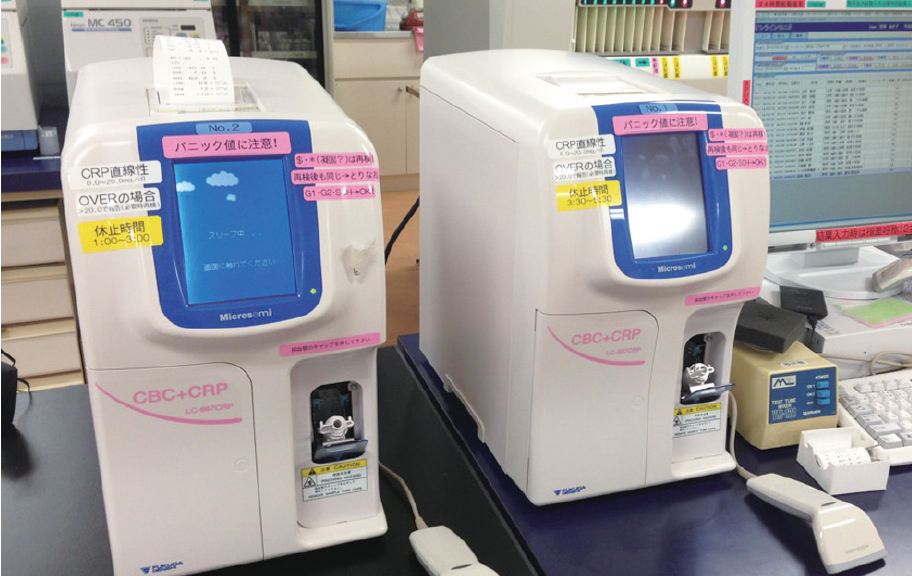
Instrument: Hematology analyzer
Parameters: CBC 3-Diff and CRP (C Reactive Protein)
Tests per day: 10-15 (higher during flu season)
*Requireid time may vary with each case.

Contains red blood cells, white blood cells, and platelets. Helps diagnose various conditions.
An acute-phase reactant increased in the serum of patients with pneumococcal infection.
We have about 10,000 children visit the ER every year (average 30 daily), high fever, cough and vomiting are the top three symptoms seen.
When the fever is over 102.2 °F (39.0 °C), a decision must be made. If CBC and CRP test results show negative inflammatory reaction, then a virus infection like ES is suspected, which does not require immediate action. On the other hand, if WBC is over 15,000, bacterial infection is suspected, which requires further testing.
We draw blood samples from fingers, which is easier to perform by nurses than venous blood sampling which is more difficult due to the delicate thin veins in children.
The hematology analyzer we are using for emergency patients outside the clinic hours can measure CBC and CRP with only 60 µL of whole blood. Smaller blood samples reduce the stress and pain associated with blood draws from children. This is beneficial to both the patients and the nursing staff.
Antibiotics are effective for the treatment of bacterial infections. CBC and CRP results can distinguish between a bacterial or viral infection, which enables the physician to prescribe antibiotics for treatment. Of course, by not giving antibiotics to patients with viral infections, we reduce the incidence of mutating bacteria becoming drug-resistant. In addition, by measuring CBC and CRP, we are able to identify and treat about 30 cases of pyelonephritis patients per year.
Do you have any questions or requests? Use this form to contact our specialists.