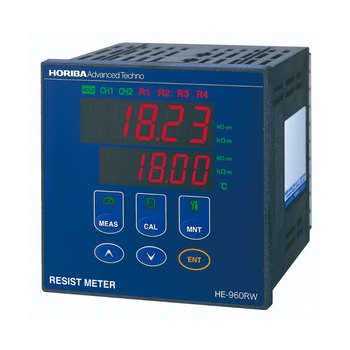
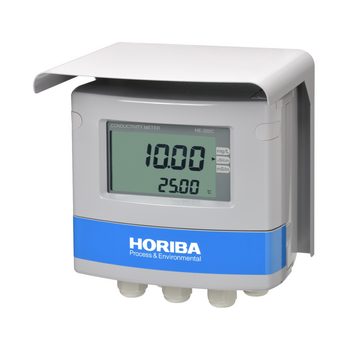
Conductivity and resistivity are measured by applying voltage between electrodes immersed in a solution to determine the size of current that flows through the solution. In doing so, deciding on the area and distance of the two electrodes makes it possible to correctly determine how much change in the flowing current is being caused by the ease (or difficulty) with which the electricity passes through the solution. The space between a pair of electrodes is called a cell, and the physical constant defined by the specified electrode area and distance is called the cell constant.
The current value is determined by the type and concentration of matter (electrolyte) that carries electricity in the solution and serves as an indicator expressing the pureness of the water. The ease of electricity flow is called conductivity and the difficulty of its flow is called resistivity. The two have a reciprocal relationship.