Mobility

Innovative applications and insights, advanced automotive validation and verification technologies and equipment, and ongoing guidance and consultation
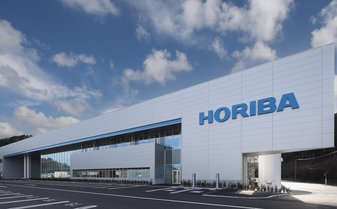
The HORIBA Group of worldwide companies provides an extensive array of instruments and systems for applications ranging from automotive R&D, process and environmental monitoring, in-vitro medical diagnostics, semiconductor manufacturing and metrology, to a broad range of scientific R&D and QC measurements. Proven quality and trustworthy performance have established widespread confidence in the HORIBA Brand.
Find out further solutions and applications from various aspects.
Scientific discovery doesn’t always follow traditional pathways. The Optical Spectroscopy Division custom configures spectrometers, monochromators, microspectroscopy, CCD’s and other instruments for fluorescence spectroscopy and other R&D and QC applications.
MoreHigh-performance scientific instruments and analytical solutions for life sciences, material sciences, water, energy, and many other applications
MoreHORIBA is a leader in OEM spectroscopy and imaging solutions, offering customizable, high-performance components like gratings, spectrometers, and cameras. We deliver scalable, tailored solutions from VUV to NIR to meet next-gen industrial needs.
MoreThis month's Chase the Case features a Non-Hodgkin Lymphoma case. Explore key hematology findings, morphology insights, and diagnostic considerations…
Automation and Efficiency Boost Mass Production, Supporting a More Stable Semiconductor Supply Chain
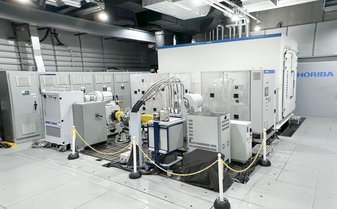
Contributing to development efficiency and cost reduction through front-loading
This issue features "Analysis and Measurement Technologies Contributing to Next-Generation Healthcare". In the post–COVID-19 era, the importance of…
Accelerating Entry into the Middle East Energy Transition Market
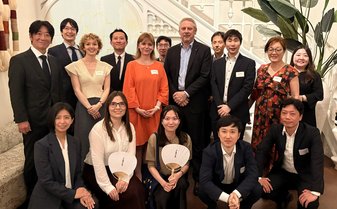
Dr. George Gillespie OBE appointed as new President of the Japan Business Council in Europe
Explore a real clinical case of Acute Promyelocytic Leukemia and discover how HORIBA Yumizen hematology analyzer and digital morphology system flag…
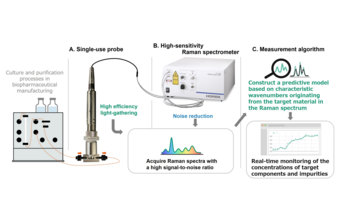
Improves Antibody Yield by About 10% in the Purification Process
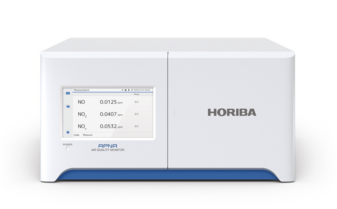
HORIBA Group’s Air Quality Monitor AP-380 Series has received type approvals from certification bodies including the U.S. Environmental Protection…
Meet the experts of HORIBA at Methods and Applications in Fluorescence 2026 (MAF 2026), Copenhagen, Denmark (9-12 August)
Join HORIBA at the 34th IMRC in Cancún, Mexico from August 16-20, 2026.
Join HORIBA at the 2026 Nanobubble Conference in Newark, New Jersey, from August 19–21, 2026.
Meet the experts of HORIBA at PSE 2026, the 20th International Conference on Plasma Surface Engineering in Erfurt, Germany.
Meet HORIBA at THIESEL 2026 – Conference on Thermo- and Fluid Dynamics Processes for Clean Propulsion Powerplants.
Meet the experts of HORIBA at LabDays Copenhagen 2026, the trade fair for laboratory technology (9-10 September).
You are invited to register for our new webinar: Thursday, September 17th, at 9 AM (BST); 10 AM (CEST), or at 4 PM (BST); 5 PM (CEST)
You are invited to register for our new webinar: Tuesday, September 22nd, at 9 AM (BST); 10 AM (CEST), or at 4 PM (BST); 5 PM (CEST)
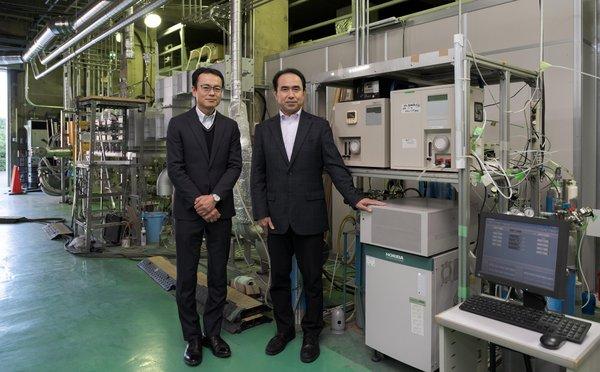
Approximately 90% of Japan’s energy production relies on the combustion of fossil fuels. For instance, vehicle powertrains generate energy by burning…
LENS generated one of the most comprehensive real-world datasets to date for L-category exhaust and noise emissions, helping inform future measurement…
Daisuke Nakatsukasa of HORIBA, Ltd. competed in the UCI Gran Fondo World Championships, one of the world’s top-level amateur road cycling events, held…