


PDF
0.69
MB
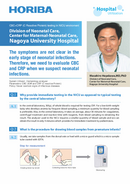
CBC+CRP (C-Reactive Protein) Testing in NICU Environment - Nagoya University Hospital

Masahiro Hayakawa, MD, PhD
Division of Neonatal Care, Center for Maternal-Neonatal Care, Nagoya University Hospital (Japan)
System Utilized: Hematology Analyzer
Parameters: CBC 3-Diff and CRP (C-Reactive Protein)
Policy: Never overlook signs of infectious diseases
In the central laboratory, 300 µL of whole blood is required for CRP testing. For low-birth-weight babies, frequent blood sampling can lead to anemia, so minimizing the quantity of blood required is preferable. Additionally, testing in the central laboratory typically takes about 30 minutes, including coagulation, centrifugation, and reagent reaction time, from blood sampling to obtaining results. In contrast, the analyzer used in the NICU requires a smaller blood sample and provides results in just 4 minutes. This allows pediatricians to initiate immediate treatment.
Usually, we take samples from the dorsal vein or heel with a micro guard which is a micro sample tube coated with EDTA.
When a newborn shows symptoms of a possible infection, both CBC and CRP are measured to assess the medical condition. These tests are monitored daily until the infant recovers from the infection or postoperative condition.
The analyzer was chosen primarily for its ease of use. It automatically starts up and shuts down, saving time on maintenance. Additionally, the cooling unit is integrated into the analyzer, eliminating the need to remove reagents manually.
The hematology analyzer is connected to the HIS (Hospital Information System) via PIMS, manufactured by Philips Electronics Japan Co., Ltd. The NICU Patient Information System is software that relays clinical test results back to the HIS.
When CBC and CRP tests are performed using the hematology analyzer, the results are automatically transmitted to PIMS after selecting a registered patient on the computer screen
Do you have any questions or requests? Use this form to contact our specialists.