PDF
1.93
MB
Pulsed RF Glow Discharge Optical Emission Spectroscopy
Elemental depth profiling made easy

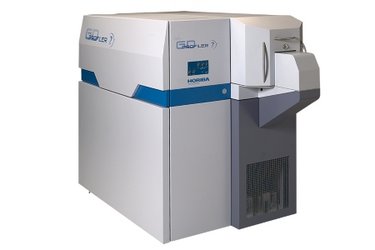
GDOES is an analytical technique that provides ultra-fast elemental depth profile analysis of layered materials, simultaneously offering quantitative measurement of all elements and thickness with nanometer depth resolution. HORIBA's pulsed RF GDOES instruments, with Differential Interferometry Profiling (DiP), are the ideal companion characterization tools for material research and process elaboration.
The innovative pulsed RF source allows profiling of all types of solid samples with optimum performance, from the first nanometer, to more than 150µm. Polymeric materials are easily sputtered with patented Ultra Fast Sputtering (UFS). In addition, this source can also be used to prepare sample surfaces for Scanning Electron Microscopy (SEM).
All elements can be measured, including Hydrogen, Deuterium, Lithium, Carbon, Nitrogen, Oxygen, and more.
The patented Differential Interferometry Profiling (DiP) allows direct measurement of the depth as a function of time, with nanometric precision, which is performed simultaneously with the GD analysis.
The patented High Dynamic range Detectors (HDD) used in all HORIBA GD instruments, allow real time, automatic optimization of the sensitivity, to analyze elements at trace levels in one layer, and as major in a second layer without compromise or need to make any adjustments.
Webinar in French / Webinaire en français
This webinar explains the growing role of surface characterization in industry, as surface composition affects material performance. It highlights the use of treatments and coatings to improve properties and presents GDOES as a fast, versatile method for analyzing layers, corrosion, and detecting nearly all elements, even on rough surfaces.
Watch the webinarThis application note demonstrates the use of pulsed RF GD-OES for nanometric depth profiling of (Al,Ga)N quantum wells and quantum dots. The technique supports process optimization and quality control of layer thickness and composition in advanced UV optoelectronic structures.
Read moreUnderstanding how and why batteries degrade over time is essential for improving design and lifecycle performance.
In this webinar, explore HORIBA’s approach to ageing studies using µRaman, GD-OES, and SEI for both in-situ and ex-situ diagnostics. See how we map SEI growth, detect oxide formation, and follow structural changes in electrodes to predict performance decline and inform better material and process choices.
Crystallinity and material structure are key to maximizing battery energy and power density. HORIBA’s µRaman and QCarbon tools offer direct access to carbon ID/IG ratios and coating uniformity, while GDOES reveal elemental depth profiles. This webinar guides you through essential characterization techniques for both carbon-based and cathode materials, empowering better design and quality control for next-gen batteries.
Watch it nowSurface and interface studies need complementary analytical techniques, like GDOES and Raman, to provide elemental profiles and molecular insights on multilayers of various depths. This webinar illustrates this complementarity by showing selected results on polymeric coatings, anodic films, batteries, coatings on glass and DLC coatings.
Watch it nowIn this webinar, we explore how HORIBA’s integrated solutions, including particle characterization and MicroXRF, provide comprehensive characterization of carbon materials and cathode powders. While laser diffraction and centrifugal sedimentation systems analyze particle size distribution and dispersion state with high precision and minimal sample prep, MicroXRF reveals elemental composition and ratios within electrodes at microscale.
Watch it nowGD-OES offers you a way to characterize the surface of under-layers by analyzing GD-OES craters using Raman and µ-XRF, confirming no alteration of the surface in complex organic/inorganic coatings.
Read moreGD-OES provides fast, uniform, and precise depth profiling of organic coatings using Ar/O₂ plasma, enhancing multilayer analysis capabilities.
Read moreThe combination between pulsed GD OES and XPS, notably to look at embedded interfaces, is generating interest from the Surface community. Look at this open Access article published in Coatings.
Read the articleDiscover the new brochure for the GD-Profiler 2™, our Pulsed RF Glow Discharge Optical Emission Spectrometer, with Differential Interferometry Profiling (DiP) information and the latest functionalities and applications.
Get the brochureIn this paper, the characteristics of new porous coatings fabricated at three voltages in electrolytes based on H3PO4 with calcium nitrate tetrahydrate, magnesium nitrate hexahydrate, and copper(II) nitrate trihydrate are presented. The SEM, energy dispersive spectroscopy (EDS), glow discharge optical emission spectroscopy (GDOES), X-ray photoelectron spectroscopy (XPS), and XRD techniques for coating identification were used.
Read the articleWe developed an in situ measurement technique implemented on a Glow Discharge Optical Emission Spectrometry (GDOES) instrument, which provides the depth information during the profiling process. The setup is based on a differential interferometer, and we show that a measurement accuracy better than 5% can be obtained for crater depths ranging from 100 nanometers to several tens of micrometers. This development can be directly applied to non-transparent coatings, and brings significant improvement to the quantification process in GDOES.
Read the articleWith their ~20 % efficiency, hybrid perovskite solar cells are the new promising candidate for next generation photovoltaics. Thanks to the wide HORIBA Scientific portfolio, different techniques can be used to gain in depth knowledge on the optoelectronic properties and mechanisms of this class of materials. In this application note we decided to use spectroscopic ellipsometry, steady-state and time-resolved fluorescence and Glow Discharge Optical Emission Spectroscopy to investigate the properties of CH3NH3PbI3 thin films deposited on a spin-coated PEDOT:PSS. The impact of the exposure to air was addressed.
Read morePulsed RF Glow Discharge Optical Emission Spectrometry offers ultra-fast elemental depth profiling capability for the investigation of thin and thick films. Thanks to the use of a pulsed RF source, coupled with a high resolution optical spectrometer, the GD Profiler 2 provides an excellent depth resolution, allowing the fast evaluation of the coating quality. In this application note, we focus on a MoS2/Pb composite multilayered sample, used as a solid lubricant. The analysis of such a sample shows the excellent performance of this instrument for the study of nm-thick complex coatings.
Read more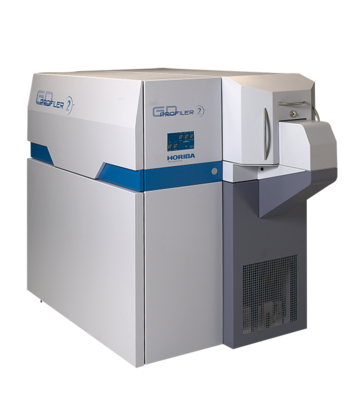
Pulsed-RF Glow Discharge Optical Emission Spectrometer
Sie haben Fragen oder Wünsche? Nutzen Sie dieses Formular, um mit unseren Spezialisten in Kontakt zu treten.