


PDF
2.72
MB
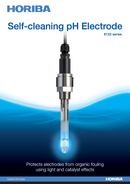
〈Catalog〉Gel-filled Self-cleaning pH Electrode 6122 series

Meet the self-cleaning pH electrode designed to resist organic fouling and reduce maintenance in demanding wastewater applications.
UV light and TiO₂ photocatalysis help prevent organic buildup on the sensing surface, extending maintenance intervals and supporting reliable pH monitoring.
Spend less time maintaining electrodes and more time focusing on your lab work and essential tasks. Make time for what matters most—at work and at home.
Electrode Maintenance: Before & After
Example from a Chemical Plant
*Example field result; actual maintenance interval depends on wastewater conditions.
HORIBA’s Self-Cleaning pH Electrode is designed to reduce the maintenance burden on operators.
The pH-responsive glass membrane is coated with a photocatalytic porous titanium dioxide (TiO₂) layer. By irradiating the electrode internally with UV light, the photocatalytic coating helps prevent fouling and keep the electrode surface clean.
HORIBA’s proprietary antifouling technology extends cleaning and calibration intervals, reducing maintenance frequency and helping save time and labor on site.

* Maintenance cost is calculated based on a labor cost of 55 JPY/min, 30 min per maintenance day, and the maintenance frequency. From year 2 onward, consumables (pH electrode, standard solution) and maintenance costs will be incurred.

The pH-responsive glass membrane is coated with porous TiO₂ and irradiated with UV light from within the electrode. This process activates the TiO₂ coating, resulting in photocatalytic hydrophilicity and the formation of a water film (hydrophilic layer) on the surface, effectively preventing the adhesion of organic contaminants. Furthermore, the activated TiO₂ facilitates the radicalization of water (H2O) and oxygen, enabling the disintegration of organic contaminants adhering to the external surface of the electrode.

See how the 6122 Series is used in wastewater treatment applications across various industries.
 Raw Water Tank pH Management at a Machinery Factory
A 43-day evaluation demonstrated that the 6122 Series maintained stable and accurate pH measurement in a heavily contaminated raw water tank without routine maintenance, supporting anomaly detection and neutralization control.
> More Details
Reducing Chemical Injection at a Beverage Plant
In an anaerobic treatment tank, organic fouling caused false acidic readings and excessive chemical injection. The 6122 Series reduced maintenance from twice a week to once a month and contributed to annual reagent savings of several million yen.
> More Details
Seven-Month pH Monitoring in Domestic Wastewater Treatment
In a biological reaction tank containing activated sludge and organic contaminants, the 6122 Series maintained a clean glass membrane and stable measurement performance for seven months without routine maintenance.
> More Details
Reducing Maintenance in Textile Wastewater Treatment
In a return sludge tank, the 6122 Series maintained reliable pH measurement for two months without routine cleaning or calibration. Recorded maintenance time decreased from 425 minutes to 0 minutes during the evaluation period.
> More Details
Reducing pH Monitoring Costs at a Semiconductor Factory
In a denitrification tank treating organic wastewater, the 6122 Series reduced maintenance from three times a week to once a month. Based on a 10-year simulation, labor costs were estimated to decrease by approximately 90%.
> More Details
Six-Month Maintenance-Free pH Monitoring at a Food Factory
In a raw water tank at a food factory, heavy organic fouling required daily cleaning and calibration of the conventional pH electrode. The 6122 Series remained clean and maintained stable pH measurement for six months without routine maintenance, helping reduce the workload associated with pH monitoring.
> More Details
Máte nějaké dotazy nebo požadavky? Pomocí tohoto formuláře kontaktujte naše specialisty.


