As industries keep evolving with new manufacturing processes, robotics spread, Artificial Intelligence introduction but also increasing regulatory and environmental pressures, elemental analysis continues to play a decisive role in securing quality, safety, and innovation.
In 2026, the focus of Elemental Analysis at HORIBA will concentrate on four strategic application areas where analytical performances directly impact industrial success. We will also cover additional topics such as chemistry, petrochemistry, and many more.
Our commitment is clear: deliver robust, application-driven analytical solutions that improve reliability, efficiency, and sustainability.
With rising demand for critical raw materials and supply chain control, accurate multi-element analysis is essential from mining to recycling.
High Resolution ICP-OES and XRF provide reliable quantification of REE elements, allowing to validate separation techniques, trace impurity control and monitor processes to optimize, secure and make beneficial the supply chains while meeting the quality standards.
Controlling elemental composition is key to prevent material failure while precise tests and understanding of material and coatings behavior in corrosive environments is key to extend lifetime and prevent major issues.
Providing thin and thick films elemental Depth Profiles, precise follow up of H, O, S and comprehensive studies of elemental changes under corrosion, our techniques GD-OES, AESEC (ICP-OES with Spectroelectrochemistry), O/N/H Analyzers and µXRF support corrosion protection research studies and material integrity workflows.
Battery performance depends on strict elemental control across the entire value chain, raw materials, active materials, and recycling streams.
ICP possibly coupled to Electrothermal Vaporization (ETV) and GD-OES ensure precise multi-element analysis, while O/N/H and/or C/S by gas analysis produced by combustion or fusion are verified in advanced materials.
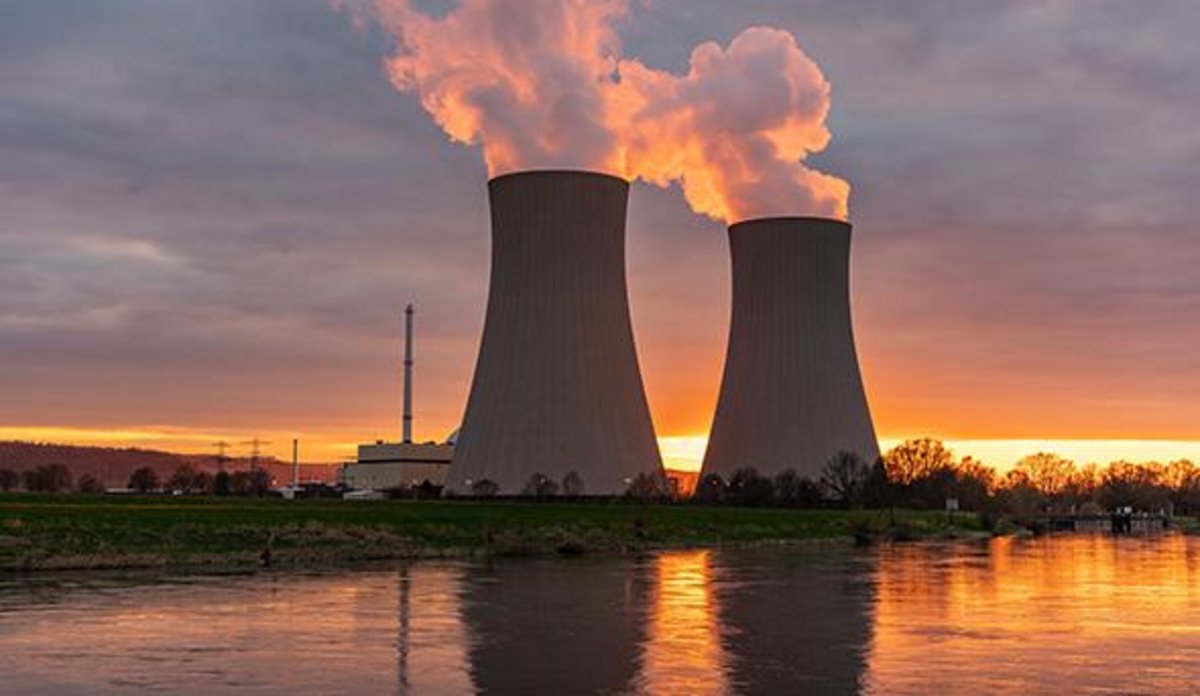
Nuclear applications require ultra-reliable elemental and possibly isotopic trace analysis and strict compliance with standards. Corrosion studies are also critical in this field. ICP, GD, XRF, and combustion techniques (C/S and O/N/H Analyzers) support fuel characterization, structural material control, and waste monitoring with high precision and confidence.
➡️ EXRS-European X-Ray Spectrometry Conference: June 14-19, 2026 - Catania (Italy)
➡️ 7th International Glow Discharge Spectrometry Symposium: April 19-22, 2026 - Antwerpen (Belgium)
➡️ 10th Symposium on Aluminium Surface Science and Technology (ASST): May 18-20, 2026 - Toulouse (France)
➡️ 7th International Conference on Applied Surface Science: June 1-4, 2026 - Chengdu (China)
➡️ 20th International Conference on Thin Films: June 8-12, 2026 - Biarritz (France)
We look forward to supporting your analytical challenges.
Sie haben Fragen oder Wünsche? Nutzen Sie dieses Formular, um mit unseren Spezialisten in Kontakt zu treten.

 Learn more about Rare Earth Elements