


PDF
4.3
MB
pH Monitoring in Denitrification Tanks - Case Study of Organic Wastewater at a Semiconductor Factory -


Denitrification tanks play a crucial role in wastewater treatment, converting nitrate nitrogen in wastewater into nitrogen gas through microbial activity. Key water quality parameters measured in denitrification tanks include pH, ORP, dissolved oxygen, ammonia nitrogen, and nitrate nitrogen. Maintaining appropriate pH is especially crucial for activating microbial activity. While microorganisms achieve high treatment efficiency under optimal pH conditions, pH changes due to microbial metabolism or improper aeration can reduce treatment efficiency. When pH changes, appropriate measures need to be taken, such as adding neutralizers or adjusting aeration levels.
Measuring pH in denitrification tanks often causes electrode fouling by organic matter, requiring frequent maintenance to prevent discrepancies in the readings.
Such cases can result in a significant amount of on-site labor hours, presenting an issue for continuous water treatment plant operation.
When organic fouling affects measurements, electrodes resistant to organic fouling are the best for stable, continuous measurement. HORIBA's Gel-filled Self-cleaning pH Electrode features a pH-responsive glass membrane coated with porous TiO2 and is irradiated with UV light from within. The photo-induced hydrophilicity of activated TiO2 creates a water film (hydrophilic layer) on the surface, preventing the adhesion of organic fouling. The activated TiO2 also radicalizes H2O and O2, decomposing organic contamination that has adhered to the outside of the electrode.
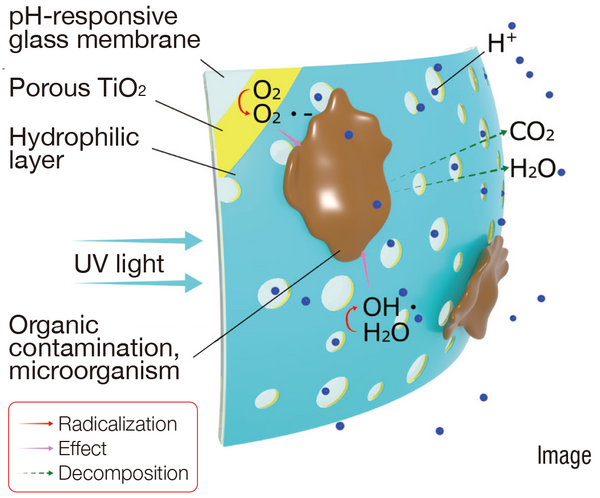
Figure 1: Key principles of the Gel-filled Self-cleaning pH Electrode
The pH in a denitrification tank during organic wastewater treatment is continuously measured at a certain semiconductor factory. However, severe electric fouling due to organic matter requires electrode maintenance three times a week: twice for cleaning and once for calibration. HORIBA conducted an implementation evaluation at this site to assess whether using a conventional electrode and a self-cleaning pH electrode could reduce labor hours needed for maintenance.
 Fouling Resistance
After installation, the fouling level of the self-cleaning pH electrode was visually inspected regularly. Each time, the pH electrode was reinstalled in the wastewater tank without the need for cleaning, and monitoring for fouling effects continued. No fouling was observed even one month after installation.
Measurement Value Comparison
To compare trends with the existing pH meter, measurements were taken continuously for one month, using both electrodes. The results are shown in Figure 2.
Although this installation location shows relatively little numerical fluctuation, even slight variations were sensed. This confirms that there were no issues affecting the measurement values for more than one month after installation, even without maintenance.
Maintenance Frequency and Cost-Effectiveness
Conventional electrodes required cleaning using water and sponges twice a week, and calibration with acid cleaning once a week, for a total of three times a week. However, with the self-cleaning pH electrode, this maintenance was reduced to once a month. A simulation of maintenance labor costs over a period of 10 years based on these evaluation results showed that the self-cleaning pH electrode could reduce these costs by approximately 90%.
Electrodes resistant to organic fouling are ideal for stable, continuous measurements in denitrification tanks used in organic wastewater treatment.
Self-cleaning pH electrodes with photocatalytic self-cleaning functionality break down organic fouling, enabling accurate and stable continuous measurements.
Extended maintenance intervals reduce on-site labor costs.