HORIBA
Search English
India
  • Products
    • Mobility
    • Energy and Environment
    • Industrial Process and Environment
    • Life Science
    • Healthcare
    • Materials
    • Semiconductor
    • Scientific and Analytical Instruments
    • Water & Liquid
    • All products from A to Z
  • Applications
    • Arts, Entertainment and Recreation
      • Art Conservation
      • Museums, Historical Sites and Similar Institutions
    • Biopharma and Pharma
    • Biotechnology and Biomedical
    • Cosmetics
    • Education, R&D and Government Institutions
      • Universities
      • Research and Testing Laboratories
    • Energy Solutions
      • Why HORIBA
      • Hydrogen Energy
        • Global Initiatives
        • Global Trends and Strategies toward Carbon Neutrality
        • Fuel Cell Evaluation
        • FCEV / FCV Evaluation
        • Stationary Fuel Cells
        • Sintering and Reduction Test Station
        • Evaluation of Hydrogen and Ammonia Engine / Gas Turbine for Power Generation
        • Hydrogen Station Evaluation
        • Water Electrolysis Evaluation
        • Hydrogen Production Evaluation
      • Energy Usage Optimization
        • Energy Management System
        • Environmental Impact Assessment (LCA and GHG Protocol)
        • Battery Manufacturing/Recycling
      • CO2 Capture and Carbon Resource Circulation
        • Reduce
        • Direct Carbon Capture
        • Carbon Resource Circulation
      • Coal and Consumable Fuels
      • Electric Utilities
      • Energy Fuel Oil
      • Environmental Countermeasures
      • Petroleum and Coal Products Manufacturing
        • Petrochemicals
      • Photovoltaics
      • Oil and Gas
      • RoHS and ELV
    • Food and Beverage
      • Agriculture & Crop Science
      • Beverages
      • Food
      • Food & Beverage Manufacturing
    • Healthcare
    • Industrials
      • Battery
      • Commercial and Professional Services
        • Gas mass flow control and measurement for reference value of PM2.5 measurement
      • Construction & Engineering
      • Electrical Equipment
      • Machinery
    • Information Technology
      • Semiconductors
        • 2D Materials
        • Graphene
        • Photovoltaics
        • Display Technologies
        • Data Storage
        • Nanomaterials
      • Semiconductor Manufacturing Process
      • Technology Hardware and Equipment
    • Materials
      • Carbon
      • Polymers and Composites
      • Raw Materials for Semiconductors
      • Metals
      • Minerals
      • Corrosion
      • Ceramics
      • Glass
      • Chemicals
      • Chemical Manufacturing
      • Construction Materials
      • Containers and Packaging
      • Paper, Forest Products and Manufacturing
      • Material Research
      • Photovoltaics
      • Forensic Science
    • Mobility and Transportation
      • Automotive Manufacturing
      • Engine, Turbine and Power Transmission Equipment Manufacturing
      • Real Driving Emissions
      • Intelligent Lab
      • Marine
    • Waste Management
      • Solid Waste Management and Remediation Services
      • Water Waste Management and Remediation Services
        • Waste Water and Soil Analysis
        • Waste Water Treatment and Disposal
      • Plastic Waste
    • Water
      • Drinking Water Utilities
      • Water Reuse
        • Water Testing
  • Technology
    • Elemental Analysis
      • Energy Dispersive X-ray Fluorescence (ED-XRF)
        • What is X-ray Fluorescence (XRF)
        • What is X-ray Fluorescence Spectroscopy (micro-XRF)?
        • XRF Key Components
        • XRF Analysis
        • XRF Articles
        • HORIBA XRF Analyzers
      • Glow Discharge Optical Emission Spectroscopy
        • What is Glow Discharge Optical Emission Spectroscopy GDOES?
        • Sample Measurement with GDOES
        • Sample Test and Analysis
        • Comparison with Other Techniques: Surface Analysis
        • Comparison with Other Techniques: Bulk Analysis
        • Instrument Introduction
        • Benefits and Features of Pulsed RF GDOES
        • Join the GD Community
        • Bibliography
      • Inductively Coupled Plasma - Optical Emission Spectroscopy (ICP-OES)
        • Inductively Coupled Plasma - Optical Emission Spectroscopy (ICP-OES)
        • Scientific ICP Spectrometers
        • Applications for ICP-OES
        • ICP-OES and other techniques
        • Principles and Theory
        • Instrumentation
        • Excitation Source
        • Dispersive System
        • Detection Systems Used with ICP-OES
        • Performances in ICP-OES
      • Carbon/Sulfur & Oxygen/Nitrogen/Hydrogen Analysis
    • Health Care
      • Multi Distribution Sampling System (MDSS)
      • Reticulocytes Analysis
      • CBC + CRP
      • Slide Production
      • Automatic Rerun
      • Absorbance
      • Fluorescence
      • Flow cytometry
      • Impedance / Resistivity
      • Sedimentation
      • Spectrophotometry
      • Potentiometry
      • INR screening
      • Clotting
      • Turbidimetric
      • Chromogenic
    • Particle Analysis
      • Dynamic Light Scattering (DLS) Particle Size Distribution Analysis
      • Molecular Weight
      • Nanoparticle Tracking Analysis
      • Static Light Scattering (SLS) / Laser Diffraction Particle Size Distribution Analysis
      • Zeta Potential
      • Centrifugal Sedimentation
    • Fluid Control
      • Vaporization of Critical Process Chemistries
      • Coriolis Flowmetry
      • Thermal Mass Flowmetry
    • Mass Spectrometry
      • Quadrupole Mass Spectrometry
    • Microscopy and Imaging
      • AFM-Raman
        • AFM-Raman
        • What is Tip Enhanced Raman Spectroscopy?
        • What information does TERS provide?
        • How does enhancement of the Raman signal occur in TERS?
        • What are the TERS instrumental configurations?
        • What are the TERS tips materials and morphology?
        • What kind of substrates can be probed with TERS?
        • What is the SPM feedback used for TERS?
        • What is the spatial resolution of TERS?
        • What is the definition of TERS Enhancement factor?
        • What is nonlinear TERS?
        • What are the degradation issues and artifacts in TERS?
        • What are the main TERS applications in Materials Sciences?
        • What are the main Life Sciences TERS applications?
        • References
        • Products
      • Atomic Force Microscopy [AFM]
      • Cathodoluminescence
      • Image Analysis of Particles
      • Micro X-ray Fluorescence
      • Raman Microscopy
    • Spectroscopy
      • Cathodoluminescence Spectroscopy
        • Cathodoluminescence Spectroscopy
        • Electron Microscope
        • SEM, ESEM, SEM-FIB, (S)TEM
        • EM Add-on detector
        • SEM-Cathodoluminescence (SEM-CL)
      • AFM-Raman
      • Detectors
        • Introduction to the detectors techniques
        • What is a CCD Detector?
        • What is an EMCCD Detector?
        • Selecting a CCD Camera for Spectroscopic Applications
        • The Relationship Between Wavelength and Pixel Position on an Array
        • Spectroscopy Detector Products
        • Scientific CCD Camera Products
      • 50 years of Diffraction Gratings
      • Diffraction Gratings Ruled and Holographic
      • Fluorescence Spectroscopy
        • Fluorescence Spectroscopy
        • Principles and Theory of Fluorescence Spectroscopy
        • What is the Jablonski Diagram?
        • What is a Fluorescence Measurement?
        • Steady State Fluorescence Techniques
        • What is Fluorescence Anisotropy or Fluorescence Polarization?
        • What are Luminescence Quantum Yields?
        • What is Ratiometric Fluorescence?
        • What is an Excitation Emission Matrix (EEM)?
        • What is A-TEEM spectroscopy?
        • What is Singlet Oxygen?
        • How to Calculate Signal to Noise Ratio
        • Fluorescence Lifetime Techniques
        • Products Using Fluorescence Spectroscopy
      • Quantum Cascade Laser (QCL) Spectroscopy
        • Optical Hardware
        • Concentration Calculation Algorithm
        • Application Fields
      • Raman Imaging and Spectroscopy
        • Raman Spectroscopy
        • History of Raman Spectroscopy
        • Application field
        • Comparison with other techniques
        • Raman analysis
        • Recording spectral images and profiles
        • Description: Combined/hybrid/hyphenated Raman system
        • Confocal Raman microscopy
        • Raman Spectrometer Presentation
        • How the technique is used
        • Raman Image Gallery
        • Related Products
      • Spectrometers and Monochromators
        • Monochromator System Optics
        • Bandpass and Resolution
        • Order, Resolution, and Dispersion
        • Choosing a Monochromator/ Spectrograph
        • Spectrometer Throughput and Etendue
        • Optical Signal to Noise Ratio and Stray Light
        • Entrance Optics
        • Spectrometer, Spectrograph and Monochromator Products
      • Spectroscopic Ellipsometry
        • Spectroscopic Ellipsometry
        • Advantages
        • Instrumentation
        • Measurement Techniques
        • Data Analysis
        • Cauchy dispersion module
        • Products
      • Vacuum Ultra Violet Spectroscopy
        • Vacuum Ultra Violet Spectroscopy
        • VUV technology
        • High Vacuum (HV), Ultra High Vacuum (UHV), gas purge
        • Light sources in VUV
        • VUV system: Detector
        • Aberration
        • References - Articles
      • X-ray Fluorescence
    • Surface Plasmon Resonance
      • Surface Plasmon Resonance imaging
        • Surface Plasmon Resonance Imaging (SPRi)
        • Brief History of the Technique
        • SPR Measurements, Application Field and Comparison with Other Techniques
        • The Basics of Label-free Biomolecular Interactions
        • Instrument Presentation
        • How SPRi is Used
        • Key Accessories. Sensorchips. Surface Chemistry
        • How are the Molecules Immobilized on the biochip?
        • Conclusion & Bibliography
  • Service
    • Analysis Services
      • Analysis Centers and Services
      • EMC Analysis Service
    • Calibration and Certification
    • Customer Support
      • HORIBA Medical Documentation Database
      • Medical Customer Support
      • On-Site Support
      • Software Support
    • Spare Parts and Consumables
    • Testing and Consulting
      • Automotive Testing Centers
    • Training
      • Product Training
        • Scientific Product Training
        • Automotive Product Training
        • Medical Product Training
      • Technology Training
  • Company
    • About HORIBA
      • Home
      • Message
      • Company Profile
      • Corporate Motto and Philosophy
      • Code of Ethics
      • Our Future (Vision, Mission, Values)
      • Corporate Governance
      • Board of Directors
      • Culture
      • History
        • 1945–1960s
        • 1970s
        • 1980s
        • 1990s
        • 2000s
        • 2010s
        • 2020s
      • Group Companies
      • Virtual Patent Marking
      • HORIBA Talk
    • Events
    • Career
    • Investor Relations
      • Home
      • Investor Relations News
      • IR Library
        • Financial Statements
        • Presentation Materials
        • HORIBA Report
      • Message from the CEO
      • Mid-Long Term Management Plan
      • Stock Information
      • Shareholders Meeting
      • Other IR Information
        • Investor Relations Calendar
        • Disclaimer
      • Investor Relations Contact
    • News
    • Social Responsibility
      • Sustainability
      • Topics
      • Message
      • Sustainable Management
        • Policy and Promotion System
        • Integrated Management System
        • Health and Productivity
        • UN Global Compact
      • HORIBARIANs
        • HORIBARIANs
        • Human Rights and Labor Management
        • Development of HORIBARIANs
        • Empowerment of Diverse HORIBARIANs
        • Occupational safety and health
      • Environment
        • Environment
        • Environmental Management
        • Climate Action
        • Reduction of Environmental Impact
        • Actions for RoHS Directive, REACH Regulation and GHS Regulations
        • Eco-Friendly Products
      • Social
        • Quality
        • Material Procurement
        • Social Activities
      • Governance
        • Governance
        • Corporate Governance
        • Internal Controls
        • Compliance Promotion Systems
        • Code of Ethics
        • Risk Management
      • HORIBA and the SDGs
      • HR and ESG related Data
      • HORIBA Report
      • Editing Policy
  • Contact
    • Contact Form
    • Worldwide Locations

Glow Discharge Optical Emission Spectrometry (GD-OES) open open
  • Glow Discharge Optical Emission Spectrometry (GD-OES) I
  • Pulsed RF GDOES instrumentation
  • Products using RF GDOES
    HORIBA » Technology » Pulsed RF GDOES instrumentation 

Pulsed RF GDOES instrumentation

GDOES unique features


HORIBA Scientific pulsed RF GDOES instruments have unique features supported by multiple patents that make them the ideal companion characterization tools to material research and elaboration.

  • The new RF pulsed source allows measuring all types of solid samples conductive or non, even fragile or heat sensitive with optimum performances.
  • The patented High Dynamic range Detectors (HDD) used in all HORIBA Scientific GD instruments allow real time, automatic optimization of the sensitivity permitting to analyze elements at trace levels in one layer and as major in a second layer without compromise or need of pre-adjustment.

  • Thickness Measurement using Depth Interferometry. The use of Differential Interferometry allows for continuous direct erosion rate and crater depth measurement along with the elemental depth profile analysis. This technique developed and patented by HORIBA Scientific is a major breakthrough for GD-OES as all the information, elemental composition and depth is now delivered in the same single experiment.


RF Pulsed source


The analytical GD plasma is a dense plasma - about 1014 (charged particles / cm3) – but incident ions bombarding the surface have a low energy – about 50 eV and due to multiple collisions they are not unidirectional. These are the reasons for fast sputtering and excellent depth resolution as well as for low surface damage compared higher energy sputtering ion beams.

In average operating conditions, metals are sputtered at a rate of 1-5 µm / minute. A 100 nm layer could be sputtered in 3s. A thermal treatment on steel in which elements diffuse down to 50 µm could be checked in 10 min.


High Dynamic range Detectors


Most instruments feature a polychromator with Paschen Runge mounting for simultaneous measurement of the elements. This is mandatory when depth profile is central as in most Pulsed RF GD OES applications: the sputtering rate being extremely fast, the optical signals change rapidly with time and ultra fast detection is required.

Our optical spectrometers include a new generation of HORIBA Scientific holographic gratings with enhanced light efficiency, notably in the VUV range for H, O, Cl etc and patended HDD detectors.
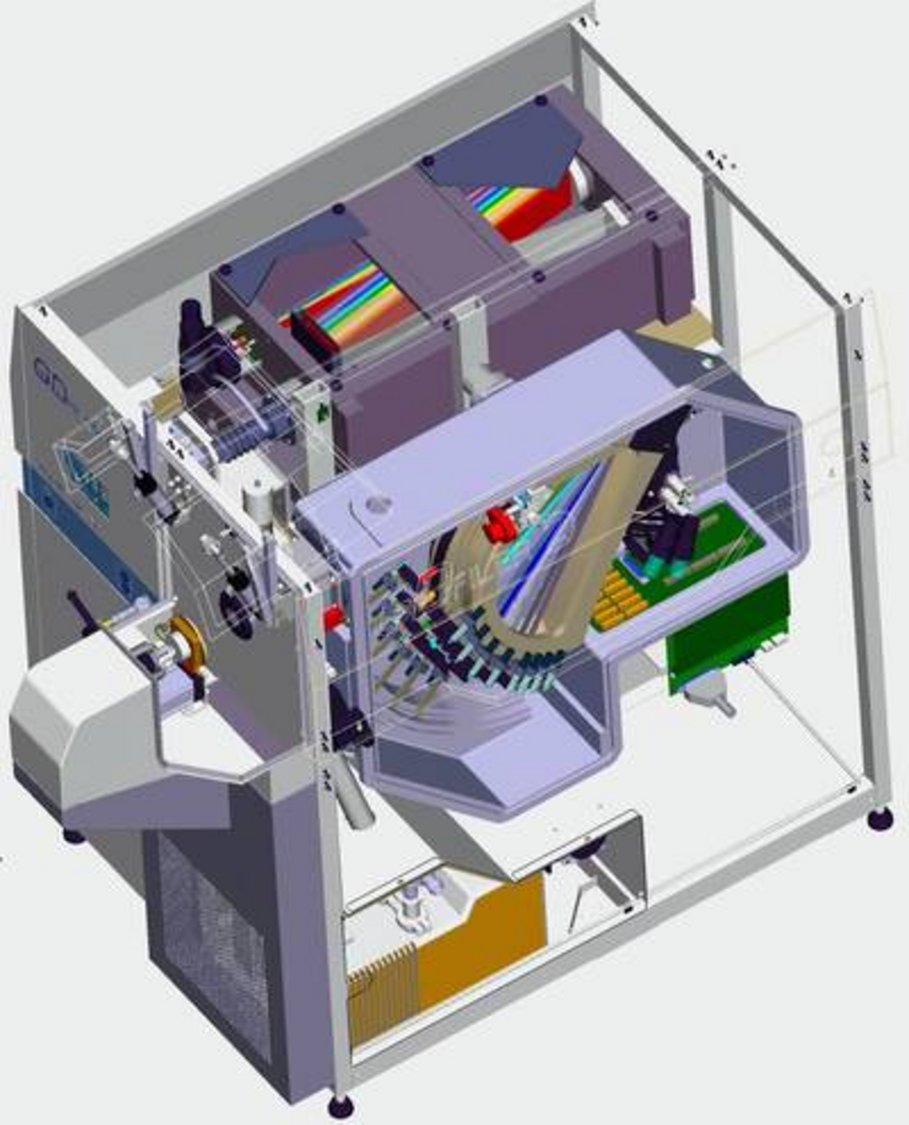


Combined optics can also be found with monochromators added in complement to the polychromators. Being flexible, the monochromators could be tuned to any line and offer the possibility to measure extra elements with high resolution and sensitivity.

CCD systems are also available from HORIBA Scientific but limited to bulk applications or thick layers as they do not have the speed required for thin films characterisation.
 

Thickness Measurement using Depth Interferometry


The use of Differential Interferometry allows for continuous direct erosion rate and crater depth measurement along with the elemental depth profile analysis. This technique developed and patented by HORIBA Scientific is a major breakthrough for GD-OES as all the information, elemental composition and depth is now delivered in the same single experiment.
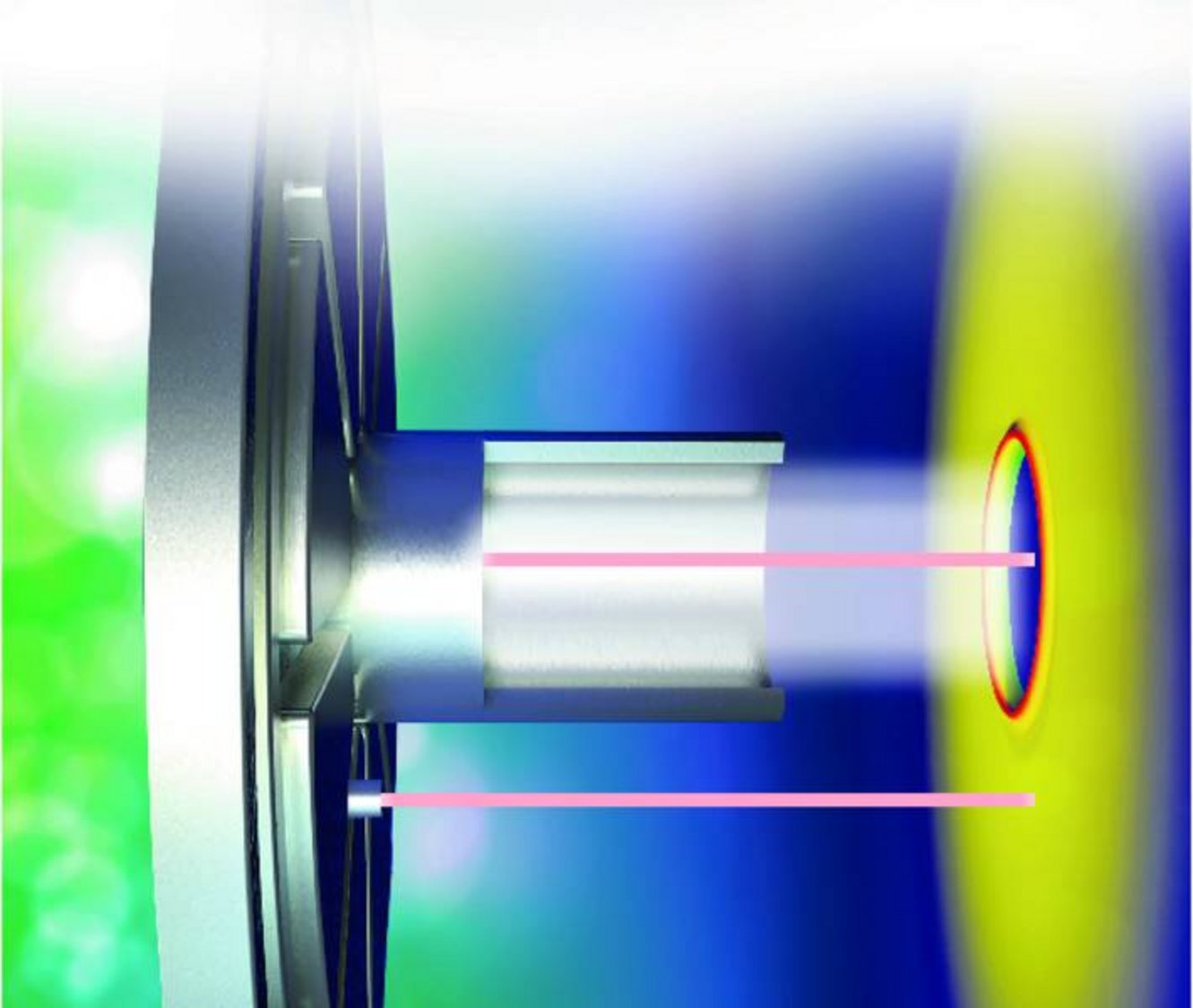


The erosion rates in GDOES are material dependent, and when multi-layers are measured, they change with depth. Previously, the estimation of these erosion rates was the result of calculations (based on recorded values for bulk materials and not well adapted to layers with varying densities) or external measurements potentially tedious.

DIP is crucially important when the investigated materials are non transparent as, in this case, Ellipsometry cannot be used.
  • Control of deposition processe
    DIP & GD provides precise layer thickness information for deposition experiments together with the follow up of the main constituent elements (composition, gradients) and the detection of contaminants.
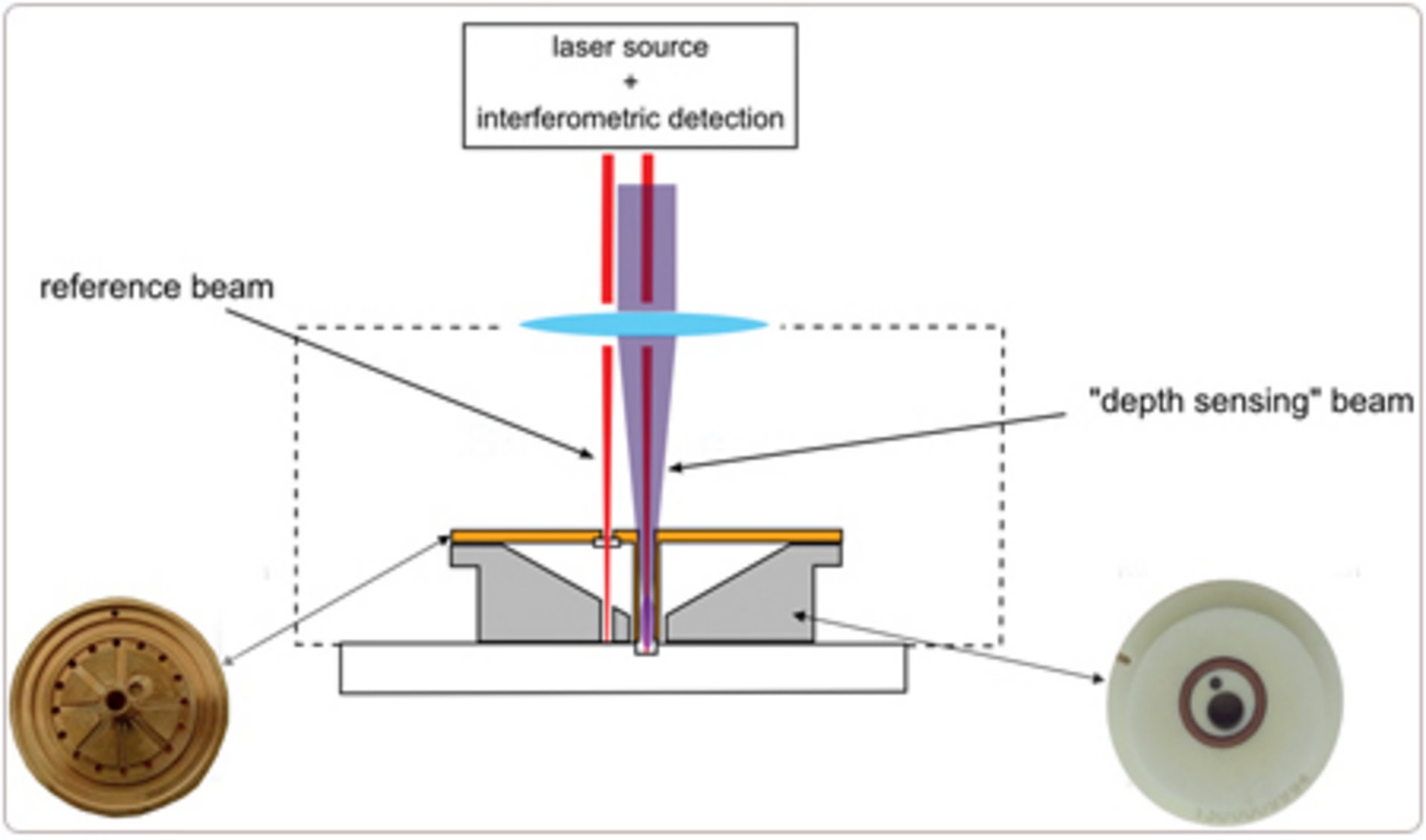
  • DiP operation principle: Interferometric measurement


  • A laser source is separated into two beams: The reference one is directed on the intact surface of the sample, while the depth sensing one is directed on the middle of the GD measured area.
  • The interference between the two reflected beams is measured as the sample is sputtered, giving a direct measurement of the crater depth.
  • Upgrade existing GD instruments
    DiP can be retrofitted on existing instruments as the design of the optical interface does not modify the light throughput towards the spectrometers.


  • Products
    • All Products (A-Z)
    • Mobility
    • Energy and Environment
    • Life Science
    • Healthcare
    • Materials
    • Semiconductor
  • Applications
    • Drinking Water Utilities
    • Automotive Manufacturing
    • Semiconductor Manufacturing Process
    • Research and Testing Laboratories
  • Technology
    • Glow Discharge Spectroscopy
    • Pressure-based Flowmetry
    • Quadrupole Mass Spectrometry
    • Raman Spectroscopy
  • Service
    • On-Site Support
    • Spare Parts and Consumables
  • Company
    • News
    • Events
    • Career
    • History
    • Corporate Culture
  • Contact
    • Career Contact
    • Contact Form
    • Worldwide Locations
    • Investor Relations Contact

Terms and Conditions Privacy Notice HORIBA Group Social Media