


PDF
0.64
MB
Hydrogen ICE Application Challenges & Solutions

A hydrogen internal combustion engine (or H2 ICE) uses hydrogen (H2) as its primary fuel. Much like traditional internal combustion engines, it generates power by combusting fuel within the engine’s cylinders. However, instead of gasoline or diesel, hydrogen is ignited to produce the pressure needed to drive the pistons. When hydrogen combusts completely, the only byproduct is water vapor—eliminating carbon dioxide (CO2) emissions and making H2 ICE a compelling solution for decarbonizing transportation.
Further, H2 ICE can divert and utilize conventional gasoline and diesel engine parts, development environments, and common skill sets for internal combustion engines. Plus, H2 ICE is attractive as a means of utilizing hydrogen, because the purity requirements of the fuel are not as stringent as required for fuel cells.
As a trusted partner in future mobility, HORIBA offers comprehensive testing and measurement solutions tailored specifically for hydrogen internal combustion engine (H2 ICE) development. Our portfolio features advanced emissions analyzers, precision measurement tools, facility safety systems, and automation software designed to meet the demanding requirements of hydrogen engine testing.
Whether you’re evaluating performance, combustion efficiency, or emissions compliance, HORIBA supports you throughout the development process — helping ensure accuracy, safety, and regulatory adherence without compromising your project timeline or test quality.
Overview of Hydrogen ICE
Hydrogen internal combustion engines are gaining attention as a practical and scalable pathway toward decarbonizing the mobility sector and achieving carbon neutrality. By using hydrogen as fuel, these engines emit only water during combustion—offering a low-carbon alternative to traditional gasoline and diesel engines.
Key points:
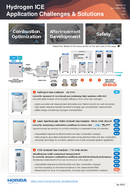
While hydrogen internal combustion engines hold significant promise for decarbonizing transportation, they introduce several technical and engineering hurdles. These challenges can be grouped into three core areas: Combustion Optimization, Aftertreatment Development, and Safety. Addressing these areas is critical for ensuring performance, regulatory compliance, and long-term reliability. Below, we explore each in more detail.
We work together with customers to find solutions and offer a wide range of measurement testing products to solve their challenges.
The challenges and solutions of hydrogen ICE vehicle development
Examples of development and evaluation facilities for hydrogen ICE
HyEVO
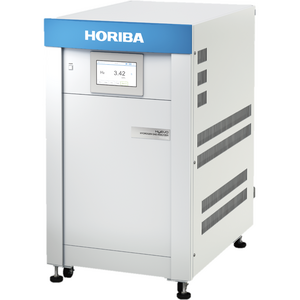 Correctly measure H2 in exhaust gas containing high moisture with Wet
Accurate determination of combustion efficiency from unburned hydrogen
• Highly accurate wet measurement eliminates error factors due to dry-wet conversion
• High-speed response enables transient hydrogen gas concentration measurement
• Safety design considering hydrogen characteristics
MEXA-ONE IRLAM
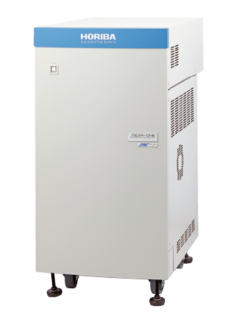
Supports exhaust gas reduction by correctly evaluating NH3 generated during SCR reduction
• Unparalleled response to stoichiometric and lean combustion changes
• Wide range to accurately evaluate the peak during stoichiometric and lean combustion
• Sampling technology to correctly measure NH3 is also proposed (patent registered)
*IRLAM is a registered trademark or trademark of HORIBA
FTX-ONE series
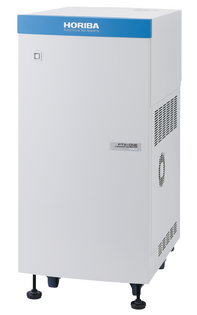 Simultaneous multi-component measurement to correctly measure combustion conditions and aftertreatment performance
Simultaneous measurement of H2O and NOx/NH3/N2O with a single unit
• Unparalleled response to stoichiometric and lean combustion changes
• Low flow sampling to minimize turbulence in the measurement field
• Measurement of up to 28 components, including high-concentration moisture
Details of the hydrogen ICE measurement solutions can be found in the following document.
Related Products
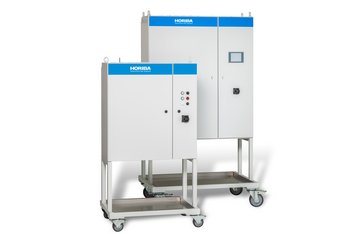
연료 흐름 측정 시스템
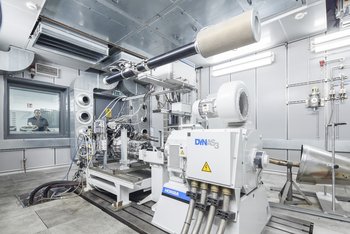
엔진 테스트 시스템
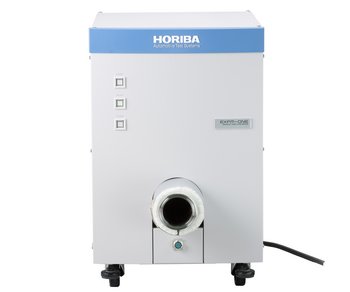
초음파 배기 유량계
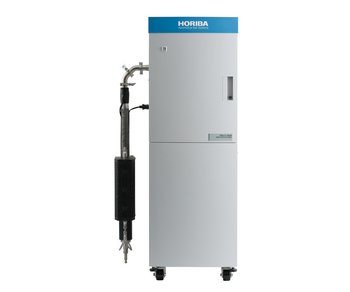
부분 희석 PM 샘플 장치
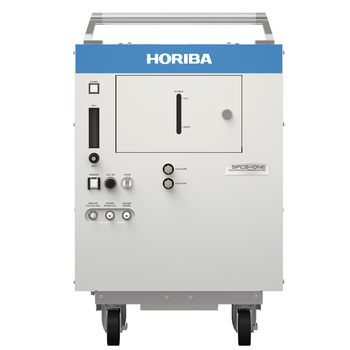
Solid Particle Counting System
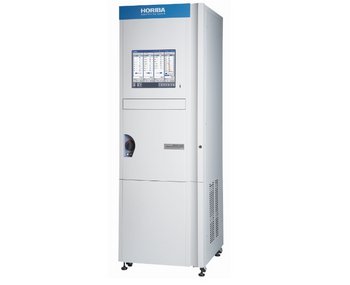
FTIR Motor Exhaust Gas Analyzer

엔진 테스트용 테스트 자동화 시스템
HORIBA제품의 자세한 정보를 원하시면, 아래의 양식에 내용을 입력을 부탁드립니다.