

PDF
7.57
MB
Brake Dust Measurement - Brochure ENG
After introducing legislation limiting exhaust emissions, new legislation may also target non-exhaust emissions including Brake Dust measurement.

Non-exhaust emissions are airborne particles generated from sources other than the tailpipe, including brake wear, tire wear, road surface abrasion, and road dust. As vehicle exhaust emissions continue to decrease, non-exhaust emissions are becoming an increasingly important contributor to particulate matter (PM) pollution in urban environments.
Brake dust emissions contain fine and ultrafine particles, including PM10 and PM2.5, that may negatively impact human health when inhaled. Similar concerns exist for tire wear particles, driving increased regulatory attention and the development of standards such as Euro 7.
Accurate brake and tire emissions testing helps manufacturers understand, quantify, and reduce non-exhaust emissions while supporting regulatory compliance and vehicle development. With decades of expertise in automotive testing and emissions measurement, HORIBA provides advanced solutions for brake emissions measurement, particle characterization, and tire testing to help manufacturers prepare for the next generation of mobility regulations.
In Europe, the informal working group of the Particulate Measurement Program (PMP) received a mandate to investigate the topic of brake emissions.
HORIBA has been an active member in all four task forces within the PMP group. These groups are working on the development of a commonly agreed method for sampling and measuring brake wear particulates. Setting the framework for the test procedure used within the UN GTR No. 24, which specifies how brake emissions have to be measured to fulfill Euro 7 standards. Visit our Euro 7 page to learn more about the proposed emission standards, including brake emissions.
The California Air Resource Board (CARB: Vehicle non-exhaust particulate matter sources) also has an ongoing investigation into particulate standards.
We provide complete brake dust measurement solutions to help OEM and brake system suppliers prepare for possible regulations, leveraging our emissions analysis and brake testing expertise.
As non-exhaust emissions become an increasingly important focus for vehicle manufacturers and regulators, accurate brake emissions testing is essential. This video explores how HORIBA solutions help measure and analyze brake wear particles using brake dynamometers, particulate measurement systems, and automation technologies that support vehicle development, emissions research, and compliance testing.
HORIBA GIANT 5200 Brake Dynamometer for measuring brake emissions according to WLTP at TMD Friction, a leading global supplier of high-quality brake friction solutions.
Further, we offer a range of brake dynamometer test systems. These are robust, compact brake inertia test systems that enable brake system performance, NVH, and brake dust analysis.
In line with the growing appetite for brake dust measurement; particulate measurement can now be performed by measuring particulate matter mass (PM2.5 and PM10). This is done by means of gravimetric filtration, or the total and solid particles (TPN and SPN) can be counted for particulate in the range of 10nm to 2.5um.
Elemental analysis is also available to analyze chemical composition:
A solution is only as good as the automation that connects it. STARS Brake Test Automation software helps set up tests, evaluate data, and generates reports meeting the requirements of UN GTR No. 24.
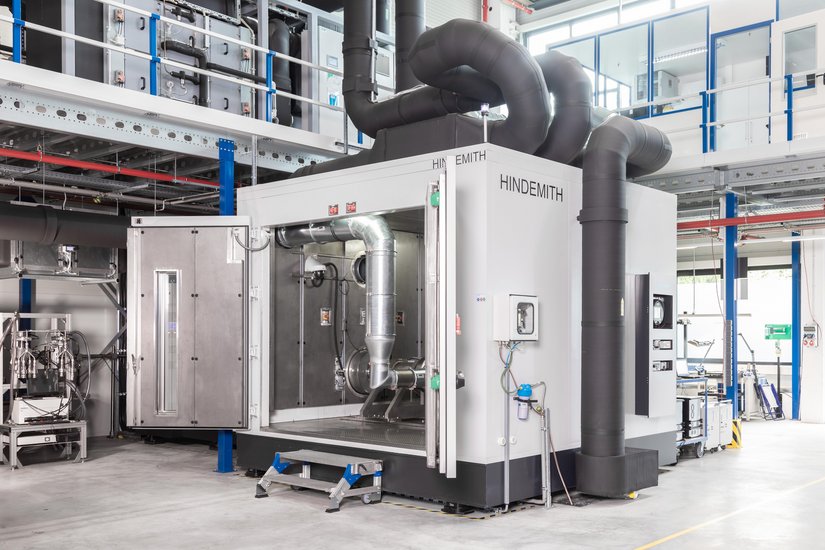
We also offer modifications to existing HORIBA brake inertia dynamometers (universal and NVH) to enable brake emissions measurements. This modification conforms to the Global Technical Regulation UN GTR No. 24. The modifications also ensure complete system integration into the familiar STARS Brake Automation System.
Explore additional HORIBA applications related to tire testing, material analysis, and automotive research:
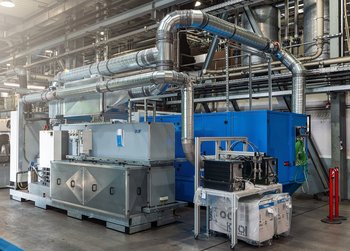
Brake Dynamometer for Brake Emissions Testing
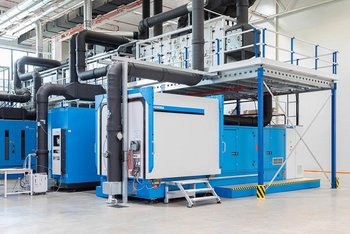
다목적 브레이크 동력계
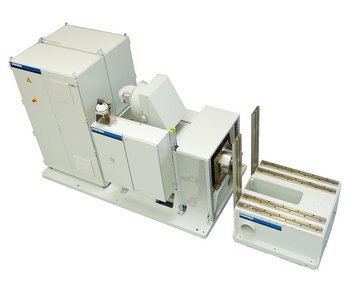
브레이크 테스트 시스템
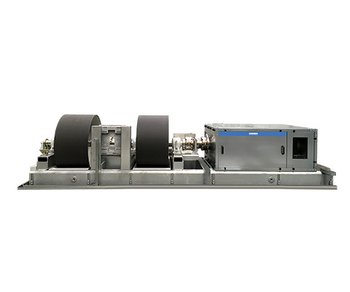
브레이크 테스트 시스템
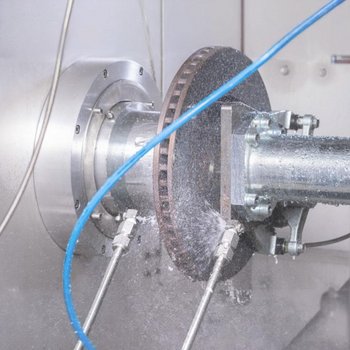
Saltwater, Wet, and Fog Testing for Brake Dynamometers
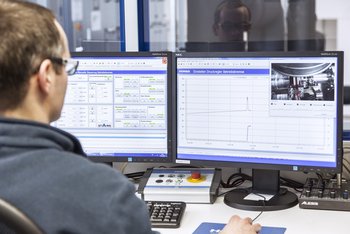
브레이크 테스트용 테스트 자동화 시스템
디지털 컨트롤러
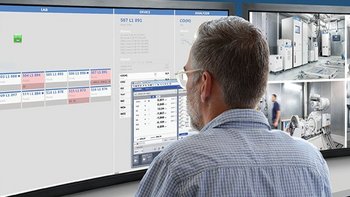
연구실용 테스트 자동화 시스템
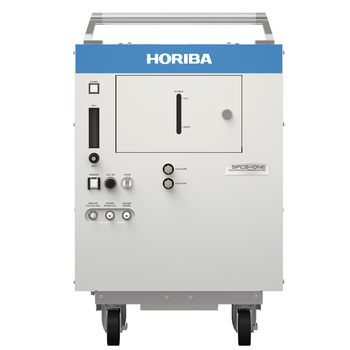
Solid Particle Counting System
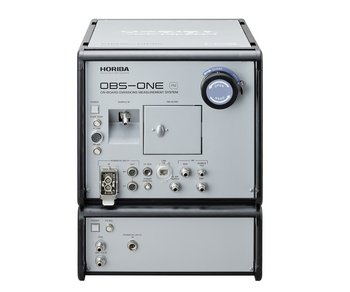
차량 탑재형 배기가스 측정 장치
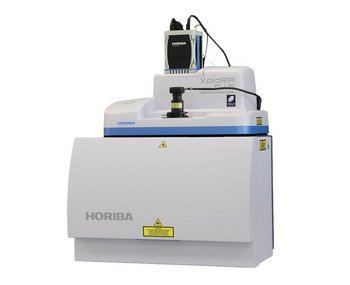
Raman Spectrometer - Confocal Raman Microscope
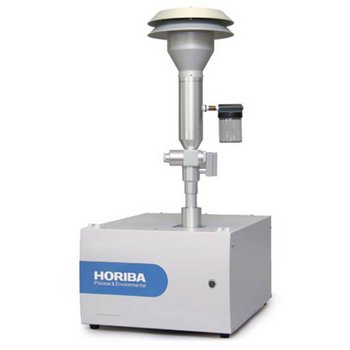
Continuous Particulate Monitor with X-ray Fluorescence
HORIBA제품의 자세한 정보를 원하시면, 아래의 양식에 내용을 입력을 부탁드립니다.