Production and Manufacturing

Production and Manufacturing engineering are linked together in the creation of a new product. HORIBA Ultima Expert solution focuses on the minor and major elements and metals analysis. These applications are common to mining, chemicals manufacture, salt production, wear metals in oil analysis, petrochemical and metallurgical production.

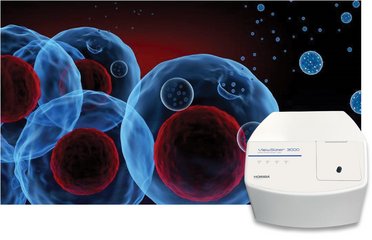
While the particle size analyser contributes significantly to manufacturing science, technology development providing readings from below 1 nanometer to 30 millimetres. Enabling your research to be cost efficient, knowledge intensive, high value and environmentally friendly in production. Let HORIBA assist you with your research lifecycle.

Interest of the Month

The Benefits of Using ICP-OES to Analyze Raw Materials in Cement

This webinar is focused on the use of HORIBA's high-resolutive ICP-OES technique to ensure the determination of major and minor elements in cements.

Find Out More

Applications

open
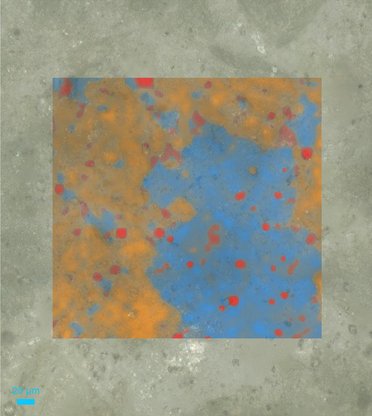
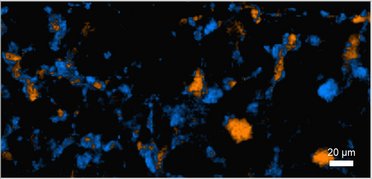
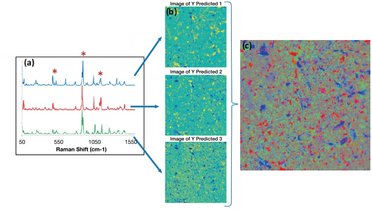
Microplastics analysis in food: assessing human exposure through Raman micro-spectroscopy
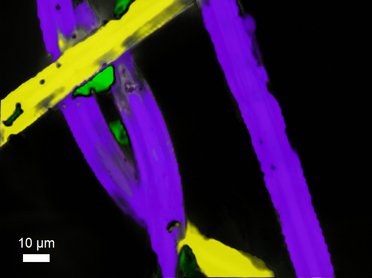
Sugar, a widely consumed dietary ingredient, is present in numerous food products, including desserts and beverages. Its production involves several stages—extraction, purification, crystallization, and drying—each presenting potential contamination risks from plastic-based equipment and packaging. In this work, we demonstrate the typical workflow for microplastics analysis using Raman microspectroscopy.
open
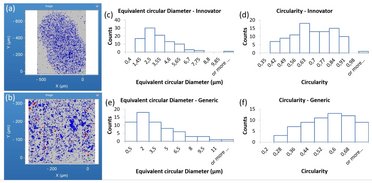
Rapid Particle Size Analysis of Topical Ophthalmic Formulations
Drug particle size and distribution are key critical quality attributes that govern stability, ocular retention via solution thickness, and therapeutic release characteristics. The laser diffraction technique is an elegant method used to establish the fundamentals of ophthalmic formulations prior to pharmacokinetic or clinical studies. To fulfill the requirements set out by the FDA, our recommendation is the Partica LA-960V2 Particle Size Analyzer.
open
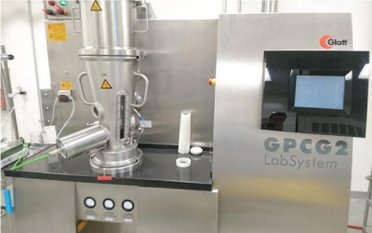
Real-Time Prediction of Polymer-Coated Multiparticulate Dissolution using Process Analytical Technology
Process Analytical Technology, or “PAT” is the term given to analytical instruments developed to measure certain attributes of product within the manufacturing process, eliminating, or substantially minimizing the need for sampling for off-line analysis. This approach offers process measurements in-situ with instant access to data, which facilitates rapid decisions during product development and manufacture.
open
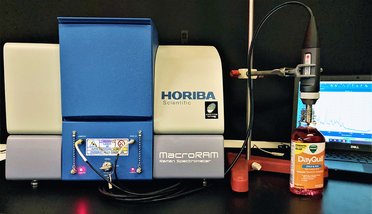
Raman spectra of DayQuil™ and NyQuil™ collected with an immersion probe fiber-coupled to the MacroRAM™ Raman spectrometer, and a picture of the immersion probe setup.
Quantitative Analysis Using Raman Spectroscopy in Pharmaceutical Applications
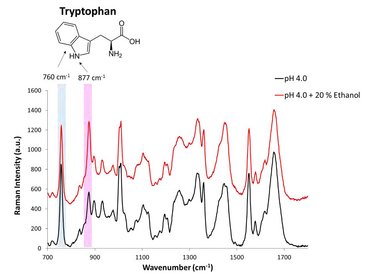
Raman spectroscopy is well known as a powerful analytical method for qualitative chemical analysis. Less well known is that under certain conditions Raman spectroscopy can also be an effective method for quantitative analysis. Here we demonstrate that capability for quantitative analysis under a variety of conditions, involving different solutes in a solution and solution mixtures, and its applications to pharmaceutical analysis such as content uniformity.
open
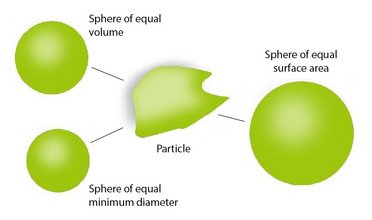
Guide to D-values in Pharmaceutical Particle Characterization
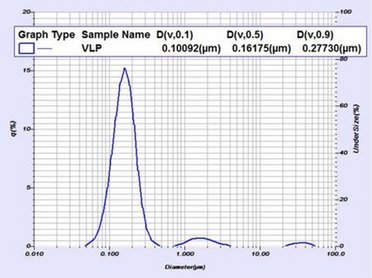
It is necessary to have a particle size quantification system better suited to the specific requirements of the pharmaceutical industry; and D-values, while basic, fit this requirement well.
open
Freeze Dry_Pharma
Vacuum Monitoring in Dryer Equipment for Freeze Dry in Pharmaceuticals and Medicine Manufacturing

Request for Information

Do you have any questions or requests? Use this form to contact our specialists.

* These fields are mandatory.