XRF

Resource Corner

Welcome to the XRF Resource Corner. Use the Media type filter below to find the resources most relevant to you.

open
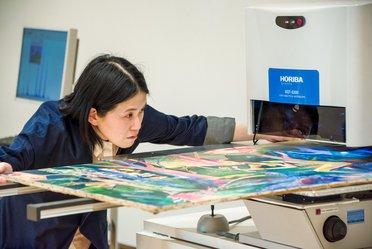
"Tokaido 53rd Nouchi Mizuguchi Choemon" (Kaei 5/1852), by Utagawa Toyokuni
Raman and X-ray fluorescence spectroscopies reveal the mysteries behind ancient Japanese art form
Yuya Shimoi, Shimoi Woodblock Printing Co., Ltd., Kamakura | Art
Yuya Shimoi, an Ukiyo-e reproduction specialist from Shimoi Woodblock Printing Co. in Kamakura, collaborates with HORIBA’s Hakaru LAB in Tokyo to scientifically analyze original Edo period Ukiyo-e pigments. He uses energy-dispersive micro XRF (HORIBA XGT 5200) to non destructively determine elemental compositions of mineral pigments, and confocal Raman microscopy (LabRAM HR Evolution) to identify organic plant based dyes. This dual spectroscopic approach reveals materials like turmeric, safflower, lead-white, and oyster shell powder—unveiling mysteries about traditional paint usage and supporting faithful reproductions.
open
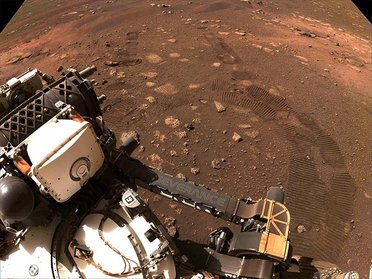
Perseverance Roving on Mars. (Courtesy of NASA/JPL-Caltech)
Perseverance lands to pursue answers to life on Mars using XRF
Dr. Andrew Czaja, University of Cincinnati | Geology
Dr. Andrew Czaja of the University of Cincinnati assists NASA’s Mars 2020 Perseverance mission by selecting promising rock samples from Jezero Crater that may preserve signs of ancient life. On Mars, PIXL (XRF) and SHERLOC (UV Raman) instruments measure elemental and organic signatures in situ. Back on Earth, Czaja plans to analyze returned Martian samples using a HORIBA T64000 Raman spectrometer to detect organic carbon and potential microbial textures. His work aims to identify biosignatures and inform future assessments of past Martian life.

Request for Information

Do you have any questions or requests? Use this form to contact our specialists.

* These fields are mandatory.

Corporate