Credit: Nobel Prize Outreach. Photo: Clément Morin
Susumu Kitagawa’s Nobel Prize–winning work introduced a new class of materials—metal–organic frameworks—that combine coordination chemistry with materials science to create highly adjustable, gas-permeable structures.
Dr. Kitagawa, recipient of the 2025 Nobel Prize in Chemistry, is a Japanese chemist recognized for pioneering the field of porous coordination polymers (PCPs) and metal–organic frameworks (MOFs). He shares the award with Richard Robson (University of Melbourne) and Omar M. Yaghi (UC Berkeley) for their collective development of metal–organic frameworks, crystalline materials with nanometer-sized cavities capable of capturing, storing, and selectively interacting with gases and molecules.
Since 2009, when HORIBA supplied a fluorescence spectrometer to Professor Kitagawa’s laboratory at the Department of Synthetic Chemistry and Biological Chemistry, Graduate School of Engineering, Kyoto University, HORIBA has had the privilege of supporting his research through a diverse array of instruments, such as Raman spectrometers and particle size distribution analyzers.
Profile
Born in 1951 in Kyoto, which is coincidentally where HORIBA’s headquarters is just 10 kilometers away, Kitagawa earned his Ph.D. from Kyoto University in 1979. He advanced rapidly through academic and research roles, ultimately becoming Distinguished Professor at Kyoto University’s Institute for Integrated Cell-Material Sciences (iCeMS), which he co-founded in 2007. His research introduced the concept of "soft porous crystals"—materials whose frameworks flex and respond dynamically to external stimuli such as gas adsorption, temperature, or pressure changes. Dr. Kitagawa has served as Executive Vice-President for Research Promotion at Kyoto University since 2024 and remains a leading voice in the chemistry of coordination spaces.
Nobel-Winning Contribution
The Nobel Committee recognized Dr. Kitagawa’s foundational work in designing and synthesizing MOFs—modular networks where metal ions serve as nodes connected by organic linkers. His key breakthrough, beginning in the early 1990s, was demonstrating that porous coordination polymers could reversibly adsorb and release gases without structural collapse, paving the way for gas storage, carbon capture, catalysis, and drug delivery applications. MOFs are now considered transformative materials for renewable energy, environmental remediation, and molecular storage due to their vast internal surface area and tunable chemistry.
Use of HORIBA Raman and Particle Instruments
Dr. Kitagawa’s collaborative research network has repeatedly utilized HORIBA analytical technologies in landmark studies spanning over a decade:
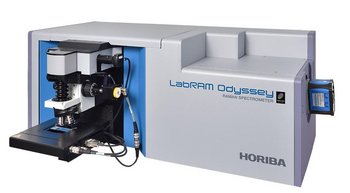
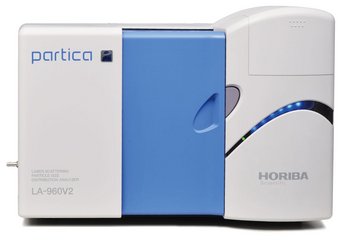
Together, these papers demonstrate the use of HORIBA Raman spectroscopy and particle analysis instrumentation (LabRAM HR800, LabRAM 1A, Partica LA-950, now updated to the LabRAM Odyssey and the LA-960V2) throughout Dr. Kitagawa’s collaborative research trajectory. While the specific physical locations of the instruments vary across multi-institutional platforms, its repeated use substantiates HORIBA technology’s role in the analytic foundation of Dr. Kitagawa’s Nobel-recognized porous materials research.
Confocal Raman & High-Resolution Spectrometer
Laser Scattering Particle Size Distribution Analyzer
Sie haben Fragen oder Wünsche? Nutzen Sie dieses Formular, um mit unseren Spezialisten in Kontakt zu treten.