
PDF
6.52
MB

ADS EVO Brochure
Review the system configuration, features and technical specifications. Download ADS EVO brochure (PDF)

Long vehicle tests require consistent driving inputs. The ADS EVO driving robot follows prescribed drive cycles on a chassis dynamometer, reducing variation in pedal and shift inputs between runs. It also reduces the time test drivers need to spend in the vehicle during extended EV range and energy consumption tests.
ADS EVO is an automatic driving system that acts as a driving robot during laboratory vehicle testing.
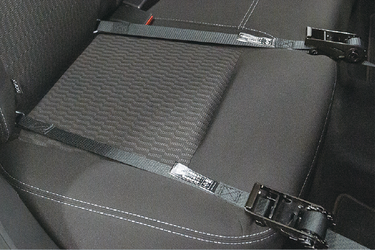
Installed inside the vehicle, its mechanical units operate the driving controls to follow prescribed cycles on a chassis dynamometer. This helps engineers reproduce driving conditions and reduces the time a driver needs to remain in the vehicle during extended tests.
ADS EVO supports emissions and fuel-consumption testing, EV and hybrid development, and performance and system validation, depending on configuration. Modular units, ISOFIX-based mounting and teaching functions help simplify vehicle preparation, while optional actuators and environmental specifications adapt the system to different controls and test conditions.
ADS EVO follows prescribed speed traces by operating the vehicle’s controls in place of a human driver.
Consistent inputs help engineers compare results across development runs, vehicle configurations and calibration changes.
HORIBA’s comparison charts show drive-trace quality and CO2 emissions from five ADS EVO runs and five human-driven runs.
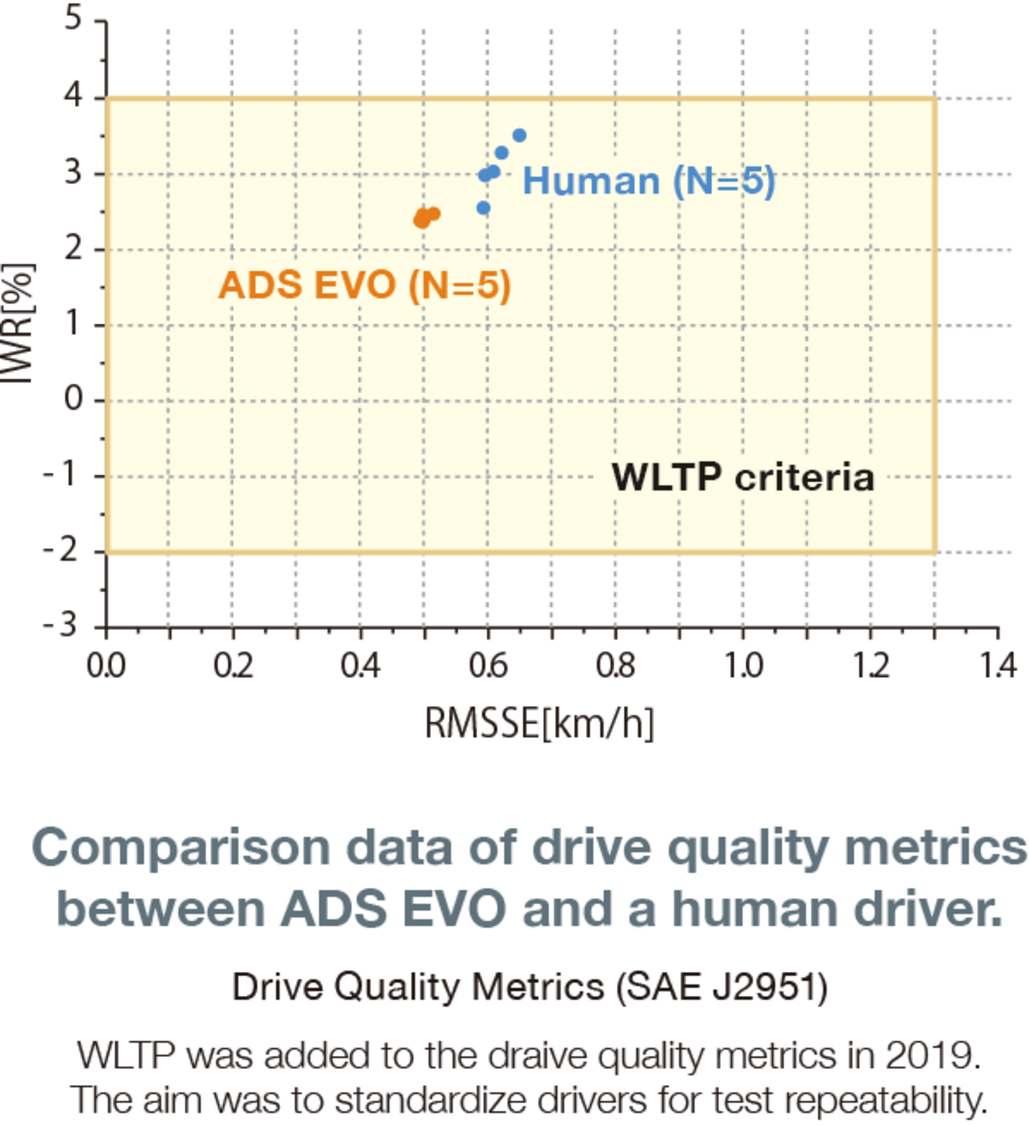
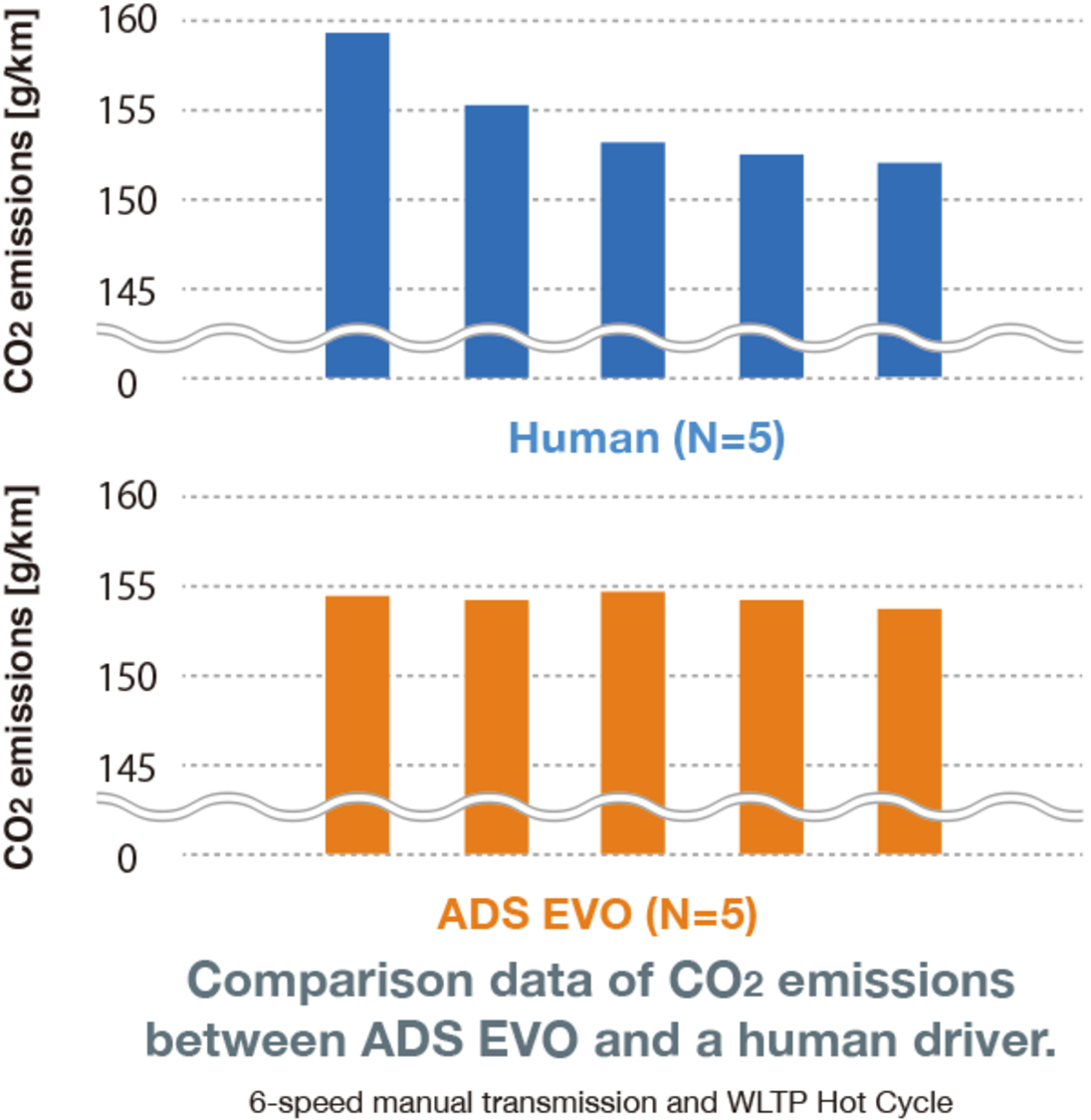
ADS EVO’s modular design lets operators position each mechanical unit individually inside the vehicle. Once the units are installed, operators use the teaching functions to set pedal and shift positions for the vehicle’s controls.
Design Recognition
The ADS EVO automatic driving system has earned international recognition for its design:
Compared with ADS-7000
| Installation time | Mechanical-unit mass |
|---|---|
16.4 → 8 min51% less | 41 → 30 kg27% less |
| Figures describe HORIBA’s ADS-7000 comparison. Actual setup time depends on the vehicle and test configuration. | |
Discuss vehicle compatibility, mounting, and the right configuration for your test cycles.
Configure ADS EVO according to the vehicle’s controls, test procedure and operating environment.
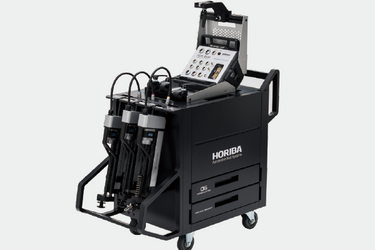
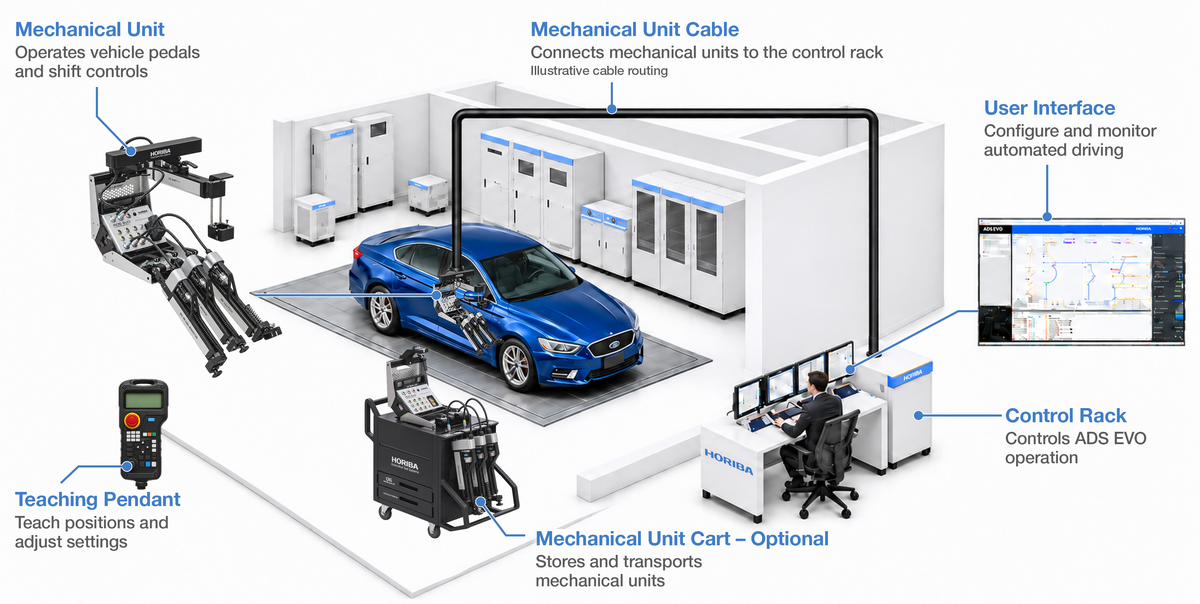
ADS EVO combines vehicle-mounted mechanical units with a control rack, user interface and teaching pendant. A connecting cable links the mechanical units to the control rack.
Illustrated ADS EVO test-cell configuration. Equipment layout and cable routing vary by installation; the mechanical-unit cart is optional.
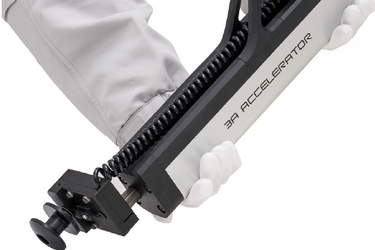
Pedal actuators operate the accelerator, brake and clutch, while shift actuators operate the gear selector according to the vehicle configuration. The modular arrangement supports installation around the controls required for the test program.
| Category | Functions |
|---|---|
| Driving functions | Standard drive traces; automatic/manual pedal and shift adjustment; learning, warm-up, constant-speed and manual modes |
| Optional driving function | Performance test mode |
| Applicable vehicles | Manual transmission (MT), automatic transmission (AT) and continuously variable transmission (CVT); left- and right-hand drive |
| Optional vehicle applicability | Hybrid/EV |
| Shift layouts | Floor shift; optional instrument-panel and column shift |
| Measurement | Dynamometer speed and engine speed |
| External operation input | Drive start/stop |
| External condition inputs | Dynamometer ready/error; blower ON |
| External operation output | Synchronization signal with a data-processing device |
| Optional host communication | AK-compliant HOST communication |
| Parameter | Specification |
|---|---|
| Total mass | 30 kg, standard specification |
| Individual unit mass | 3–7 kg |
| Standard operating environment | −10 to 45 °C; 30–90% RH, no condensation |
| Optional environmental specification | −40 to 80 °C; 30–90% RH, no condensation |
| Actuator | Stroke length | Rated output | Maximum operating speed |
|---|---|---|---|
| Accelerator | 150 mm | 160 N | 0.61 m/s |
| Brake | 200 mm | 241 N | 0.61 m/s |
| Clutch | 200 mm | 322 N | 0.78 m/s |
| Shift, X axis | 190 mm | 193 N | 0.77 m/s |
| Shift, Y axis | 240 mm | 193 N | 0.77 m/s |
| Starter, push | — | 16 N | — |
| Starter, turn — optional | — | 0.97 N·m | — |
| Up to five additional push-actuator channels are available as an option to operate other vehicle controls, such as switching air conditioning during a test cycle. | |||
| Parameter | Specification |
|---|---|
| Dimensions, W × D × H | 578 × 929 × 1000 mm |
| Operating environment | 5 to 40 °C; 20–80% RH, no condensation |
| Power supply: 200–240 V configuration | Single-phase AC 200–240 V ±10%, maximum 250 V; 50/60 Hz; 3.0 kVA |
| Power supply: 100–120 V configuration | Single-phase AC 100–120 V ±10%; 50/60 Hz; 3.0 kVA |
| Teaching pendant | Used to teach shift positions and configure settings |
| Mechanical-unit cable | Connects the mechanical units and control rack |
| Mechanical-unit cart | Optional |
| Optional items are identified above. Confirm the required vehicle compatibility, options and power-supply configuration with HORIBA. Specifications and appearance are subject to change. | |
Driving robots help labs follow the same speed trace across long EV range and energy consumption tests.
Taiwan’s Automotive Research & Testing Center (ARTC) uses ADS EVO to simplify setup, automate EV test cycles, and reduce driver fatigue.
See how UN GTR No. 22 evaluates how much usable battery energy and driving range EVs retain as they age.
Mechanical units installed inside the vehicle operate its driving controls to follow a prescribed speed trace. Supported pedal, shift and additional control functions depend on the vehicle and system configuration.
Yes, with the optional Hybrid/EV configuration. ADS EVO supports repeatable driving inputs during extended cycles and reduces the time a driver needs to remain in the vehicle. Test duration depends on the vehicle and procedure.
The optional environmental specification allows the mechanical units to operate from −40 to 80 °C. The control rack is rated for 5 to 40 °C and must be located accordingly. Humidity and non-condensation limits also apply.
Fill out the request for information form below to speak to an expert about your vehicle controls, test cycles and ADS EVO configuration.
Tiene alguna pregunta o solicitud? Utilice este formulario para ponerse en contacto con nuestros especialistas.