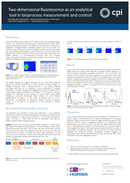

Fluorescence spectroscopy is widely used in various industries, including life sciences. Two-dimensional (2D) fluorescence excitation-emission matrix (EEM) spectroscopy has been utilized for over 30 years to characterize or “fingerprint” biological samples. Historically, data acquisition was slow and required extensive corrections. Advances in Charge Coupled Device (CCD) technology and improved data correction methodologies, such as the Inner Filter Effect (IFE) adjustment, have renewed interest in 2D fluorescence spectroscopy. In the Pharmaceutical/Biopharma industry, this renewed interest includes peptide drugs, monoclonal antibodies (mABs), antibody-drug conjugates, protein denaturing and aggregation.
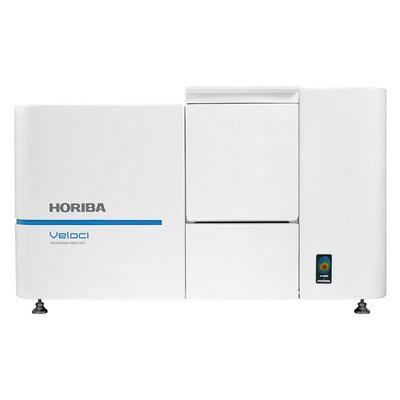
The HORIBA Veloci BioPharma Analyzer, equipped with innovative Absorbance-Transmission fluorescence Excitation and Emission Matrix (A-TEEM) acquisition technology, offers rapid and accurate spectral collection. Initially developed for the water treatment industry, the Veloci BioPharma Analyzer has since expanded into other applications, including mAB discrimination/counterfeiting, peptide aggregation, final release testing, cell culture media analysis, co-form blending, and AAV analysis. This study explores the use of 2D fluorescence spectroscopy to characterize six monoclonal antibody (mAb) purification samples, demonstrating its potential as a Process Analytical Technology (PAT) tool in biologics production.