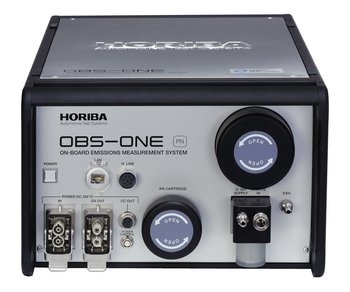
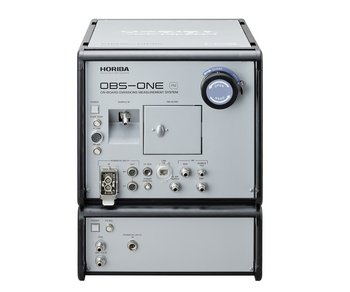
HORIBA has a variety of Portable Emission Measurement Systems (PEMS testing) to meet all validations of real driving emission testing.

PEMS Testing Solutions for Real-World Emissions

Portable emissions measurement system (PEMS) for vehicle and engine testing

PEMS testing is the measurement of exhaust emissions using portable emissions measurement systems (PEMS) installed on a vehicle or machine. These systems measure gases and/or particles during operation on the road, in the field, or in the laboratory. By combining emissions measurements with exhaust-flow and operating data, PEMS testing shows how emissions change with driving conditions, engine load, and the surrounding environment.

HORIBA helps engineers and OEMs evaluate emissions beyond standard laboratory test cycles, investigate engine and aftertreatment performance, and support regulatory testing. Our configurable solutions support real driving emissions (RDE), real-world emissions (RWE) evaluation, and in-use testing for light-duty vehicles, heavy-duty vehicles, and non-road mobile machinery (NRMM), helping development teams identify emissions challenges and assess improvements under representative operating conditions.

What PEMS Testing Measures

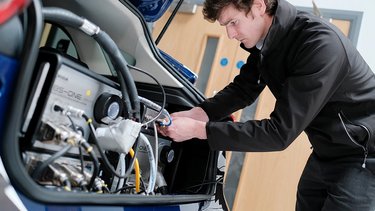
A PEMS installation brings emissions measurement equipment on board the vehicle or machine. Depending on the configuration, it can measure gaseous emissions, particle number, or particle mass, alongside exhaust-flow and supporting operating data.

Combining these signals allows engineers to relate emissions to changes in speed, load, route, and environmental conditions. The components measured and the result calculations depend on the test objective and applicable procedure.

MeasurementPurpose
Gaseous emissionsEvaluate components such as CO, CO2, NOx, and hydrocarbons; selected systems extend measurement to NH3, N2O, HCHO, and CH4.
Particle emissionsAssess particle number or particle mass with the appropriate measurement module.
Exhaust flowCombine flow and concentration data to calculate gaseous mass emissions.
Vehicle, engine, & location dataConnect emissions with operating conditions and the test route.
Environmental conditionsRecord temperature, pressure, and humidity to support evaluation of test conditions.

PEMS testing complements laboratory exhaust emissions testing by extending measurement into actual vehicle and machinery operation.

Three Challenges in PEMS Testing

Measurement Under Changing Conditions

Temperature, altitude, vibration, and rapidly changing engine operation make real-world testing particularly demanding. Measurement systems must perform reliably within their specified operating conditions while capturing changes in emissions.

Key considerations include:

  • Analyzer response time and measurement stability
  • Sample-line temperature and effective condensation prevention
  • Calibration, leak checks, and drift verification
  • Exhaust-flow measurement during transient operation
Installation Across Different Applications

Passenger cars, trucks, and off-highway machinery present different installation constraints. Equipment location, mounting, power supply, and sampling connections must suit the application without compromising safety or affecting operation.

Key considerations include:

  • Available space, equipment mass, and mounting points
  • Battery capacity and test duration
  • Sampling-line routing and exhaust connections
  • Protection from weather, vibration, and mechanical shock
Data Alignment and Test Validity

Useful emissions results require correctly aligned measurement and operating data. Signal delays, data gaps, and invalid test conditions must be identified to connect emissions with vehicle or engine activity and evaluate results against regulatory quality criteria.

Key considerations include:

  • Synchronization of emissions, exhaust-flow, and operating signals
  • Checks for missing or invalid data
  • Evaluation of route, duty cycle, and ambient conditions
  • Appropriate calculations and traceable reporting

PEMS Testing Applications

Light-Duty Vehicles

LDV using an OBS-ONE for PEMS Testing

Measure on-road emissions from passenger cars and light commercial vehicles across varying driving conditions. PEMS supports RDE testing and development investigations into emissions behavior beyond the chassis dynamometer.


LDV Engine Testing

Heavy-Duty Vehicles

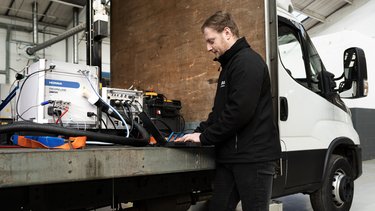
PEMS Testing for HDV using MEXAcube

Evaluate emissions from trucks and buses during representative operation. PEMS testing helps engineers investigate the effects of load, duty cycle, and aftertreatment performance, compare emissions across operating conditions, and support applicable in-use testing programs.


HDV Engine Testing

Non-Road Mobile Machinery

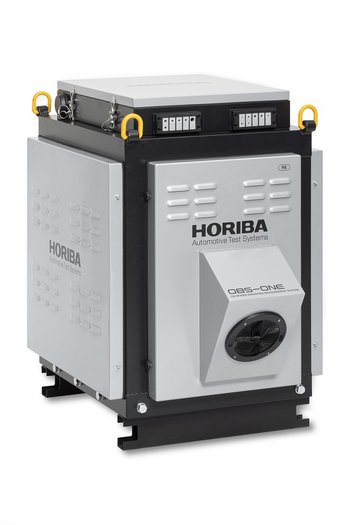
PEMS Testing using a OBS ONE enclosed in the OBS ONE RE

Measure engine emissions while machinery performs its working tasks. Field testing helps characterize operation that can be difficult to reproduce in a laboratory. System configuration and evaluation procedures should match the engine category and testing objective.

NRMM Engine Testing

PEMS Testing Systems and Software

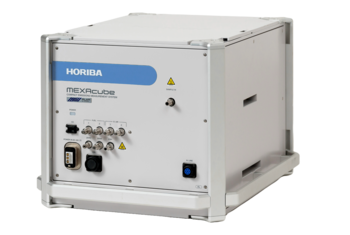
MEXAcube
MEXAcube

Compact Emissions Measurement System

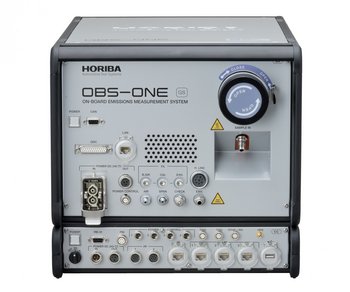
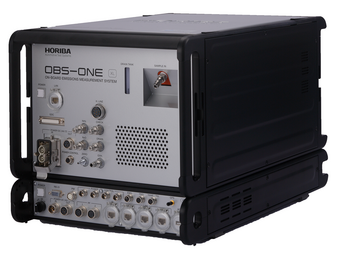
OBS-ONE GS Unit
OBS-ONE GS Unit

On-board Emissions Measurement System

OBS-ONE-XL (IRLAM)
OBS-ONE-XL (IRLAM)

On-board NH3/N2O Measurement System for real-world driving

OBS-ONE PN Unit
OBS-ONE PN Unit

On-board Emissions Measurement System

OBS-ONE SPN10 Unit
OBS-ONE SPN10 Unit

On-board SPN10 measurement for real-world

OBS-ONE PM unit
OBS-ONE PM unit

On-board Emissions Measurement System

OBS-ONE RE
OBS-ONE RE

Protection Case for Testing Heavy-Duty and Non-Road Mobile Machinery

STARS Enterprise
STARS Enterprise

Software for Laboratory Management

STARS VETS
STARS VETS

Test Automation Software for Emission Testing

Connecting Road and Laboratory Testing

On the road PEMS Testing using OBS ONE On board emission analyzer

Real-world measurement can reveal emissions behavior that needs further investigation under repeatable conditions. Combining emissions results with drive-recording data helps engineers identify relevant operating events for laboratory development.

HORIBA’s Intelligent Lab supports road-to-rig development approaches, including torque matching and empirical digital twins. These approaches help teams investigate real-world behavior, evaluate calibration changes, and compare results in a controlled environment.

Regulations and Technical Resources

PEMS testing requirements differ by region, vehicle or engine category, and testing program. The resources below explain portable emissions measurement and provide application-specific regulations and guidance. Use the applicable requirements and amendments when planning a test.

Country / RegionApplicationRegulation or Technical Resource
InternationalUnderstanding PEMSEuropean Commission overview of PEMS explains portable emissions measurement and its role in real-world in-use testing.
EuropeLight-duty vehicle RDE testingEuropean Commission on-road PEMS testing guidance provides practical recommendations for preparing, conducting, and evaluating tests. Published in 2018, it should be used alongside current regulations.
European UnionLight- and heavy-duty vehicle emissionsEuro 7 Regulation (EU) 2024/1257 establishes the emissions framework. Detailed testing procedures are specified in the applicable implementing requirements.
United StatesEngine field testing40 CFR Part 1065, Subpart J covers field testing using PEMS, including equipment and testing procedures. Applicability depends on the engine category and associated emissions standards.
ChinaLight-duty vehicle RDE testingChina 6: GB 18352.6–2016 specifies emissions limits and measurement methods, including RDE testing. Refer to applicable amendments.
ChinaHeavy-duty vehicle PEMS testingChina VI: GB 17691–2018 includes on-road PEMS procedures and in-use conformity requirements for applicable heavy-duty vehicles. Refer to applicable amendments.
ChinaNon-road mobile machineryHJ 1014–2020 supplements China Stage IV non-road diesel emissions requirements, including PEMS measurement during machinery operation.
IndiaLight-duty vehicle RDE testingBS VI RDE requirements: G.S.R. 226(E), 2023 specifies real-world emissions measurement using PEMS for applicable vehicles, with procedures defined in AIS-137 and its amendments.
JapanApplicable diesel vehicle on-road testingMLIT Annex 119 specifies on-road emissions requirements for applicable diesel vehicles, referencing UN R168 test procedures with Japan-specific provisions.
South KoreaApplicable light-duty diesel vehicle RDE testingVehicle certification and inspection regulations include actual-road emissions measurement procedures for applicable diesel vehicles. See Annex 4-3 and applicable amendments.

HORIBA’s PEMS portfolio supports a range of regional testing applications. The appropriate analyzer, particle measurement module, and supporting equipment depend on the vehicle or engine category, measured components, and applicable test procedure. If you are unsure which configuration suits your application, contact us using the form below—we can help identify a suitable measurement solution.

MEXAcube VCA Approval

MEXAcube has received UK Vehicle Certification Agency approval as an alternative analyzer under UN Regulation No. 168 for certification tests conducted by VCA. Read the approval announcement.

Frequently Asked Questions

PEMS testing measures emissions during actual vehicle or machinery operation, where speed, load, and environmental conditions vary. Laboratory testing provides controlled conditions for repeatable tests and comparisons. The methods complement each other: real-world testing evaluates operation on the road or in the field, while laboratory testing supports controlled investigation. Portable systems can also be used in laboratories when the applicable requirements are met.

For RDE testing, PEMS equipment is installed on a vehicle to record emissions during an on-road trip. Emissions measurements are combined with exhaust-flow and supporting data, such as speed, location, and environmental conditions. The results are evaluated using the applicable procedure, including checks on test conditions and data quality. RDE is a defined testing procedure; PEMS is the measurement equipment used to carry it out.

Yes. PEMS can measure emissions from heavy-duty vehicles and non-road mobile machinery during operation. The equipment configuration, measured components, installation, and evaluation methods must suit the application. On-road routes and off-highway working cycles present different conditions, so the relevant testing requirements should guide system selection.

Discuss Your PEMS Testing Requirements

Planning an RDE test, evaluating in-use emissions, or investigating a development challenge? Share your vehicle or machinery type, target emissions components, testing conditions, and data requirements using the form below. HORIBA can help identify a suitable measurement configuration for your application.

Back to Top


Запросить информацию

У вас есть вопросы или пожелания? Используйте эту форму, чтобы связаться с нашими специалистами.

* Эти поля обязательны для заполнения.

Corporate