Particle Measurement

Technology to measure particles (diameter, number, molecular weight, and components)

There are many measurement principles for measuring particle size distribution, ranging from simple methods such as sieving or microscopy to more complex methods that use light, such as laser diffraction/scattering, dynamic light scattering, centrifugal sedimentation, and particle trajectory analysis.

Static Light Scattering (SLS) / Laser Diffraction Particle Size Distribution Analysis
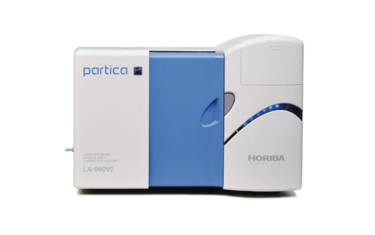
The laser diffraction/scattering method utilizes the phenomenon that the scattering angle dependence of scattered light intensity (scattering pattern) changes depending on the particle size.
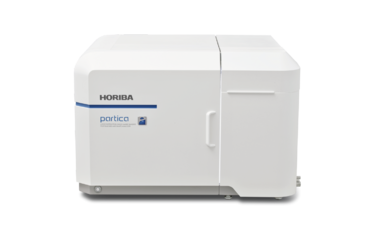
Dynamic Light Scattering (DLS) Particle Size Distribution Analysis

Brownian motion moves quickly when particles are small and slowly when they are large. When these particles are irradiated with laser light, the intensity of the scattered light fluctuates due to this Brownian motion. Therefore, a rapidly changing fluctuation signal is obtained from small particles, and a slowly changing fluctuation signal is obtained from large particles. Dynamic light scattering is the method of calculating particle size by analyzing these fluctuation signals.

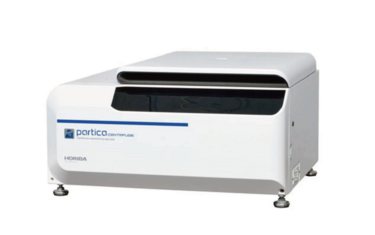
Centrifugal Sedimentation

When particles settle, they are subjected to resistance and buoyancy, with larger particles settling faster and smaller particles settling more slowly. This phenomenon is used to separate particles by size for analysis. The centrifugal sedimentation method is a method for determining the particle size from the speed of particles moving by centrifugal force (settling velocity).

Zeta Potential: Layout, Calculating, Analysis

Zeta potential is the charge on a particle at the shear plane. This value of surface charge is useful for understanding and predicting interactions between particles in suspension. Manipulating zeta potential is a method of enhancing suspension stability for formulation work, or speeding particle flocculation for water treatment for example. Measuring zeta potential by electrophoretic light scattering allows one to assess the effects of various strategies for manipulating zeta potential. 

Nanoparticle Tracking Analysis

Plurality of light beams at different spectral wavebands is used to create one light sheet for illuminating nanoparticles in a liquid sample. A detector is configured to capture images of light scattered by nanoparticles. Images are recorded over time to form videos. The videos are analyzed to compute Brownian diffusion coefficient for each tracked nanoparticle and, finally, calculate their diameter. Combined data reveal nanoparticle distribution across predetermined set of size bins.

Image Analysis of Particles

Particle size and shape can be determined with photos of the particles. Since a typical particle sample consists of a range of size and shapes, modern analysis is done with a computer that automatically analyzes particle images to rapidly determine size and shape. Data from a large number of particles can then be summarized into distributions that describe the sample.

▶ Technology

Corporate