HORIBA Scientific and Analytical Instruments
Explore HORIBA
Corporate
  • HORIBA Group
Markets
  • Mobility
  • Energy and Environment
  • Life Science
  • Healthcare
  • Materials
  • Semiconductor
Countries/Regions
Americas
  • Brazil / Brasil
  • United States / United States
Asia
  • China / 中国
  • India / India
  • Japan / 日本
  • Korea / 한국
  • Singapore / Singapore
  • Taiwan / 台灣
  • Thailand / ประเทศไทย
  • Vietnam / Việt Nam
Europe
  • Austria / Österreich
  • Czech Republic / Česko
  • France / France
  • Germany / Deutschland
  • Poland / Polska
  • Russia / Россия
  • Spain / España
  • Türkiye / Türkiye
  • United Kingdom / United Kingdom
Global
  • International
Search
HORIBA Scientific and Analytical Instruments

Contact us

Find us

  • A giant leap in fuel cell engineering
  • The Alchemist’s Factory – A Particle Characterization Story
  • Astrobiologist/Geobiologist uses Earth as a lab to examine possibility of extraterrestrial life
  • Carbon black lightens your wallet
  • Cryogenics and Multimodal Microspectroscopy — Filtering out the Noise
  • Designing a new breed of nuclear reactors
  • Detecting early signs of cancer with Raman microscopy
  • Developing in-situ, online monitoring tools for radioactive materials using fluorescence spectroscopy
  • Discovering the origins of life
  • Drilling deep to discover life
  • Duetta: fluorescence and absorbance - in the blink of an eye
  • Exploring biogeochemical cycles, speciation, and primary productivity in the ocean using fluorescence spectroscopy
  • Exposing Counterfeit Drugs
  • Finding ancient life through minerals on earth and beyond
  • Fluorescence sensors contribute to biological and display technologies
  • Fluorescence Spectroscopy: An Alternative to Chromatography in Enhancing the Flavor of Foods
  • Fluorescent carbon nanodots: making foldable displays
  • The Grape Identity Crisis and How Spectroscopy Separated History’s Most Confusing Cultivars
  • Health benefits of olive oils get boost
  • How do thin films help NASA uncover the secrets to the universe?
  • How fusion breakthroughs will lead to clean renewable energy
  • How to measure temperature with light
  • How we customized a spectroscopy solution in the low UV range
  • Investigating missing carbon in Australian caves
  • Ionic Liquids as a Breakthrough for Resource Recycling Issues
  • Killing cancer with lanthanides and air
  • Launch of Mars 2020 to explore Mars using XRF
  • Leading the World with All-Solid-State Batteries
  • Low cost solar power on the horizon
  • Man of science follows business path
  • Making better gas turbines
  • Making carbon nanotubes more accessible
  • Making more efficient solar energy
  • Materials characterization crucial in Silicon Valley systems
  • Micro-XRF uncovers secrets to Van Gogh’s brilliance
  • Microplastics: a big problem for the environment
  • Mishaps and ski trip lead to laser revolution
  • Museum’s mineral studies improving life
  • MXenes are revolutionizing nanotechnology with the help of Raman Spectroscopy
  • Nano-scale research and technology leads to advanced materials development
  • Optimizing Wastewater Treatment in South Africa: A-TEEM Fluorescence Spectroscopy for BOD Analysis Amidst Economic Pressures
  • Photodynamic therapy – A non-toxic way to fight cancer
  • Photovoltaics and photoluminescence
  • Raman gets the goods on counterfeiters
  • Researcher developing (non) linear nano-optical methods to characterize heterogenous interfaces
  • Researcher traces path of potentially toxic nanoparticles
  • Should you be worried about nanotoxicity?
  • The ARC Program: Forging Appalachia's Future Workforce
  • The best nanoparticle
  • The mystery of gemstone colors has finally been revealed
  • The science of food
  • Thin film analysis reveals secrets to renewable energy
  • Tracing toxic heavy metals in organisms using X-ray fluorescence (XRF)
  • Understanding two-dimensional material interfaces with AFM Raman/TERS will transform computing
  • Unlocking the Secrets of the Deep Ocean’s Carbon Engine
  • Using AFM-Raman to understand defects in two-dimensional semiconductor materials
  • Using low temperatures to probe 2D materials for device applications
  • Using renewable and alternative sources for value-added products production
  • Versatile Aqualog saves chemical costs at treatment plants
  • Weeding out Over-the-Counter Frauds
  • Welcome to the dawn of a paradigm shift in technology
  1. Home
  2. Scientific and Analytical Instruments
  3. Resources
  4. Microplastics: a big problem for the environment

Microplastics: a big problem for the environment

Microplastics are turning up everywhere. Microplastics in water, microplastics in the ocean.
National Oceanic and Atmospheric Administration (NOAA)

That fancy iced coffee you downed this morning might give you more than a jolt. A common accessory - the plastic straw -  is contributing to a type of contaminant affecting our ecosystems, not to mention the human food chain.

The pollutants are called microplastics, tiny bits of plastic that break down from larger pieces and are ingested by sea life. And eventually by humans. Microbeads are also part of the problem. These are extremely small pieces of plastic, used especially in cleansing products as exfoliating agents. The detection of microplastics has become an important research goal.

But why straws? It’s small and often bypasses recycling automation. If it doesn’t go to landfill, it can end up in our oceans and lakes.

While some cities have taken to banning straws, others have considered banning other single-use plastic products, such as plastic water bottles, cutlery, and bags. It’s the life cycle of these materials that can make them harmful.

According to various estimates, by 2016, microplastics detection efforts reported there were between 15 and 51 trillion pieces of microplastics in the world’s oceans.

About one million plastic water bottles were bought every minute across the globe in 2017, according to Forbes Magazine. Yet only nine percent was recycled.

The rest end up in landfills, or on our beaches and in our parks. Some of those materials can wash away into our oceans, lakes, or rivers.

What are microplastics?

Sand samples containing microplastics are prepared for analysis

When plastics are subjected to the sun, air and sea, the larger pieces fragment or degrade into smaller pieces. The smallest pieces, with a size of smaller than 5 millimeters, are called microplastics. Some are microscopic and pass through filters meant to remove impurities from our drinking water.

Researchers ran tests on 259 bottles of water from 11 brands bought in nine countries, according to Time Magazine. More than 90 percent of the examined bottles contained microplastics.

Different plastic types have different toxicities, according to Ashok Deshpande, Ph.D., a research chemist with the Northeast Fisheries Science Center of National Oceanic and Atmospheric Administration (NOAA) in Sandy Hook, New Jersey.

And different polymers accumulate various contaminants to different extents. Plastics also accumulate bacteria, viruses, chemicals and harmful algae. 

“The plastics act as a conduit for the transport of the algae and colonizing bacteria,” Deshpande said.

Microplastics can be mistaken for prey by fish. Fish think it’s their food – the aquatic life can’t distinguish between microplastics and food. The microplastics affect the fish when they are ingesting it, mostly choking up the fish’s digestive system. The fish thinks it’s not hungry. So it starves to death. Since plastics are the conduits for chemical contamination, the fish can be subject to all those agents too.

And people, of course, eat fish.

Northeast Fisheries Science Center of National Oceanic and Atmospheric Administration (NOAA) poster
Northeast Fisheries Science Center of National Oceanic and Atmospheric Administration poster

According to a study Deshpande was involved in 15 years ago, the contaminants in the fish off Sandy Hook tested within U.S. Food and Drug Administration’s acceptable levels. But that was 15 years ago.

“We are just beginning to do the research on the fish,” he said. “Different studies have shown how the plastics affect the fish and shellfish. These are ongoing and there are no conclusions now. But if they eat microplastics, it’s definitely not good for them.“

The World Economic Forum warns that there will be more plastics in the ocean by 2050 than fish.

The science of microplastics

Ashok Despande Ph.D.
Ashok Despande Ph.D., a research chemist with the Northeast Fisheries Science Center of National Oceanic and Atmospheric Administration (NOAA) in Sandy Hook, New Jersey

To characterize the microplastics found in fish, multiple technologies can be applied such as gas chromatography (GC) pyrolysis, mass spectrometry, infrared (IR) spectroscopy, or Raman spectroscopy, according to Deshpande. Raman microscopy combines Raman spectroscopy and optical microscopy, and is one of the most efficient and effective ways to identify polymers.  It allows the researcher to analyze microscopic pieces of plastics by focusing the laser beam to a very small spot, and obtaining Raman spectra from it.  Raman spectra are characteristic to each polymer, and can be identified by searching the library of known polymer spectra.

Chelsea Rochman, Ph.D., Professor at University of Toronto’s Department of Ecology and Evolutionary Biology uses a Raman microscope to study microplastics. She said she’s tried to understand how much is there, what it is, and what size it is.  There are so many different types of plastics out there, she pointed out, that analytical tools (like Raman) are necessary to characterize these materials, which helps gauge their impact on animals.

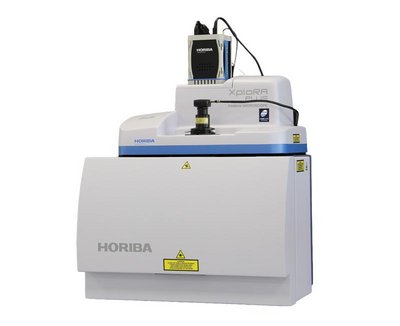
Her group is pursuing faster and more accurate ways to analyze microplastic samples. The goal is to increase the efficiency of the analytical methods to answer relevant questions more effectively.  It’s important to identify the type of polymers (or microplastics) because it can lead to identifying the source of the pollutants to the environment.  This will, in turn, help to reduce contamination in the environment via social campaigns, consumer movements or regulatory actions.  Rochman’s group uses HORIBA Scientific’s XploRA™ PLUS Raman microscope, and is developing sample characterization methods that are fast, easy, robust and accurate.

Deshpande said one of the next challenges is to identify the small fibers in shellfish and other small organisms.  He said shellfish “ingest microplastics, and fish eat thousands of them, as well as zooplankton. Imagine how much fish are ingesting.  The bigger fish have double exposure because they can eat smaller sea life and bigger pieces of plastics.”

Microplastics contaminate salt

Microplastics in table salt
A 2018 study estimated that the average adult consumes approximately 2,000 microplastics per year through salt.

Researchers found microplastics in 90 percent of the table salt brands sampled worldwide, according to a 2018 report by National Geographic. The study was part of an effort to look at the geographical spread of microplastics in table salt, and their correlation to where researchers found plastic pollution in the environment.

The findings of the study suggest that human ingestion of microplastics via marine products is strongly related to emissions in a given region.

Different brands showed a dramatic variation in the density of microplastics among different brands. However, the density of those from Asian brands were especially high, the study found. The journal cited Asia as a hot spot for plastic pollution.

Microplastics levels were highest in sea salt, followed by lake salt and then rock salt. That provided another indicator of the geographic density of plastic pollution.

The study replicated earlier ones done in the United States, Spain, China, and by a group from France, Britain, and Malaysia.

The 2018 study estimated that the average adult consumes approximately 2,000 microplastics per year through salt. The health effects of that phenomenon was unclear at the time of the research.

Rochman warns the mismanagement of our waste means it has come back to haunt us in our seafood and drinking water.  We may not know the exact impact it has on human health, but it is a fact that our trash is coming back into our food, and we should manage it properly.

It is clear there is so much yet to learn about microplastics, and researchers agree that we must and as soon as possible.

Microplastics and human consumption

In 2019, researchers published a microplastics study in the Environmental Science & Technology journal from the American Chemistry Society. It estimated how many microplastic particles are entering our body through our food supply.

The team reviewed 26 published studies that looked at microplastic quantities in fish, shellfish, added sugars, salts, alcohol, tap or bottled water, and air. They calculated the food and drink intake using recommendations from the 2015-2020 Dietary Guidelines for Americans.

The researchers estimated we consume microplastics in the range of 39,000 to 52,000 particles per year. When they added inhalation to this estimate, it increased to 74,000 to 121,000 microplastic particles per year. The results varied depending on sex and age.

The researchers encouraged more studies on the topic.

Microplastics in rainwater

Researchers with the U.S. Geological Survey in 2019 found that about 90 percent of rainwater samples collected from the Denver-Boulder area of Colorado contained microplastics.

The researchers weren’t sure how the microplastics ended up in the rainwater.

They found the microplastics in samples from six sites in the areas.

Fibers were found in a variety of colors. The most common colors were blue, followed by red, silver, purple, green, and yellow.

Here’s what the experts are saying

In  Microplastics explained  part I, Dr. Chelsea Rochman breaks down what we know, what we don’t, and what we want to know. Alterra Sanchez describes the big risks and factors involved. Part II gives us a look into the Rochman Lab and the work being done there. Alterra Sanchez tells us the importance of her research as well. 

Click to watch both videos

More information on microplastics

Microplastics a Big Problem For The Environment

Watch this video for more information on microplastics and the environment.

Read more about microplastics and microplastics analysis.

Related Products
XploRA™ PLUS

XploRA™ PLUS

MicroRaman Spectrometer - Confocal Raman Microscope

Show More
ParticleFinder

ParticleFinder

Automated Particle Measurement, Identification and Classification using Raman Analysis

Show More
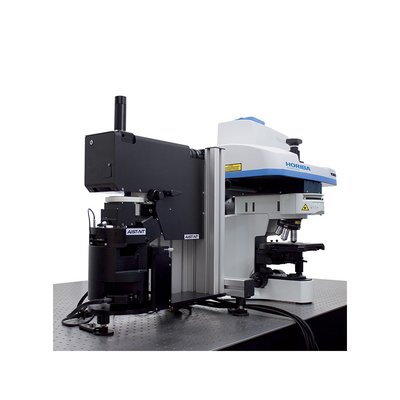
XploRA Nano

XploRA Nano

AFM-Raman for Physical and Chemical imaging

Show More
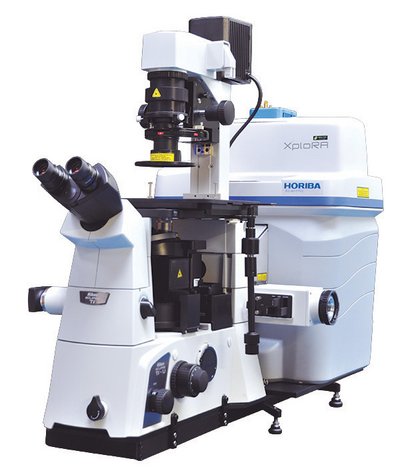
XploRA INV

XploRA INV

Inverted Raman Microscope

Show More

Discover 50 years of Raman innovation by HORIBA. Click here to read more about Raman Spectroscopy history and HORIBA's contribution.

Follow Us 


Request for Information

Do you have any questions or requests? Use this form to contact our specialists.

* These fields are mandatory.

Products

  • All Products (A-Z)
  • Mobility
  • Energy and Environment
  • Life Science
  • Healthcare
  • Materials
  • Semiconductor

Applications

  • Drinking Water Utilities
  • Automotive Manufacturing
  • Semiconductor Manufacturing Process
  • Research and Testing Laboratories

Technology

  • Glow Discharge Spectroscopy
  • Pressure-based Flowmetry
  • Quadrupole Mass Spectrometry
  • Raman Spectroscopy

Service

  • On-Site Support
  • Spare Parts and Consumables

Company

  • News
  • Events
  • Career
  • History
  • Corporate Culture

Contact

  • Career Contact
  • Contact Form
  • Worldwide Locations
  • Investor Relations Contact

Terms and Conditions Privacy Notice Cookies HORIBA Group Social Media

© Copyright 2026 - All Rights Reserved