
The creation of innovative cosmetic products, with demonstrated perceived effects, relies on deep scientific knowledge of biological matrices (skin, hair, teeth…), development of efficient and safe active ingredients, optimized formulations, and an instrumental evaluation of the performance. From particle size characterization of emulsions, pigments or fillers, through the molecular analysis of hair chemistry, surface functionalization with smart coatings or tribology analysis, to the assessment of formulation composition and stability, spreading on substrates or interaction with packaging, to contamination or nanotoxicity studies, to the ex-vivo or in-vivo objectivation of endogenous skin markers, topical actives penetration, and the impact of environmental factors (UV exposure, blue light, pollution) – HORIBA’s instruments can address most of those applications!

Applications
Characterization of Cosmetic Products
The Science of Beauty


How to evaluate the impact of skincare and haircare products?
Evaluating the impact of skincare products on the skin is crucial for assessing their effectiveness, ensuring safety, and enabling targeted delivery. This evaluation requires a good understanding of skin structure, and contributes to the overall well-being of individuals. In addition to the skin, there is a need for a deeper understanding of the structural and compositional changes that occur in hair under different circumstances. Prior to the evaluation step, the properties of raw materials should be carefully characterized, and their formulation optimized to ensure that they meet the highest standards of safety and quality.
HORIBA’s instruments can help with all these aspects to improve the performance of your cosmetic products.
In-vivo and ex-vivo evaluation
(Raman, Fluorescence)
- Endogenous markers:
Water, lipids, proteins, natural moisturizing factors, tryptophan, porphyrin, collagen, melanin - Cosmetic devices: Microneedles, patches, blue light
- Penetration of active molecules or nanoparticles
- Surface deposits

Skin knowledge
(Raman, AFM, SPRi, Fluorescence)
- Impact of external factors: Pollution, UV
- Chrono-photo-aging, hydration
- Cell models, reconstructed skin, explants
- Biofilms, lipidic films
- Surface properties: Roughness, adhesion, molecular composition, coatings

Hair chemistry
(Raman, AFM, ICP, Fluorescence)
- Effect of treatments: coloring, shampoos, masks and oils
- Impact of routines: ironing, chemical straightening, bleaching
- Environmental factors: humidity, sun exposure, ozone, metal content
- Hair chemistry: keratin, sebum, melanin, water
- Active penetration: cuticle, cortex, medulla
- Surface functionalization and coatings

Raw materials
(Raman, AFM, ICP, PCA, XRF, Fluorescence)
- Size distribution and zeta potential
- Molecular and elemental composition
- Quality control: Adulteration, origin, impurities, active molecule concentration, REACH
- For small molecules, nanoparticles, polymers, lipids, proteins

Formulation
(Raman, AFM, PCA, SPRi, XRF, Fluorescence)
- Spreading, film homogeneity
- Size of domains, particles spatial distribution
- Interaction with packaging, stability
- Micro-nanoemulsions, micelles
- Encapsulation and loading with delivery systems: Liposomes, capsules, microspheres

Analytical Solutions
The cosmetics industry requires intricate analytical solutions for evaluating product safety, efficacy, and quality, and to deliver reliable, compliant, and effective formulations.
HORIBA's advanced instruments are designed to furnish essential insights for making informed decisions about the quality and performance of cosmetic products. Tailored to meet the distinctive requirements of the cosmetics industry, our solutions cover a range of needs, from raw material selection and characterization to product formulation and development. Additionally, they offer valuable information on skin and hair knowledge, enhancing our understanding of their structures and specific needs.

In Vivo Raman analysis offers non-invasive skin analysis without the need for pre-analytical sample preparation.

Raman imaging faster than before to support your ingredient selection and skin & hair care formulation development to achieve desired effects and product performance.

Fluorescence A-TEEM replaces your HPLC workflow for qualification of raw materials by a rapid optical fingerprinting control.

Atomic Force Microscopy (AFM) finally made easy for all, with the bonus of added chemical capabilities on the same spot, for your routine work at the nanoscale.

nanoGPS navYX for direct and fast relocalization between different imaging modalities (Raman, μFTIR, SEM…), thus complementing nanoscale observation with chemical characterization.

Micro-XRF measures elemental quantities, even at the microscopic particle level, and identifies the presence of contaminants. Through mapping analysis, it details the distribution of elements in formulation spreadings.

Foundations, sunscreens, eye shadows or creams include particulates (pigments, exfoliants, mineral powders…) or appear in the form of emulsions. Their size distribution, as raw materials or formulated, is obtained with laser diffraction analyzers.

SPRi studies can benefit cosmetics research by guiding the formulation optimization process, through the understanding of binding affinity, pharmacokinetics, and the dose-response relationship between an active molecule and its target, to finetune ingredient concentrations.

ICP-OES quantifies metallic traces (Ti, Fe, Zn, Al…) at low concentrations in raw materials, packaging or biological matrices like hair or nails, for performance and safety evaluation (Pb, Hg, Cd, Co…)

Dynamic Light Scattering (DLS) brings, in addition to particle size determination, the Zeta Potential to support the development of stable suspensions or emulsions, predicts interactions, and optimizes the formation of films and coatings.

Cytoviva modules (Enhanced Dark Field and Hyperspectral imaging) can be integrated onto a Raman imaging platform. This allows capturing very large area HSI and EDF images with high spatial and spectral resolution. Nanoparticles can be easily Raman detected on skin, hair or formulations.
Related Application Notes
Pharmaceutical compounds distribution and cosmetic products analysis
In the final step of the formulation process, pharmaceutical and cosmetic industries have to control their products to check if the compounds' distribution in the final product, or in its application form, i.e. dispersed on a skin for an intracutaneous product, are homogenous and stable in order to guarantee the product's efficacy.

Particle Size Determination of Mineral-Based Sunscreens
The safety and effectiveness of zinc oxide is size dependent. It is important to monitor the particle size of both active and inactive ingredients of sunscreen to maintain its intended efficacy and safety, while preventing the active ingredient from penetrating deep into the skin.
Endogenous Skin Fluorescence In Vivo on Human Skin
The fluorescence spectra of intrinsic protein fluorophores have been studied extensively and used in investigating biological events.
Browse Applications
Impact of Ozone exposure on the skin: new method to monitor in-vivo oxidative damages related to skin barrier alteration
Combining in vivo FT-IR and Confocal Raman spectroscopy enables rapid, non-invasive and depth-resolved monitoring of ozone-induced oxidative damage. The approach provides quantitative molecular biomarkers for advanced skin and environmental exposure studies.
Learn more
Relevant technologies to develop future sunscreen products with longer and safer photoprotection
Advanced sunscreen technologies are evaluated to enhance protection durability and safety. A multimodal Raman/FTIR workflow (RZ-660 for in vivo, XploRA PLUS for ex vivo) reveals UV-filter loss and maps skin retention in 3D to optimize formulations.
Learn more
Hydration Effect of Moisturizing Cream on Stratum Corneum Thickness using IN VIVO RAMAN ANALYZER RZ-660
Raman spectroscopy was used in vivo to evaluate the effect of a moisturizing cream by measuring depth-resolved water content in the stratum corneum, providing a fast, non-invasive and quantitative assessment of skin hydration and barrier function.
Learn more
Skin biomarkers and depth profile: PCA and PARAFAC correlations from HORIBA RZ‑660 skin probe analyzer
Raman spectroscopy is a powerful non-invasive technique for analyzing skin biomarkers and their depth profile. Combined with chemometric tools such as PCA and PARAFAC, it enables reliable identification of cosmetic–skin interactions, supporting regulatory requirements with fast and accurate results.
Learn more
In Vivo Raman Study of Retinol Skin Penetration for Anti-Aging Applications
This study uses the IN VIVO RAMAN ANALYZER RZ-660 to track Retinol penetration into human skin over time. Raman depth and imaging maps reveal diffusion through epidermal layers and changes in hydration, providing quantitative evidence to support moisturizing and anti-aging cosmetic claims.
Learn more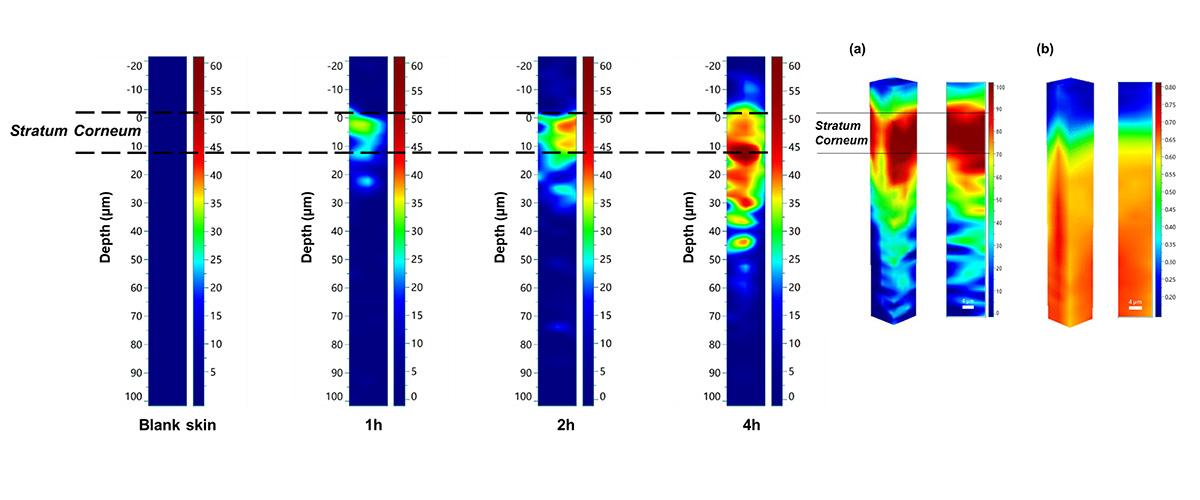
Spectroscopic Methods for Sunscreens Characterization
This Application Note outlines three different kinds of spectroscopic tools being used for the characterization of sunscreens, and discusses the obtained results. These include Fluorescence spectroscopy for photoactivity, Particle Size analysis for composition and Raman microscopy for formulation investigation.
Learn more
Pharmaceutical compounds distribution and cosmetic products analyzed by confocal Raman spectroscopy
In the final step of the formulation process, pharmaceutical and cosmetic industries have to control their products to check if the compounds' distribution in the final product, or in its application form, i.e. dispersed on a skin for an intracutaneous product, are homogenous and stable in order to guarantee the product's efficacy. In this paper, we present why confocal Raman microscopy is an excellent tool for product characterization after formulation.
Learn more
Valuable analysis tool for cosmetics and skin characterization
Confocal Raman Spectroscopy is an important analytical tool in various fields and it has shown high efficiency for specific applications in the cosmetic and/or pharmaceutical fields. Its non-invasive behavior, and its high molecular sensitivity make it one of the preferred label-free analytical techniques to characterize materials such as skin and cosmetic products.
Learn more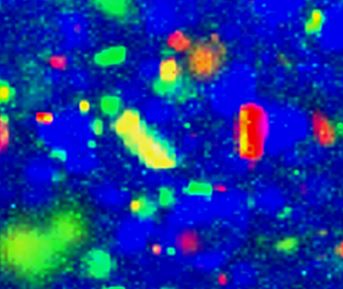
Noninvasive In-Vivo Determination of Sunscreen-UVA Protection Factors
The development and evaluation of UVA (320–400 nm) sunscreens is important because UVA sunlight can penetrate deep into human skin and cause severe internal damage, as well as erythema and photoaging.
Learn more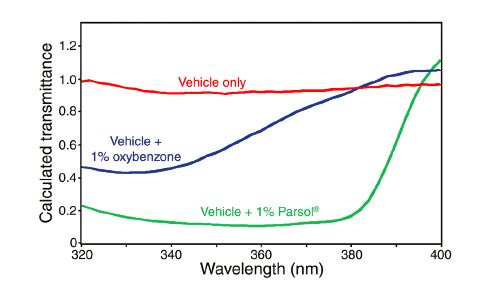
Rapid Quality Assessment of Essential Oils using Fluorescence Excitation-Emission Matrix Spectroscopy
The Duetta was used to collect Excitation-Emission Matrices that distinguish different species of essential oils, as well as the same species by region of origin. A 50/50 mixture of lavender and eucalyptus demonstrated the ability of the approach to qualitatively identify an adulterant.
Learn more
A-TEEM Fluorescence Spectroscopy for the Quick Detection of Adulteration in Lavender Essential Oils
Verifying the quality of lavender essential oil is crucial to ensure it is safe for its intended use, and to ensure consumers aren’t being deceived into buying inferior products. Two samples of lavender essential oil with identical label claims of "Pure", one from a supplier that tests for quality and one that does not, were evaluated with A-TEEM spectroscopy and GC-MS
Learn more
Fast & Non-invasive Determination of Skin State
Biological tissues contain chromophores that absorb light, as well as fluorophores that absorb and reemit light (fluorescence effect). Light absorption depends on the chromophores’ content and their distribution within the organic matter.
Learn more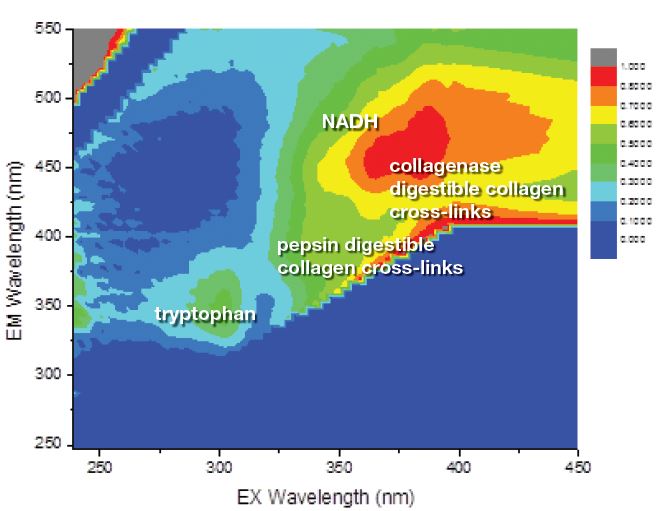
Endogenous Skin Fluorescence In Vivo on Human Skin
The fluorescence spectra of intrinsic protein fluorophores have been studied extensively and used in investigating biological events. Native fluorophores in human tissue include NADH, collagen, elastin, tryptophan, tyrosine, porphyrins and FAD.
Learn more
In Vivo Raman measurements of Human Skin
Confocal Raman spectroscopy is beginning to be recognized as a high potential technique for the non invasive study of biological tissues and human skin under in vivo conditions. Raman spectroscopy can be applied to obtain information regarding the molecular composition of the skin down to several hundred micrometers below the skin surface.
Learn more
Soap compound investigation by Raman mapping
In the soap industry, many chemical reactions are involved for the preparation of the final product. A hight control of the reactions is a major part of the quality control mission in these industries in order to ensure the non-invasivity of the final product on human skin.
Learn more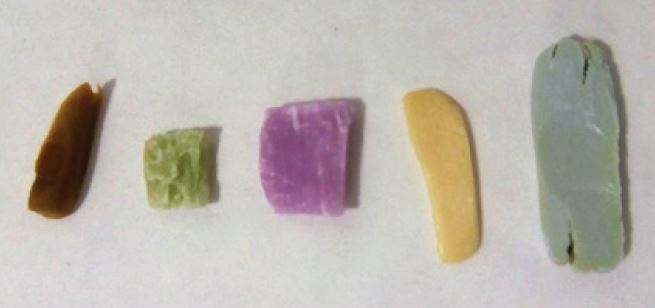
Laser Diffraction Analysis of Methicone-treated Blended Iron Oxides
Iron oxides (Fe2O3 and Fe3O4) are magnetic black materials. The methicone treatment adds a degree of “slip” to the particles allowing for better color saturation although they still remain magnetic. The resulting black pigment is predominantly used in cosmetics manufacturing.
Learn more
Particle Size Determination of Mineral-Based Sunscreens
Mineral-based sunscreens have gained popularity due to their excellent ability to scatter ultraviolet (UV) rays without causing photo-induced skin irritation from chemical-based sunscreens. Three over-the-counter zine oxide sunscreens were purchased and analyzed using Partica LA-960V2 Laser Diffraction Particle Size Analyzer. A standard 15 mL fraction cell accessory fitted with a magnetic stir bar was chosen for this experiment.
Learn more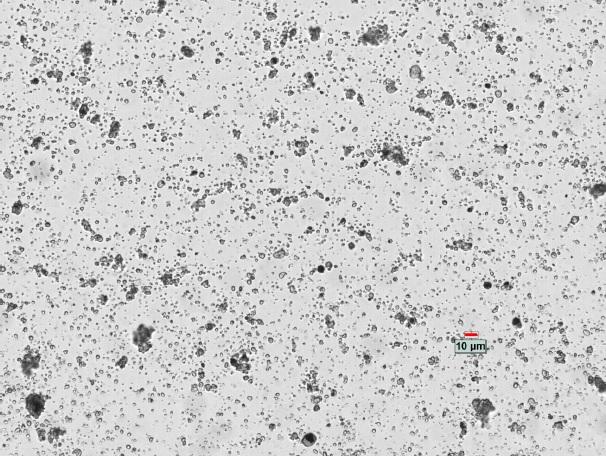
Particle Analysis for Cosmetics
Many cosmetic products include particulate material or emulsions. Some examples of cosmetic products consisting of or including particulates include facial powders, moisturizers, and lipstick.
Learn more
Laser Diffraction Analysis of Dimethicone-treated Chromium Oxide Green
Chromium oxide is a green material. The dimethicone treatment adds a degree of “slip” to the particles allowing for better color saturation. The resulting green pigment is predominantly used in cosmetics manufacturing.
Learn more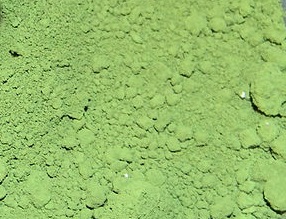
Laser Diffraction Analysis of Magnesium Silicate (Talc)
Talc is a naturally occurring mineral ranging in color from white to various shades of gray and green. Some talc is red to brown usually the result of impurities. Talc is used in a wide range of manufactured products; it can be found in paper (as a filler), face and talcum powder, soap, fireproof roofing, lubricants, electrical insulation, and pottery.
Learn more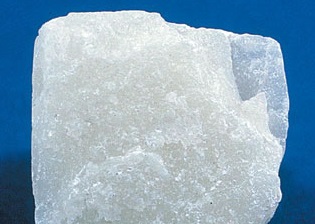
FAQ and Users' Papers

Frequently Asked Questions
Explore our FAQ dedicated to advanced analytical solutions for comprehensive cosmetic products characterization.

Users' Papers
Discover how our instruments help research teams in solving their development problematics.
Brochures and eBooks

Exploring characterization techniques in cosmetics e-book
Our e-book provides you with an overview of the techniques used to evaluate the performance of cosmetic products. We explain and detail the different fields of application, along with suitable analytical solutions.

RZ-660 In Vivo Raman Analyzer brochure
The RZ-660 In Vivo Raman Analyzer offers cutting-edge, non-invasive skin analysis, perfect for a variety of research and development applications.
Request for Information
Do you have any questions or requests? Use this form to contact our specialists.