

Scientific
Particle Characterization Webinars
Spanning topics from introductory discussions to advanced applications and industry groups, HORIBA webinars are a great source of information on the world of particles. To learn about upcoming webinars and more, sign-up for our Particle Characterization Newsletter.
Upcoming Webinars
Visit our Virtual Information Program page to view upcoming scientific webinars.
On-Demand Webinars
Sort using the filters below. Search is available by selecting an Industry or Product filter below, and using the menu’s search field at the top.
One Sample, Two Perspectives: Combining Laser Diffraction and Dynamic Image Analysis for Better Particle Characterization
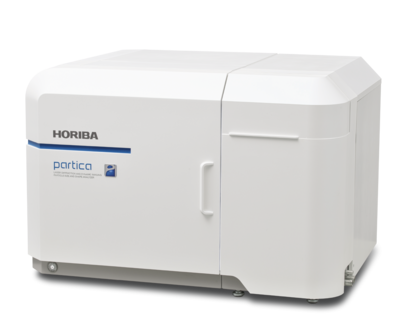
In this webinar, Dr. Anderson Bonon will explore the complementary strengths of Laser Diffraction and Dynamic Image Analysis and discuss why their results may sometimes differ. Using the HORIBA Partica®, which combines both techniques in a single platform, we will demonstrate how integrated particle characterization can provide deeper application insight, accelerate method development, and improve confidence in formulation, process, and quality decisions.
Learn more
The Next Evolution of NTA: Understanding Multi-Variable Pulse NTA (MVP-NTA)
Webinar
Join Dr. Jeff Bodycomb for an in-depth look at the latest advancement in Nanoparticle Tracking Analysis (NTA): Multi-Variable Pulse NTA (MVP-NTA). This innovative approach brings capabilities traditionally associated with complex multi-laser systems to a streamlined single-laser platform, enabling rich particle characterization while simplifying instrumentation.
Learn more
The Future of Surface Area Analysis: Dynamic Gas Adsorption vs. Traditional BET Methods
Webinar
Join HORIBA’s experts as we explore why dynamic adsorption is gaining traction and where it offers measurable advantages over traditional volumetric systems.
Learn more
Advanced Nanoparticle Analysis: NTA Explained
Webinar
This application‑driven webinar delivers a clear, practical introduction to Nanoparticle Tracking Analysis (NTA) and the latest innovations transforming how nanoparticles are measured, differentiated, and quantified.
Learn more
Practical Laser Diffraction: Samples, Settings, and Size Distributions
Webinar
Are you new to laser diffraction—or just need a refresher? Join Dr. Jeff Bodycomb for a practical, accessible introduction to this powerful particle‑sizing technique. Laser diffraction enables rapid measurement of particle size distributions across an exceptionally broad range—from tens of nanometers to several millimeters.
Learn more
The Cats & Dogs of Material Processing: Mastering the Challenges of Liquid/Gas Systems vs. Solids
Webinar
Anyone who works with materials knows that solids rarely behave like liquids and gases. In fact, they often act like entirely different species—independent and unpredictable “cats” compared to the obedient and consistent “dogs.” This webinar explores the key differences between these material behaviors and how those differences influence processing decisions.
Learn more
Probing Nanoparticle Systems with Dynamic Light Scattering (DLS) and Zeta Potential
Webinar
Join Dr. Jeff Bodycomb for an application‑focused introduction to Dynamic Light Scattering (DLS) and Zeta Potential Analysis—two essential techniques for fast, reliable characterization of nanoparticle size, protein and polymer behavior, and suspension stability.
Learn more
Seeing is Believing: Advanced Particle Size & Shape Analysis Using Dynamic Imaging Techniques
Webinar
This webinar introduces the fundamentals of imaging techniques and their practical implementation. We will explore how to characterize particles ranging from microns to millimeters with application examples from various modern systems.
Learn more
Mastering ISO/TR 18196: A Practical Guide to the Measurement Technique Matrix
Webinar
This essential one-hour webinar provides a practical, hands-on introduction to ISO/TR 18196, the technical report that establishes a crucial comparative framework for selecting and applying measurement techniques used to characterize nano-objects.
Learn more
Characterization of Shell-Stabilized Micro & Nanobubbles for Enhanced Nanomedicine Performance
Webinar
In this webinar, we'll provide a comprehensive overview of the unique properties, advanced characterization methods, and emerging therapeutic applications of lipid-shelled nanobubbles.
Learn more
Shaping Power: The Role of Particle Characterization and Elemental Analysis in Electrode Efficiency
Webinar
In this webinar, we explore how HORIBA’s integrated solutions, including particle characterization and MicroXRF, provide comprehensive characterization of carbon materials and cathode powders. While laser diffraction and centrifugal sedimentation systems analyze particle size distribution and dispersion state with high precision and minimal sample prep, MicroXRF reveals elemental composition and ratios within electrodes at microscale.
Learn more
Beyond the Breakthrough: How to Survive the Valley of Death in Product Development
Webinar
Taking a product from concept to commercialization is never a straight line. The leap from R&D to full-scale production often introduces unexpected obstacles, sometimes referred to as the “Valley of Death.” In this webinar, Dr. Willie Hendrickson, Founder and CEO of the AVEKA Group, will demystify the critical stages of scale-up and share practical insights from decades of experience.
Learn more
Nanoparticle Size and Charge: Introduction to Dynamic Light Scattering (DLS) and Zeta Potential
Webinar
Nanoparticle behavior in suspension is often determined by particle size and surface charge. Dynamic light scattering (DLS) is a popular choice for determining size and zeta potential analysis can be used to determine surface charge. Dr. Jeff Bodycomb introduces these popular techniques that features fast, repeatable, and accurate size and charge determination for nanoparticles and large molecules such as proteins and polymers.
Learn more
Making Sense of Particle Size Data: Interpreting and Presenting Distributions with Confidence
Webinar
Join Dr. Jeff Bodycomb as he demystifies the language and visuals of particle size reporting. In this practical and engaging session, Dr. Bodycomb will explore the meaning behind common size terms, graph formats, and statistical measures used to summarize particle populations. Learn how to confidently interpret results and clearly communicate them to colleagues, customers, and collaborators.
Learn more
Why Surface Area Matters: A Practical Guide for Scientists and Engineers
Webinar
Join John Guerin for an insightful webinar exploring the science and application of surface area measurement. John will explain why surface area is essential to material performance and introduce HORIBA’s dynamic flow adsorption technology—a powerful and precise method for characterizing surface area across a wide range of materials.
Learn more
Ask the Experts: Unveiling the Secrets of Particle Characterization with HORIBA
Webinar
Join our 'Ask the Experts' webinar, where HORIBA’s application lab scientists are ready to answer your questions about particle characterization! With decades of hands-on expertise in particle size analysis, zeta potential measurement, and more, our team brings invaluable knowledge to the table.
Learn more
Practical Particle Pictures: Size and Shape Distribution by Dynamic Image Analysis
Webinar
Join us as we discuss this complementary pair of techniques to address these challenges. After an introduction to the techniques, we illustrate the complementary data that can be obtained from carbon composite powders used in modern lithium-ion batteries.
Learn more
Building Better Batteries: Monitoring Particle Size and Composition
Webinar
Battery electrode (both anode and cathode) raw materials are often powdered materials. Particle physical properties affect surface area and therefore ion and charge transport. Particle size also affects slurry behavior during coating operations.
Learn more
Gold Nanoparticle Standards for NTA: Advancing Calibration and Precision in Nanoparticle Characterization
Webinar
HORIBA and nanoComposix outline how to utilize gold nanoparticle standards for nanoparticle tracking analysis (NTA) applications. Particle counting standards, such as nanoComposix’s Ultra Uniform Gold Nanoparticle Number Standard, are colloidal nanoparticles formulated at directly characterized particle number concentrations applicable to NTA’s dynamic range. These standards provide the highest uniformity in size and shape and are suitable for...
Learn more
Revolutionizing Water Treatment with Nanobubbles: Science, Stability, and Sustainable Solutions
Webinar
This joint webinar of PureNanoTech and HORIBA, will introduce the latest innovation in nanobubble technology, validated using an improved nanoparticle tracking analysis (NTA) and explore different bubble generation techniques, providing insights into nanobubbles’ fundamental principles and unique characteristics.
Learn more
Unlocking the Power of Nanobubbles: Innovations and Applications in Agriculture
Webinar
Embark on an exciting journey into the world of nanobubbles, exploring their unique properties and growing significance across various scientific and industrial fields. Join us for an insightful exploration of nanobubbles and their role in shaping the future of agriculture.
Learn more
Picking the Perfect Diffraction Dispersion System
Webinar
Join us for an in-depth exploration of sampling techniques, complete with practical advice on selecting the most suitable option for your unique applications. Enhance your understanding and improve the accuracy of your measurements by learning how to effectively present your samples for laser diffraction analysis.
Learn more
Harnessing Centrifugal Sedimentation for Particle Analysis: A Case Study Approach
Webinar
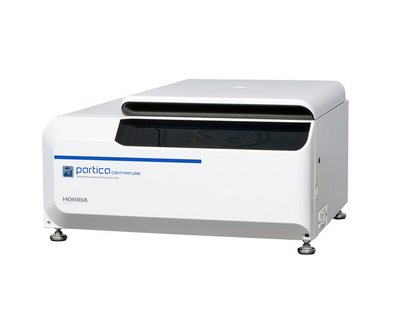
Centrifugal sedimentation technique are gaining attention as an evaluation tool for materials study field especially nanomaterials. In this talk, we discuss the several case study by centrifugal nanoparticle analyzer Parica CENTRIFUGE covered the application of CMP slurry, battery materials and so on.
Learn more
Exosomal Biomarker Development: Promises, Progress, Challenges
Webinar
In this talk, we discuss the topic of EV isolation with a focus on the most popular method of size exclusion chromatography and the challenges in characterizing their size distribution. Additionally, Ya-Hong Xie from UCLA will share his perspective of how this line of research could lead to deepening our understanding of exosomal biology pertaining to their diagnostic and therapeutic promises.
Learn more
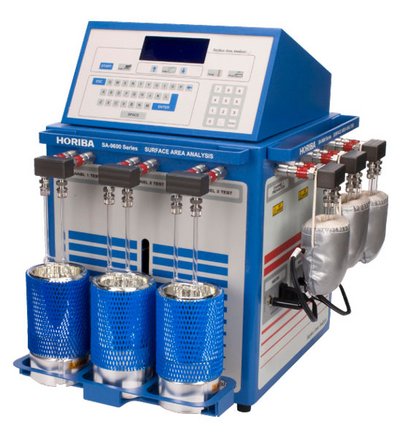
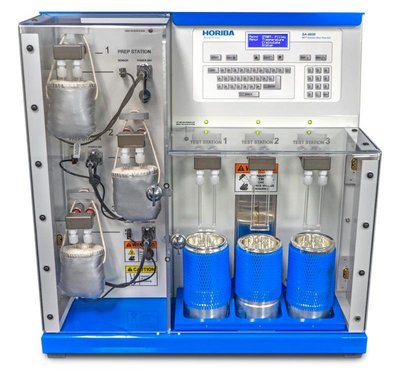
Fast and Reliable Surface Area Gas Analysis with the NEW SA-9650 Analyzer
Webinar
Are you tired of slow and expensive surface area measurements slowing down your production or research? Join us for a webinar introducing HORIBA's all-new SA-9650 dynamic surface area analyzer. This innovative instrument utilizes flowing gas to dramatically accelerate analysis times, providing you with fast and reliable results.
Learn more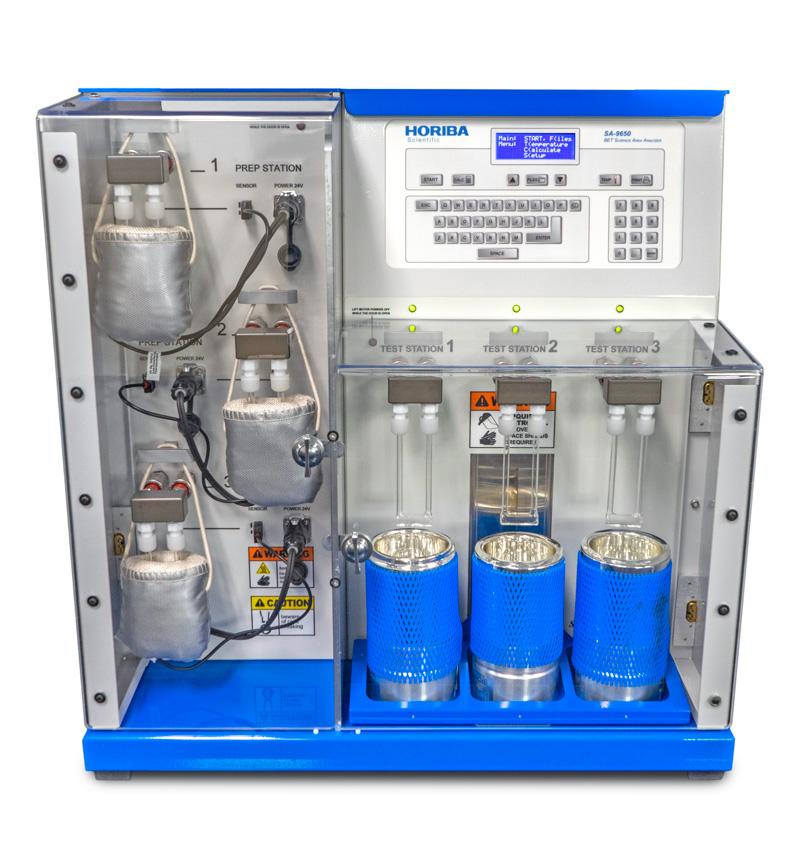
Advancing the Frontiers of Nanotechnology: Innovation in Nanobubble Generation
Webinar
This joint webinar of PureNanoTech and HORIBA, will introduce the latest innovation in nanobubble technology, validated using an improved nanoparticle tracking analysis (NTA) and explore different bubble generation techniques, providing insights into nanobubbles’ fundamental principles and unique characteristics.
Learn more
Jet Milling and Air Classification – Particle Refinement at its Best
Webinar
Do you need help finding the best method to grind or classify your product to the correct particle size and shape? With constantly advancing technology demands, many are looking for answers on how to create unique particles. Let us introduce you to jet milling and air classification as means to manipulate particle size and shape.
Learn more
Practical Advice for Storing and Handling Bulk Solids; an Engineering Perspective
Webinar
This webinar will discuss how to solve or prevent solids flow problems in storage vessels, measure the fundamental flow properties of powders, and design hoppers, bins, and silos for reliable flow or predict solids flow in existing storage vessels.
Learn more
Solving Nanotechnology Application Challenges with the Versatile and Scalable Microfluidizer Technology
Webinar
Benefits of nanotechnology depend on the fact that it is possible to tailor processes for different applications to obtain specific characterizations, such as particle size, and thus achieve desired properties. The industry leading Microfluidizer technology is a versatile technology that can address these challenges from lab to production scale volumes.
Learn more
New Methods for Particle Size and Shape Analysis
Webinar
EyePASS 3.1 is the latest version of the Eyecon2 image analysis software. It includes several new exciting features for particle size and shape analysis. This webinar will provide an overview of the new features of EyePASS 3.1 and how they can be used to provide more insight into determining particle size and shape.
Learn more
Challenges & Opportunities in Spray Drying
Webinar
In this webinar, Dr. Willie Hendrickson will take a closer look into the fundamentals of spray drying, how the industry uses engineering solutions to help with consistency and outline the gaps in our understanding of processing with food-grade and industrial materials.
Learn more
NEW! Next Generation Dynamic Image Analysis: ANALYSETTE 28
Webinar
Image analysis is intuitively appealing. It reliably characterizes a large number of particles while offering high-resolution size and shape information from microns to millimeters. This introductory webinar features Dr. Günther Crolly of Fritsch and Dr. Jeff Bodycomb of HORIBA who will cover the basics of the dynamic imaging technique and highlight the features of ANALYSETTE 28.
Learn more
Industrial Challenges of Particle Processing
Webinar
This webinar will take a closer look into the fundamentals of solids processing, how the industry uses engineering solutions to help with consistency and outline the gaps in our understanding of industrial processing. Practical examples featuring blending, size separation, drying and particle formation using polymer, food and ceramic materials will be used to illustrate these challenges.
Learn more
Laser Diffraction Academy: Choosing the Best Dispersion Tools for Your Samples
Webinar
Choosing an appropriate particle measurement approach is often more thought-provoking than it seems. For laser diffraction, there are many dispersion accessories and instrument options. In this webinar, Dr. Jeff Bodycomb will present a range of options that will lead to easy and successful analyses and the considerations behind each choice.
Learn more
Introduction to Dynamic Light Scattering (DLS)
Webinar
Dr. Jeff Bodycomb introduces dynamic light scattering (DLS), a fast, repeatable, and accurate size determination for nanoparticles and large molecules. Here Jeff introduces and reviews the technique while also discussing method development, application results, data interpretation, and comparison with other nanoparticle analysis techniques.
Learn more
Generation, Properties and Applications of Oxygen Nanobubbles in Aeration
Webinar
Nanobubbles in water exhibit many appealing characteristics, such as a long residence time of bubbles in water due to their low buoyancy and stability against coalesces, collapse or burst. Long retention times in water potentially enhance chemical reactions and mass transfer in processes such as ozonation or aeration. This presentation will give an overview of the common generation processes of nanobubbles and their respective principles.
Learn more
Particle Agglomeration – A Technical How-to Guide with Illustrative Examples
Webinar
This webinar will provide an overview of various agglomeration techniques with a consideration of their advantages and disadvantages. The focus will be on fluid bed agglomeration, but extrusion and high-shear agglomeration examples will also be discussed. In addition, different types of materials and their wetting characteristics in correlation to particle size distribution and flowability will serve as examples.
Learn more
Introduction to Gas Adsorption
Webinar
This presentation will begin with the fundamental building blocks for this technique and illustrate the basics so that scientists and technicians who are new to this method or even those who are well versed can better familiarize themselves with the basics. Then, this presentation will primarily focus upon the calculation of surface area from gas adsorption raw data using the BET (Brunauer, Emmett and Teller) method.
Learn more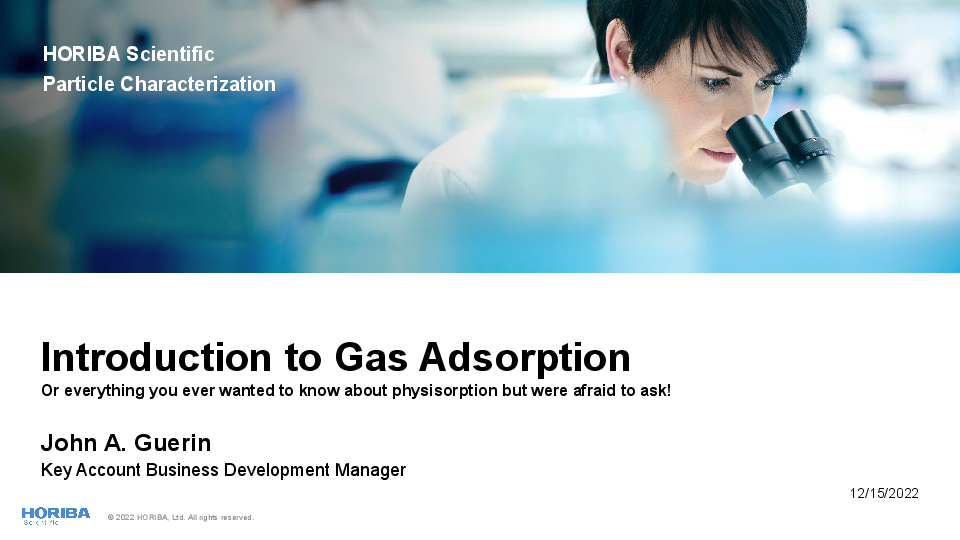
Nanoparticle Tracking Analysis (NTA) for Practical Nanoparticle Size and Concentration
Webinar
This is the first webinar of our Nanoparticle Tracking Analysis series. Here Dr. Jeff Bodycomb introduces the technique in detail along with recent advances in the field. For perspective, Jeff compares NTA with dynamic light scattering (DLS) with practical examples. Join us for this introduction to a (very) small world.
Learn more
How does Particle Characterization Enhance Research and Scale-up, Validate Production, and Increase Your Bottom Line?
Webinar
Join Dr. Willie Hendrickson as he discusses the use of multiple characterization techniques to enhance process understanding. Practical examples will include materials such as ceramics, glasses, polymers, food ingredients, and carbon blacks as they are used in the specialty chemical, food, animal feed, personal care, or automotive industries.
Learn more
The Power of Machine Learning: Image Analysis for Particle Size and Shape
Webinar
In this webinar, you will hear leading imaging experts, Darren McHugh and Girish Mallya, from Innopharma Technology illustrate what Convolutional Neural Network (CNN) is and how it offers users the ability to create a software model that emulates human vision, thereby offering robust, automated, and accurate particle segmentation. You will gain confidence in the CNN-powered image processing for features such as particle size and shape.
Learn more
High Sensitivity Tools for Vaccine Development and Quality
Webinar
Join Dr. Kevin Dahl of Particlese LLC and Dr. Linda Kidder of HORIBA Scientific provide tips and alternative solutions for better vaccine development and quality. They will discuss the application of multi-laser nanoparticle analysis (NTA) in determining vaccine degradation and total particle count. They will also present a new analytical approach, fluorescence A-TEEM method for rapid screening of similar but different vaccine final formulations.
Learn more
A New Spin on Particle Analysis: Introducing Centrifugal Sedimentation
Webinar
In this introductory webinar for Partica CENTRIFUGE Centrifugal Nanoparticle Analyzer, Dr. Mike Pohl will discuss the innovations made that allow a long-established sedimentation technique to extend its measurement down to 10 nanometers and up to 40 microns. The talk will dive into practical case studies to demonstrate CENTRIFUGE’s unique ability to deconvolute individual peaks of very close multimodal particle mixtures. Various applications will also be presented. A Q&A session will follow.
Learn more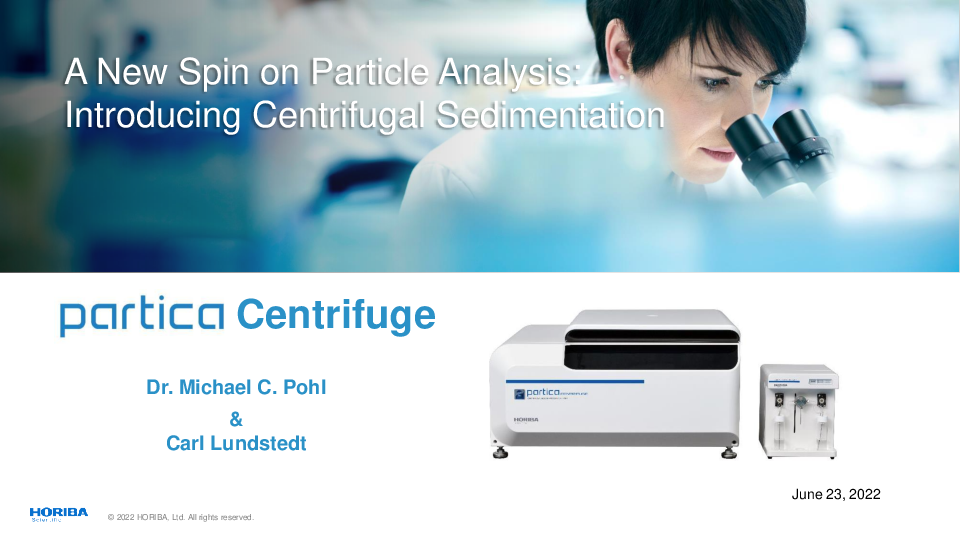
Jet Milling and Air Classification: The Secret to Ultrafine Particles
Webinar
The focus of this presentation will be on jet milling and air classification, starting with a description of the processes. Comparison examples to other grinding processes with different types of materials and their grinding characteristics, as well as examples showing how jet milling and air classification can be optimized for particle size and range, will be featured.
Learn more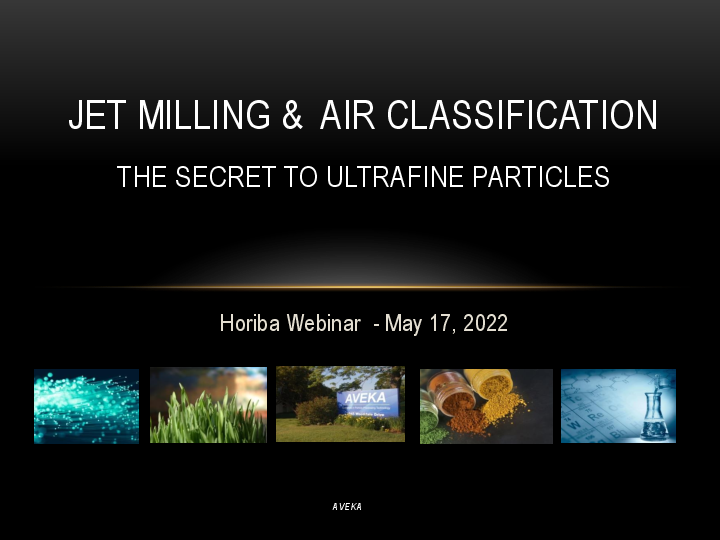
Analysis Techniques for Modern Battery Design and Manufacture
Webinar
In this webinar, Drs. Jeff Bodycomb and Sergey Mamedov talk about particle analysis and spectroscopic techniques (Raman and XRF) for evaluating these important components that power 21st century technology. They describe a range of techniques and give examples of their practical application.
Learn more
Rapid Analytical Methods for Quality Control of Hemp Emulsions
Webinar
Cannabidiol (CBD) is used in a variety of commercial products, from dietary supplements, to food and beverages and cosmetics. Potency, particle size, and stability all play an important role in the quality control, regulation, and efficacy of CBD/Hemp emulsions. In this webinar, we describe current guidance from FDA, and describe novel, cost effective approaches from HORIBA that address several testing needs of emulsions.
Learn more
Decoding Particle Science and Technology into Practical Manufacturing
Webinar
This webinar will present the history, structure, and current research program of the International Fine Particle Research Institute (IFPRI). We will also look at the benefits of IFPRI membership including access to over 700 papers and reviews, focused workshops on particle science and technology areas, and a new emphasis on continuing education in particle science and technology.
Learn more
Introduction to Laser Diffraction
Webinar
Analyzing particles over a size range of 10's of nm to millimeters? Looking for a high throughput particle sizing technique to support development or manufacturing QA? Need a simple method to ensure you can focus on your problem, not the finer points of scattering theory? Laser diffraction has evolved to meet all of these requirements. Join Dr. Jeff Bodycomb as he introduces laser diffraction to get you started or as a refresher.
Learn more
Technology Readiness Levels and Scale-Up: the Path from R&D to Production
Webinar
While we all understand that there may be more steps to the successful commercialization of any idea or product, until you actually go to commercialization, the process and the new challenges are potentially confusing. Dr. Willie Hendrickson will share his experience and provide clarity into the mysteries of development (scale-up), commercialization, and the path through the Valley of Death.
Learn more
Extracellular Vesicle Isolation Efficiency: Method Comparison using Multispectral Nanoparticle Tracking Analysis
Webinar
Dr. Nicole Comfort of Columbia University discusses the approach her team uses for comparing the efficiency of two previously published CNS-EV isolation methods. The use of blood-isolated CNS-EVs are biomarkers of metal exposure and disease progression in amyotrophic lateral sclerosis (ALS). In this webinar, learn about Dr. Comfort’s exciting research and the important role of nanoparticle tracking analysis (NTA).
Learn more
Tips from Industry Expert: The Importance of Particle Size for Cosmetic Products
Webinar
This webinar is an introduction to particle size analysis for cosmetics applications. Chris Harrison of H Squared Industries (in partnership with EVIO Labs) includes a brief overview of particle size analysis and its role in product stability, effectiveness, and acceptance. We will discuss the impact of particle size and size distribution on product quality, CBD/non-CBD emulsions, and the role in cosmetics going forward.
Learn more
Blending: It is Never as Easy as it First Appears
Webinar
While seemingly simple, blending can provide many surprising challenges. Each type of process; including dry blending, powder blending with added liquids, or the blending of micro ingredients, contains unique issues. In this webinar, Dr. Willie Hendrickson of AVEKA, Inc. will include an overview of segregation during blending, types of mixers used, and a number of practical examples of blending issues and challenges.
Learn more
Laser Diffraction Method Development
Webinar
Sample preparation and instrument setup are crucial parts of obtaining good data. Method development is thinking through and testing sample preparation and instrument setup to ensure optimal results. That is, variations due to sample preparation should be minimized. Questions include: Should the sample be run in suspension or as a dry powder? What salts or surfactants are needed for the suspension? How much energy should be applied and how?
Learn more
Extracellular Vesicle Secretion: Tissue-Specificity and the Impact of Health and Disease
Webinar
Professor Dan Lark gives a talk through the WebEVTalk series focusing on their findings in extracellular vesicles (EVs) secretion between skeletal muscle and white adipose tissue. This study uses transgenic fluorescent reporter mice and various analytical techniques including multi-laser Nanoparticle Tracking Analysis to collectively demonstrate improved understanding of EV secretion by different tissues and their biodistribution.
Learn more
Particle Size Data Interpretation and Communication
Webinar
Understanding and communicating analysis results are a key part of practical particle characterization. There are a number of specialist terms that are used to precisely describe the result, but these terms can confuse the unwary. This webinar reviews communicating size analysis results and what various terms mean about your sample and specifications.
Learn more
Fine Particle Characterization in CMP Slurries with Fluorescence Correlation Spectroscopy
Webinar
Fabrication of commercial integrated circuits depends critically on the physical and chemical properties of the abrasive slurry particles used to polish silicon wafer surfaces via chemical-mechanical planarization. The particle size distribution of the abrasive particles is a key factor in the CMP process. In this presentation, the use of fluorescence correlation spectroscopy in conjunction with particle tracking using the Viewsizer 3000 is described.
Learn more
Integrated Characterization of Organic Matter for Water Treatment Optimization
Webinar
Drs. Katherine Y. Bell, (Director of Water Strategy), and Martha J.M. Wells (Chemical Consultant to Brown and Caldwell) will co-present this webinar. Kati will provide an overview of water treatment at Brown and Caldwell and what services are offered. Martha will provide the fundamentals of the technologies applied and a discussion of our current understanding of organic matter aggregation in water.
Learn more
Fluid Bed Processing: Drying, Agglomeration, Particle Coating
Webinar
Fluid bed drying is a process by which particles are fluidized and dried. For the material to become fluidized, the particulates are placed under conditions that cause it to behave like a fluid. In this webinar, Willie Hendrickson, Founder and CEO of the AVEKA Group and President of IFPRI, will discuss in detail the advantages of fluid bed drying and what instances this technique should be used over other drying processes.
Learn more
In-line Particle Size Analysis: Interpretation of Results and Correlation with Orthogonal Methods
Webinar
Handling powders and bulk solids is an essential element of many manufacturing processes. During these processes, key considerations are controlling and predicting the particle size and shape data, as collected in situ. In this webinar, Darren McHugh will provide a demonstration of the Eyecon2 real-time imaging particle size analyzer, then review in-depth how the results compare to sieve and other correlation methods.
Learn more
Dynamic Light Scattering in Electrochemical Energy Conversion Systems: An Overview
Webinar
Dynamic light scattering (DLS) is a common technique to determine size and zeta potential of colloidal particles in a suspension. In this webinar, Prof. Iryna Zenyuk and Prantik Saha will discuss how DLS helps prepare catalyst inks with high electrochemical performance required for optimal design of these systems, and thus, help build a zero-carbon emissions society.
Learn more
Size, Chemistry, and More: Raman and Laser Diffraction for Pharma Particle Analysis
Webinar
Raman microspectroscopy is an excellent probe of particle composition and particle size. Laser diffraction is a workhorse technique for particle size determination and offers precision and speed. Join Dr. Jeff Bodycomb and Dr. Eunah Lee as they discuss using both of these techniques for analyzing pharmaceutical powders and emulsions and comment on how they fit together.
Learn more
Fresh Insights into Nanoparticle Characterization: DLS, Diffraction, or NTA
Webinar
In this webinar, Dr. Jeff Bodycomb introduces, compares, and contrasts the three main techniques for nanoparticle analysis: Dynamic Light Scattering (DLS), Laser Diffraction, and Nanoparticle Tracking Analysis (NTA), including the latest advances. He includes applications and information to help you think about the best way to get the answers you need.
Learn more
Additive Manufacturing: Effective Control of Metal Powder Quality
Webinar
In this webinar, Dr. Anderson Bonon and Dr. Matthieu Chausseau will use laser diffraction, image analysis, X-ray fluorescence and elemental analysis (C/S, O/N and H) to demonstrate effective control of the raw material as well as recycled powder. Case studies obtained from various powders commonly used in processes will be discussed with a Q&A session to follow.
Learn more
The Ultimate LA-960V2 Virtual Demonstration: Ceramics Powder
Webinar
In this webinar you will receive a full demonstration of the capabilities of the next generation laser diffraction particle size analyzer - the Partica LA-960V2. You will learn to measure ceramic powders, why accuracy is important, and see a hands-on demo direct from the HORIBA Applications Lab.
Learn more
Unveiling the LA-960V2
Webinar
The LA-960V2 laser diffraction particle size analyzer advances scientific knowledge for tomorrow's world through intuitive software, unique accessories, and high performance. The NEW "V2" can easily measure nanoparticles (10 nm) to 5,000 µm in less than 60 seconds with accurate, reproducible results. In addition, by adding the Imaging Unit Accessory, you can see your particles in real time when running the wet system.
Learn more
How to Achieve One-Coat, High Hiding Power Paints
Glenn Evers, international titanium dioxide consultant and former DuPont TiO2 research scientist & inventor will reveal pigment properties needed for the most valuable next generation paint. In this webinar, you will learn: basic properties of white TiO2 pigment for paints, particle size properties of resins and pigments to optimize water-based paints, how to achieve a high ROI using a particle size instrument, and why one-coat paints have room for improvement.
Learn more
Best Practices for Multiparticulate Formulations: The Importance of Computational Design and Process Analytical Technology
Experts in multiparticulate applications from Colorcon and Innopharma Technology will discuss how computational design and PAT can help build more robust formulations, predict multiparticulate performance, and accelerate development by reducing traditional iterative trial and testing practices in development. Discover how the best practices and technology presented here will accelerate formulation development and improve quality outcomes for your multiparticulate formulations.
Learn more
Importância da Determinação do Tamanho de Partículas na Microencapsulação e suas Aplicações em Alimentos
izabela possui graduação em Engenharia de Alimentos pela Universidade Federal de Viçosa, mestrado e doutorado em Alimentos e Nutrição pela Universidade Estadual de Campinas. Vem desenvolvendo pesquisas em microencapsulação desde 2008, voltadas a aplicação em produtos alimentícios, no Centro de Tecnologia de Cereais e Chocolates, no Instituto de Tecnologia de Alimentos com foco na proteção e liberação controlada de substâncias diversas.
Learn more
Exosomes: Exploiting the Diagnostic and Therapeutic Potential of Nature’s Biological Nanoparticles
Research on exosomes and other forms of extracellular vesicles (EVs) have rapidly expanded over the last two decades. These lipid-enclosed, nanoscale messengers are released from cells packed with diverse cargo and can travel long distances to modify the function of target cells. Learn more about what exosomes are, how researchers study them, and what challenges remain.
Learn more
Modern Particle Characterization Techniques Series VII: Image Analysis
Image analysis can be used for particles with sizes ranging from about a micron to tens of millimeters. Learn about this powerful technology for high resolution particle size and shape measurement. This webinar will cover the basics of the technique and some considerations for obtaining reliable data.
Learn more
Modern Particle Characterization Technique Series VI: Zeta Potential
Suspensions are two-phase systems implying that an interface exists between the surface of the material and the liquid in which it is dispersed. The bulk properties of any suspension are dependent upon – and controlled by - two fundamental parameters: the extent of the particle-liquid interface which is characterized by, for example, particle size; and the nature of that interface, characterized by, for example, surface charge.
Learn more
Modern Particle Characterization Technique Series V: Brunauer-Emmett-Teller (BET)
Surface area is an important physical property that influences the reactivity, dissolution, catalysis, and separation of materials. The surface area often must be carefully engineered and measured to optimize specific functions. In this webinar, our applications lab will help explain BET theory, the theory behind surface area as well as how to ensure good BET measurements.
Learn more
Modern Particle Characterization Techniques Series IV: Multi-laser Nanoparticle Tracking Analysis (NTA)
Multi-laser Nanoparticle Tracking Analysis (NTA) is an advanced patented technology featuring three simultaneously operating lasers with independently adjustable power. In this webinar, Dr. Jeff Bodycomb will offer a broad overview on how multi-laser NTA technique fits into the gene therapy space and where we and our collaborators see the applications going in the near future.
Learn more
Modern Particle Characterization Techniques Series III: Dynamic Light Scattering
Dynamic light scattering (DLS) is a fast, accurate, and popular method for analyzing nanoparticles and large molecules such as proteins and polymers. In this webinar Dr. Jeff Bodycomb reviews the technique along with comments on method development, application results, and data interpretation.
Learn more
Modern Particle Characterization Techniques Series II: Laser Diffraction
An introduction to basic experimental considerations when choosing laser diffraction for particle size analysis. The presentation will explain what makes laser diffraction a “modern technique.” Both wet and dry case studies will be shown along with brief demonstration videos. Learn about method development, choosing an appropriate refractive index, and understanding the analysis results.
Learn more
Validación de Procedimientos en la Medición de Tamaño de Partículas
(Spanish Webinar) La medición de tamaño de partícula por difracción láser estática debe ser validada, en la industria farmacéutica según ICH Q2(R1), tomada como referencia y armonizada por USP-EP-JP. Esa guía fue reabierta para incluir los conceptos de ciclo de vida y aptitud para propósito. Esta exposición ilustra la aplicación de estos conceptos.
Learn more
Mastering the Processing Methods of Engineered Particles
Dr. Willie Hendrickson will explain the development process for particles with specific attributes that can cause problems during production. His talk will focus on alternative processing methods, the importance of understanding the materials being used, and what can happen when you do not understand the functional properties that you are designing for.
Learn more
Modern Particle Characterization Techniques Series I: Introduction
This webinar is the beginning of a series reviewing a number of modern measurement techniques. Dr. Michael Pohl, Vice President of HORIBA Scientific, describes some common ideas in particle characterization along with common questions to ask when selecting a technique. Mike will also give a very brief overview of some modern techniques before subsequent webinars go into detail.
Learn more
Concentration and Size of Viruses and Virus-like Particles
Accurate concentration for virus and virus-like particles can be determined by multi-laser nanoparticle tracking analysis due to the fact they are nanoparticles. In this webinar, Dr. Jeff Bodycomb will discuss the use of multi-laser nanoparticle tracking analysis (NTA) to determine the size distribution and concentration of these species, the latter which is correlated to viral infectivity.
Learn more
The Value of Real-time Imaging: Integrating Particle Size Analysis onto Fluid Beds, Twin Screw Granulators and Roller Compactors
The capability to measure critical quality attributes (CQA) such as particle size in real time reveals their functional relationships with the critical process parameters (CPP). The Eyecon2™ offers a true non-product contact, a real-time imaging system that can be used with dry and wet bulk solid processing equipment affording a digital maturity competitive edge.
Learn more
How and Why to Analyze Ceramic Powder Particles
In this webinar, Dr. Jeff Bodycomb of HORIBA Scientific discusses particle analysis of ceramic particles, including electronic materials and common oxides. He will cover the basic principles of analysis, practical methods for obtaining good data, and example data.
Learn more
Interpreting Laser Diffraction Results for Non-Spherical Particles
Equipped with only qualitative knowledge of particle shape, the particle analyst can resolve this inherent ambiguity and use laser diffraction to obtain quantitative information (such as aspect ratio) about non-spherical particles. This webinar explains the origin of this effect, describes how to interpret PSD data in such cases, and demonstrates several practical applications for measurements of crystals, bacteria, and clays.
Learn more
Particle Classroom Series V: Sampling and Dispersion
The goal of a particle analysis is to understand the properties of a material, whether it is the size distribution of particles that are manufactured today or the size distribution of particles in the truck that just arrived. In this webinar, Dr. Jeff Bodycomb discusses how to improve data quality by obtaining a representative sample and effectively disperse the sample to remove or prevent agglomerates.
Learn more
Particle Classroom Series IV: System Verification
Confirming the performance of a particle analyzer is a critical step in ensuring and proving data quality. Join Dr. Jeff Bodycomb as he discusses performance expectations, confirming system performance, and recommended practices. Topics to be discussed include: Calibration vs. Verification, Monodisperse Standards, Polydisperse Standards, and Example Data.
Learn more
Particle Size Analysis of Polydisperse Liposome Formulations with Multispectral Nanoparticle Tracking Analysis (NTA)
Dr. Pushpendra Singh discusses the significance of liposome size characteristics in medicine, the challenges present in particle size measurement for heterogeneous size containing formulation (polydisperse), and his recently published results on polydisperse bead and liposome formulations using DLS, conventional NTA, laser diffraction and a novel multispectral NTA measurement techniques.
Learn more
Principio, Optimización y Aplicaciones del Análisis de seguimiento de Nanopartículas (NTA)
(Spanish Webinar) Este webinar tiene como objetivo presentar los fundamentos teóricos del análisis de seguimiento de nanopartículas (NTA), su optimización y su aplicaciones más recientes en la industria e investigación.
Learn more
BET Theory Explained
Surface area is an important physical property that influences the reactivity, dissolution, catalysis, and separation of materials. The surface area often must be carefully engineered and measured to optimize specific functions. This webinar will explain BET theory, Sample preparation, Calculating specific surface area from gas adsorption on solid surfaces, and Troubleshooting.
Learn more
The University of Maryland uses the LA-960 to Enhance Studies in Intra-lymph Node Injection
Joshua Gammon, from the University of Maryland, will present how locally controlled release vaccines demonstrate an enhanced immune response in mice and how this platform may be applied to therapeutic cancer vaccinations. If you're in the pharmaceutical industry, you'll want to hear more about this ground breaking research.
Learn moreHow to Present and Compare Data Obtained by Particle Tracking Analysis and Other Related Methods
Dr. Kuba Tatarkiewicz will examine methods for particle size distributions as obtained by particle tracking analysis, fluorescence, as well as micro-sedimentation. Methods for comparison of particle size distributions will be presented and explained in practical terms.
Learn more
Why the University of Washington chose the HORIBA Laser Scattering Particle Size Distribution Analyzer
In this webinar, Materials Science and Engineering (MSE) graduate students, Michelle Katz and Tiffany Tang will demonstrate with case studies how other orthogonal methods such as optical microscopy, scanning electron microscopy and X-ray diffraction help them cross-validate their particle size and size distribution.
Learn more
Particle Processing and the Value of Characterization
Join Dr. Willie Hendrickson as he discusses several particle processes and characterization methods that can help you to understand and control the final product. Examples include grinding (jet and ball milling), classification (air and simple screening), biomaterial separation and purification, powder coating for flow control, and spray drying.
Learn more
Particle Classroom Series III: Refractive Index and Laser Diffraction
Modern laser diffraction particle analyzers use particle refractive index to accurately model the behavior of light inside of the particle. However, this presents the analyst with the challenge of choosing the correct value. In this Webinar, Dr. Jeff Bodycomb will discuss: Why do we need a refractive index value, What is refractive index, and How do we choose refractive index values?
Learn more
Particle Classroom Series II: The Basics of Laser Diffraction
Particle size analysis by laser diffraction offers many advantages. The technique is fast, reliable, and can be used for analyzing a wide range of particle sizes. In laser diffraction an optical model is used to convert scattering data into a particle size distribution. This is a great introduction for someone who wants to understand the science behind the measurement.
Learn more
Particle Classroom Series I: Introduction to Particle Analysis
If you're new to particle characterization, this is a webinar just for you! Dr. Jeff Bodycomb will discuss the basics of particles. Why different size definitions will give you different results, various methods used to measure particles and why the method you use matters! This webinar is the first in a series that will give you the knowledge you'll need to be the particle expert in your lab.
Learn more
Key Points to Achieving Successful Laser Diffraction Method Development
In this webinar, we cover the important factors to consider when developing a method with your LA-960 laser diffraction system. Topics covered include choosing appropriate accessories, selecting the best dispersing medium, assessing the effect of circulation pump speed, and evaluating the impact of using different imaginary refractive index values.
Learn more
Introducing the MagnoMeter™ XRS: A NEW Instrument for Particle Characterization and Surface Analysis of Dispersion
Here, Dr. Graham Fairhurst introduces the NEW Mageleka MagnoMeter XRS spectrometer, a bench-top NMR instrument, and shows how it can provide particle characterization insights that are not otherwise available from traditional techniques such as particle sizing, zeta potential, and rheology.
Learn more
What Does It Take to Accurately Measure Concentration of Nanoparticles in Colloids
In this webinar, previously given at a Royal Society of Chemistry (RSC) and the National Physical Laboratory (NPL) symposium in the UK, Dr. Jan "Kuba" Tatarkiewicz will discuss the influence of various experimental parameters determined by different methods to measure the concentration of particles in colloids, especially in poly-dispersed and poly-material samples.
Learn more
Getting a Charge Out of Nanoparticles: Zeta Potential
Surface charge on the particle is typically discussed in terms of zeta potential; the potential at the shear plane. Determining the effect of suspension properties on zeta potential allows deliberate design of suspensions and is a critical tool to manipulating nanoparticle behavior. In other words, suspension stability can be effectively manipulated for our benefit.
Learn more
Particle Size Analysis for Homogenization Process Development
Emulsions and suspensions are commonly used in pharmaceutical, chemical and consumer products. The pharmaceutical industry, in particular, uses emulsions and suspensions to increase drug efficacy by controlling their particle size and size distribution. This webinar discusses ways to develop a robust homogenization process for making pharmaceutical emulsions by evaluating droplet size distribution.
Learn more
Improved Visualization Counting and Sizing of Polydisperse Nanoparticle Colloids
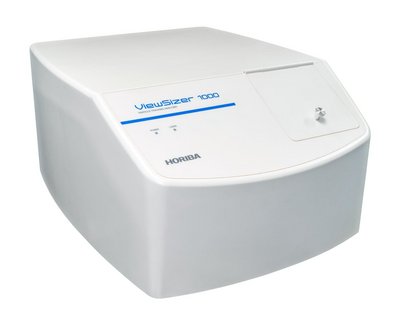
The ViewSizer® 3000 offers the ability to visualize nanoparticle colloids without requiring calibration standards or knowledge of any particle material properties, such as refractive index. It offers the user an unprecedented ability to count and size highly polydispersed samples, such as milk, sea water, or blood plasma.
Learn more
Does Particle Size Matter? Yes and No
Physical characterization is central to the development of small molecule pharmaceutics, but focusing on particle size can sometimes be right or wrong. Our guest speaker, Dr. Mick Hurrey of SteadyMed Therapeutics shares his experience on solid oral dosage characterization.
Learn more
Effortless Emulsion Evaluation for Everyone
Emulsion behavior is often determined by droplet size. Evaluation of droplet size by laser scattering is a time-tested method for checking product quality or performance. Surface charge is often a factor in predicting emulsion stability and can be measured by scattering as well. Whether you're trying to create emulsions for food, pharmaceutical, or other purposes or trying to break emulsions for water treatment, this webinar is for you.
Learn more
River Sediment Transport
The transport of sediments by rivers affects the environment in many ways, forming and deforming bedforms, eroding banks, and transporting pollutants to name a few. In this presentation, Dr. Yogi Agrawal, from Sequoia Scientific, will describe new instrumentation and some revealing measurements in Washington State's Cowlitz River.
Learn more
Soil Particle Size Analysis and Clay Fraction Extraction
In this webinar, Dr. Scott Werts, an Associate Professor of Geology at Winthrop University, shares his research focusing on utilizing various aspects of soil chemistry and particle size to investigate many things, such as long-term carbon sequestration in soils using stable isotope trends in soil biological materials, investigating heating in soils from surface fires, and the geomorphology and stable isotope composition of peat cores for paleoclimate studies.
Learn more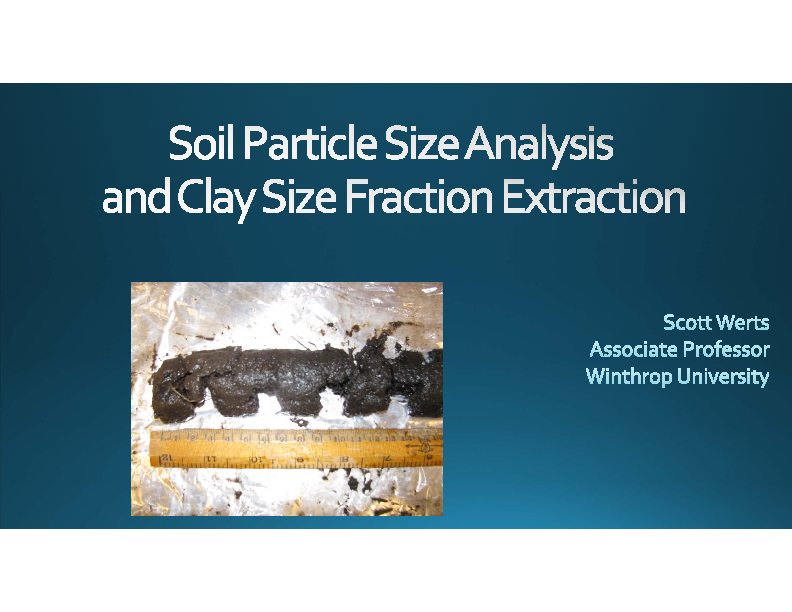
Emerging Food Trends
In this webinar, Julie Nguyen will share her view on the particle science behind the emerging food trend and buzzwords. She'll be using laser diffraction and dynamic imaging techniques to explore how physical properties of food ingredients effect product quality, stability, flavor while reviewing available FDA guidance for food manufacturers.
Learn more
Pondering Piezo Particles
Piezoelectric ceramics are used widely, including in medical ultrasound devices, inhalers, automotive back-up sensors, aerospace SONAR, BBQ grill ignitors, and humidifiers. Because of their excellent ability to transform electrical energy into mechanical energy and vice versa, these piezoelectric powder compounds are often modified during manufacturing process to suite a variety of applications.
Learn more
Meeting Green Goals with Zeta Potential and the SZ-100
Particles or emulsion droplets can be removed from dirty water in a settling pond or tank. The process can be accelerated by adding coagulants. Zeta potential measurements help save (green) money and improve treatment results (for a green environment). Learn how zeta potential measurement helps determine the most effective or economical additives for wastewater processing.
Learn more
Particle Size Method Development and Validation
In this webinar, guest speaker Joost Strasters will discuss particle size method development and validation in support of NanoCrystal Colloidal Dispersion® formulation characterization. Topics to be discussed include: Background: NanoCrystal Colloidal Dispersion® Compositions, Relevance of particle size analysis, and Particle size method development and validation.
Learn more
Advanced Ceramics & Refractive Index Determination
In this webinar, guest speaker Matt Creedon will discuss particle size analysis of ceramics and the particular challenge of determining a suitable refractive index. Topics to be discussed include: Ceramic Formulations, Importance of particle size, Problems in particle sizing, and Approaches to index determination.
Learn more
Overview of Zeta Potential Theory, Use, & Applications
In this webinar, guest speaker David Fairhurst will give an overview of the concept, measurement, use and application of zeta potential. Topics to be covered include: How Particle Surfaces Acquire a Charge in Water, Calculation of the Zeta Potential, and Uses and Applications.
Learn more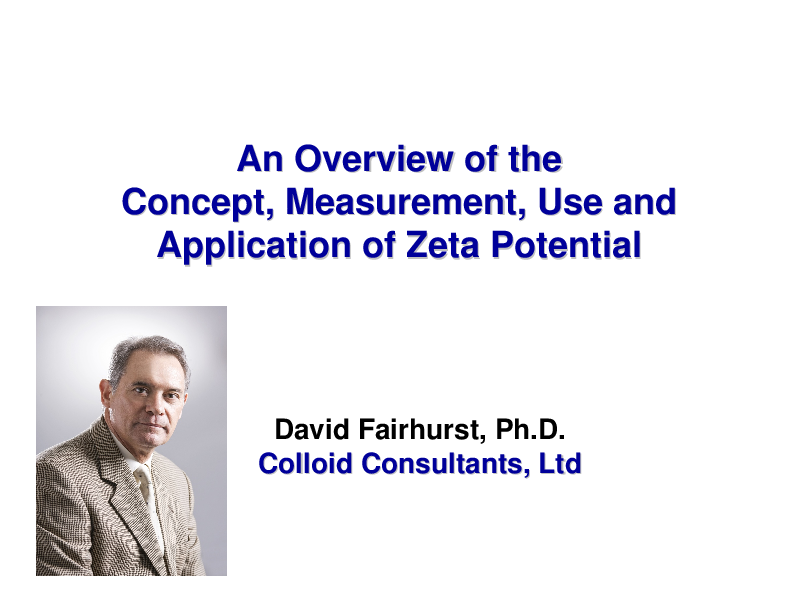
Measuring Isoelectric Point with the SZ-100
In this webinar, Jeff Bodycomb will discuss measuring the IsoElectric Point (IEP), a topic within the area of zeta potential. Additional topics include: What is the Isoelectric Point and why is it important, What is Zeta Potential, How do Surfaces Acquire Charge, How to Measure & Determine Zeta Potential, and Uses and Applications.
Learn more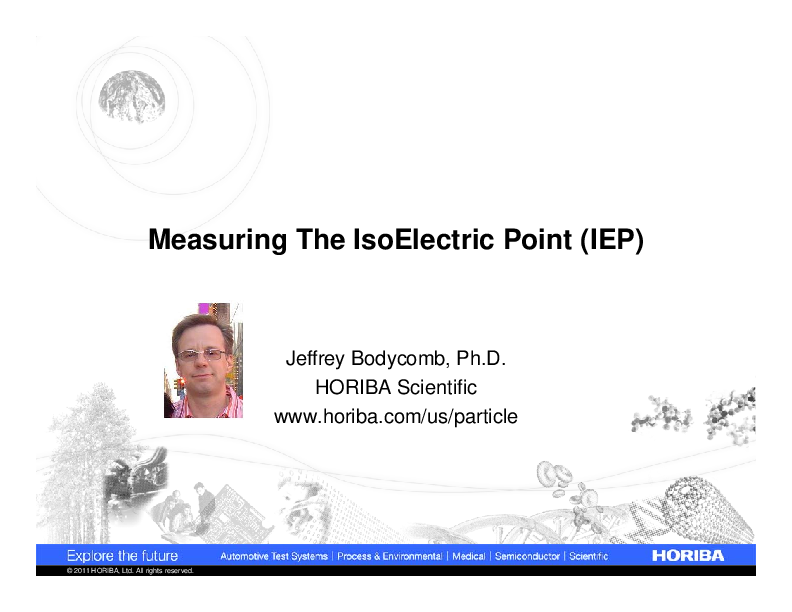
Particle Size and Raman Evaluation of a Semi-Solid Dosage Form
In this webinar, guest speaker Robert W. Lee from Particle Sciences will talk about particle size determination and raman spectroscopy. Topics to be discussed include: Background on Particle Sciences, Laser Diffraction and Image Analysis Comparison, and Examination of Raman Spectroscopic Data.
Learn more
Optimizing Wastewater Treatment using Zeta Potential
In this webinar, Jeff Bodycomb will dicuss how to use zeta potential to optimize and improve our wastewater treatment. Wastewater contains chemical and particulate contaminants that need to be removed for safety, environmental, and aesthetic reasons. This discussion will primarily talk about particulate waste.
Learn more
Characterizing Single-Walled Carbon Nanotubes
In this joint webinar, Adam Gilmore and Jeffrey Bodycomb will discuss characterizing single-walled carbon nanotubes using fluorescence and particle analysis.
Learn more
Pharmaceutical Homogenization Process Development
In this webinar, guest speaker Daniel Huang of Novartis Pharmaceuticals will discuss particle size analysis for homogenization process development using the LA-950 particle analyzer.
Learn more
Method Development for Dynamic Light Scattering
Dr. Jeff Bodycomb discusses method development for sizing by dynamic light scattering (DLS) and the SZ-100 Nanoparticle Analyzer. This presentation will be useful for those who use DLS to determine nanoparticle size. Topics to be covered include preparing suspensions, sample filtration (clarification), and particle concentration.
Learn more
How to Select the Best Refractive Index
Dr. Jeff Bodycomb discusses the process HORIBA uses to select the best possible refractive index. This information is valuable for anyone using any type of laser diffraction particle size analyzer regardless of manufacturer or model.
Learn more
Nano-safety: What Workers Need to Know
As with all materials, if you work with nanoparticles a few minutes of thought about safety will help you avoid problems later. Join Dr. Dominick Fazarro of the University of Texas at Tyler as he discusses nanoparticle safety. This talk provides a reasonable discussion of the potential hazards of nanoparticles and steps that can be taken to reduce these hazards. This talk is useful for those who work with nanoparticles or manage a facility that handles nanoparticles.
Learn more
Breakthrough in Nanoparticle Tracking Analysis (NTA)
In this presentation we describe a novel, Multispectral Advanced Nanoparticle Tracking Analysis (MANTA) system for particle visualization and routine determination of particle concentrations and their sizes. These capabilities combined in one instrument, enable first-of-their-kind measurements of particle kinetic processes which will also be demonstrated.
Learn more
Microfluidizer Technology
The production of nanoparticles and performing cell disruption are important for many applications. The Microfluidizer® high shear processor offers robust, scalable, cGMP compatible solutions to these challenges. In this webinar, Yang Su of Microfluidics, discusses high shear technology and its application to nanoparticle manufacturing.
Learn more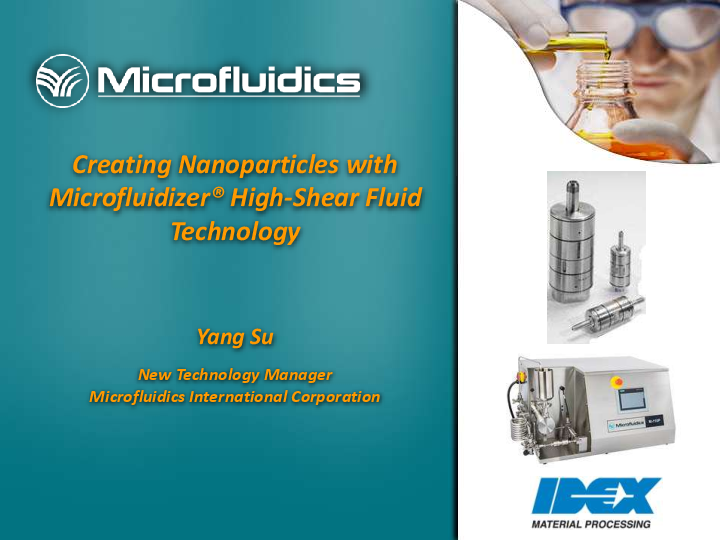
Introduction to Surface Area Analysis
In many cases such as catalysis, particle surface area is more interesting than particle size. Specific surface area (surface area per unit mass of material) can be determined over the range of about 0.01 to 2,000 square meters per gram. This webinar provides an introduction to core surface area analysis concepts.
Learn more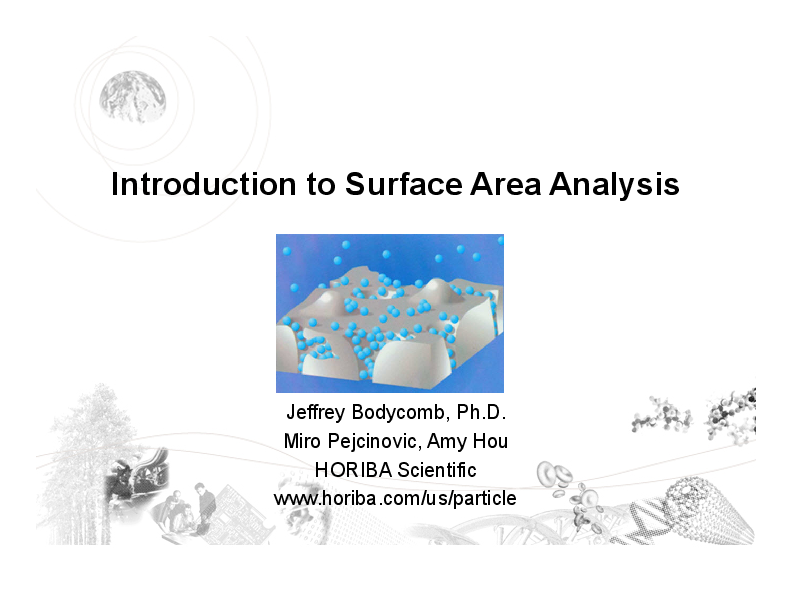
Zeta Potential of CMP Slurries
In this webinar we will first review and discuss the importance of the iso-electric point of metal-oxide polishing agents and the role of slurry pH and more.
Learn more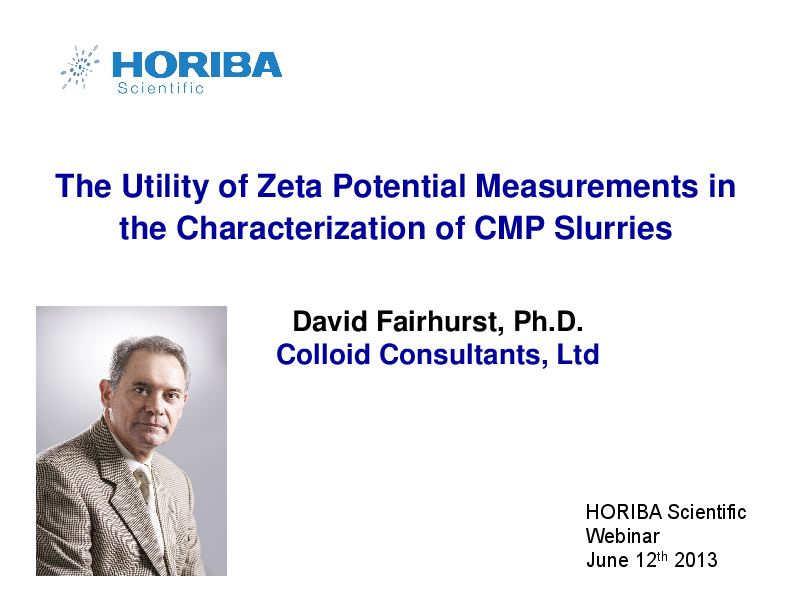
Browse Products

Request for Information
Do you have any questions or requests? Use this form to contact our specialists.