Fluorescence

Why Choose HORIBA Fluorescence Solutions?

Researchers reveal how HORIBA’s fluorescence spectroscopy solutions turn ideas into discoveries and innovation into impact.

Our customer Testimonials attest to the value of using HORIBA instruments. Explore compelling real-world journeys in our Science in Action series, showing fluorescence technology overcoming challenges across diverse applications.

And learn how our equipment has played a role in the works of numerous Nobel Laureates, with some researchers using HORIBA instruments in the groundbreaking studies that ultimately earned them Nobel recognition.


Testimonials | Science in Action Articles | Nobel Laureate Connections | Contact us


Testimonials

  Gérard Mourou, Ph.D., Nobel Prize in Physics Winner, 2018

When the Nobel Museum in Stockholm asked Dr. Gerard Mourou to choose a single item to display to commemorate his 2018 Nobel Prize-winning breakthrough, he chose a HORIBA grating.  

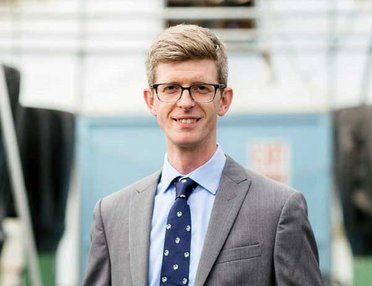
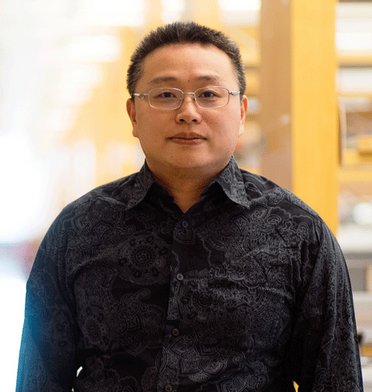
  Urban Wünsch, Assistant Professor at the Chalmers University of Technology:

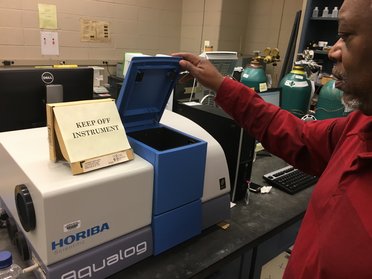
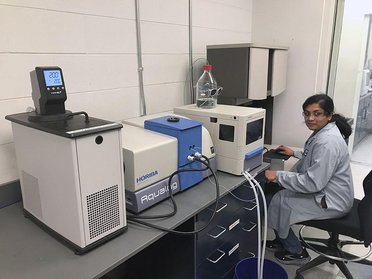
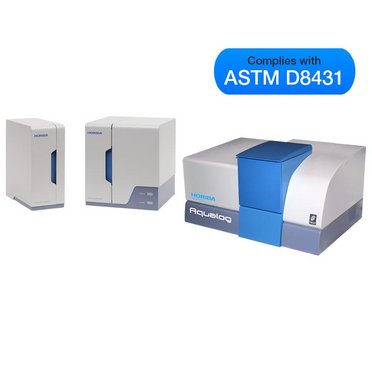
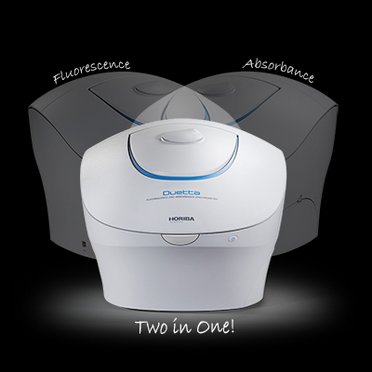
"We know the Aqualog really, really well. It’s a familiar instrument, a workhorse of our research. In order to push things a little, the Aqualog would be quite instrumental because it measures absorbance and fluorescence at the same time... the instrument allows us to collect both at the same time, which, when we combine that with high-pressure measurements, was the key point."  

  Dr. Maria G. Corradini, Associate Professor at the University of Guelph

Fluorescence spectroscopy serves as a "fantastic" tool for rapid, noninvasive analysis. To execute her groundbreaking research in food integrity—including detecting counterfeit maple syrup—she relies on HORIBA's FluoroMax™ and Duetta™ systems, and looks to the advanced flexibility of the Veloci™ A-TEEM to expand her vital safety surveillance into new fields.  


Science in Action Articles

open
Benjamin de Jourdan
The Fight to Protect the Oceans and Marine Life
Benjamin de Jourdan, Ph.D., Huntsman Marine Science Center | Water Research
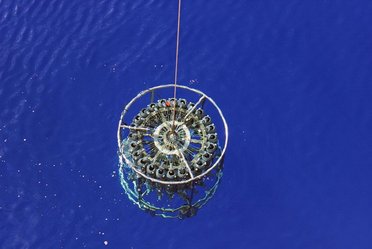
Benjamin de Jourdan is on a mission – to protect economically important marine species from oil spills and other toxins. He uses a HORIBA Aqualog spectrofluorometer to characterize the spills and formulate mitigation strategies.
open
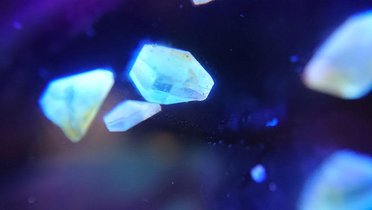
Using fluorescence spectroscopy to develop novel light-emitting materials
Marc Etherington, Ph.D., Northumbria University | Energy
It’s never been more crucial to discover efficient and stable light-emitting compounds that can curtail energy consumption. See what one researcher from the UK is doing.
open
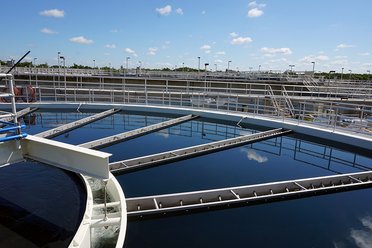
Fluorescence spectroscopy proves a fast accurate and economical method for wastewater measurement
Prof. Shane Snyder, Nanyang Environment & Water Research Institute | Water Treatment
Prof. Shane Snyder talks about wastewater management challenges and how he depends on fluorescence spectroscopy to monitor water quality.
open
Juliana D'Andrilli, Ph.D.
Fluorescence spectroscopy exposes carbon cycle changes
Juliana D’Andrilli, University of North Texas | Water Research
Humans, through the migration of populations, agricultural practices and fossil fuel consumption have interfered with the natural carbon cycle of the planet, Fluorescence spectroscopy gives us clues as to how those changes will affect our environment.
open
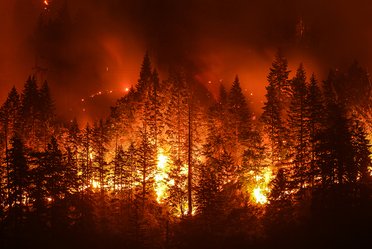
Wildfire frequency and duration have increased in recent years
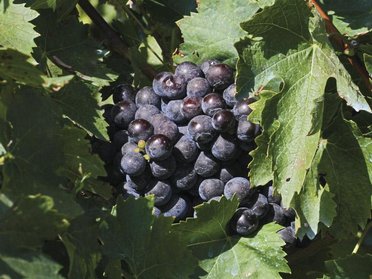
Detection of smoke taint in grapes and wine—a simpler, faster and less expensive optical method based on A-TEEM spectroscopy
Kerry Wilkinson, University of Adelaide | Food and Beverage
Increasingly frequent wildfires and bushfires threaten grape and wine output. Read how fluorescence spectroscopy and A-TEEM technology can quantify smoke taint and yield cost and quality benefits.
open
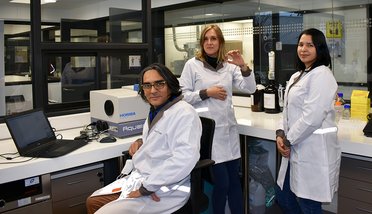
From left to right: Jorge Zincker, Doreen Schober, and Mónica Rodríguez
Chilean grape and wine quality assessment with Aqualog A-TEEM analyses
Doreen Schober, Viña Concha y Toro | Food and Beverage
See how scientists at Chile’s largest wine maker are using HORIBA’s Aqualog with A-TEEM technology to classify grapes and wines for quality and chemical composition.
open
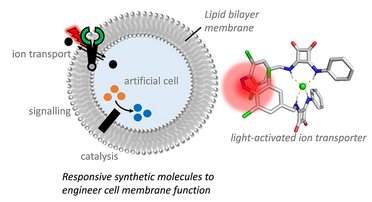
Research into ion transport through cell membranes aided by fluorescence spectroscopy
Matthew Langton, University of Oxford | Biomedical
Ion transport through cell membranes is at the heart of most biological processes. Matthew Langton of Oxford is finding ways using fluorescence spectroscopy to synthesize molecules to take the place of dysfunctional proteins.
open
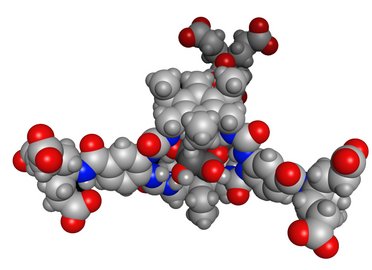
Glucose binding receptor
Glucose Binding Molecules could revolutionize diabetes management
Robert Tromans, Bristol University | Biomedical
The discovery of a glucose binding molecule could revolutionize diabetes management. Researchers are also working with partners to develop these molecular sensors to release insulin as needed. And the Duetta benchtop spectrofluorometer is at the heart of the discovery.
open
Rich Lamar, Ph.D.
A-TEEM and fluorescence spectroscopy may offer a better way to feed the world
Rich Lamar, Linxi Chen, Bio Huma Netics, Inc. | Agriculture
Humic materials are part of a class of compounds called biostimulants that, when applied to plants or agricultural soils, stimulate plant growth and productivity. A-TEEM fluorescence spectroscopy and can quantify the concentration of fulvic acids more efficiently.
open
Matthew Harris
Historic carbon fluctuations could expose climate change secrets
Matthew Harris, University of New South Wales, Keele University Ice Laboratory | Paleoclimatology
Our planet has posed a baffling puzzle for scientists ―one that contradicts established climate theories and has enormous implications for the future.
open
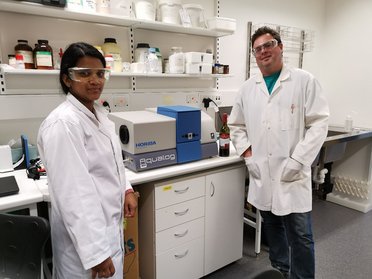
Ruchira Ranaweera and David Jeffery in their lab with a HORIBA Aqualog.
Study validates fluorescence spectroscopy with A-TEEM for fast and precise wine authentication
Ruchira Ranaweera, University of Adelaide | Food and Beverage
The aim of the study was to see if fluorescence spectroscopy, using HORIBA’s proprietary A-TEEM technology, and a novel use of a multivariate algorithm could effectively and economically identify a number of wine samples produced from various regions in Australia.
open
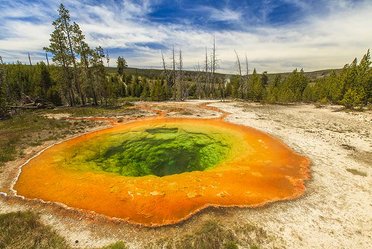
Hot Spring in Yellowstone National Park
Yellowstone’s treasures may hold clues to life
Michael Gonsior, University of Maryland’s Center for Environmental Science | Biogeochemistry
Michael Gonsior studies dissolved organic materials (DOM) from an environment that scientists believe replicates many of the conditions of ancient Earth ― the majestic hot springs in Wyoming’s Yellowstone National Park.
open
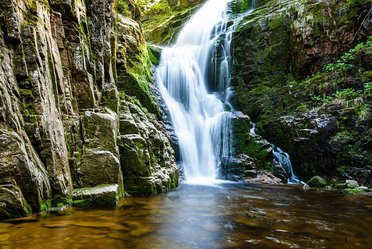
The Kamienczyk waterfall in the Karkonosze National Park in Poland
"Disruptive" carbon research deepens climate change understanding
Ryan Pereira, Heriot-Watt University | Biogeochemistry
Increasing atmospheric CO2 is causing significant warming of the Earth by changing the heat and water balances between the surface and atmosphere.
open
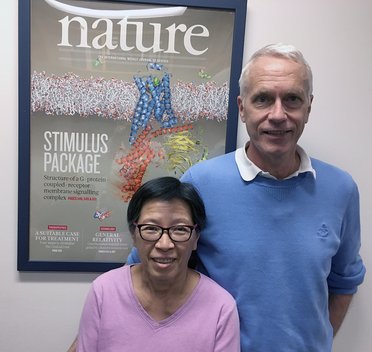
Tong Sun Kobilka, M.D., and her husband, Nobel Laureate Brian Kobilka, M.D.
The baker’s son
Brian Kolbilka, Stanford University | Biopharma
The chairman told him the news. The Nobel Committee chose Kobilka and his mentor, Robert Lefkowitz, M.D., as the 2012 co-recipients of the Nobel Prize for Chemistry.
open
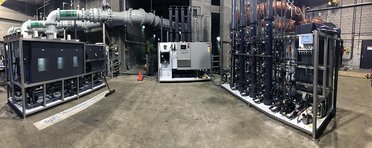
Pilot equipment for experimental water treatment process at the Hampton Roads SanitationDistrict
Scientist pioneers wastewater treatments to fight global warming effects
Ramola Vaidya, Virginia Polytechnic Institute and State University | Wastewater Treatment
Vaidya and her team are developing methods of advanced water treatment that not only returns the wastewater to a healthy level, but raises the ground water level, and prevents land subsidence and seawater intrusion.
open
Cleaner water through fluorescence spectroscopy and artificial intelligence
Chris Miller, University of Akron in Ohio/Fontus Blue, Inc. | Water Treatment
Miller focused his research on drinking water quality monitoring and management, along with treatment optimization.
open
Fluorescence spectroscopy becoming key to identifying pain
Mikhail Berezin, Washington University | Biomedical
Berezin turned his focus to imaging inflammation in the body – and how to locate it. That, he hoped, would eventually lead to the treatment of peripheral neuropathy and chemotherapy induced peripheral neuropathy in particular.
open
Dave Brogle of the Middlesex Water Company
Companies collaborate for better water treatment
Dave Brogle, Middlesex Water Company | Water Treatment
Dave faced challenges managing the amount of dissolved organic material from its water source. Its main supply of raw water is the Delaware Raritan Canal. Rain events cause runoff, compounding the problem.
open
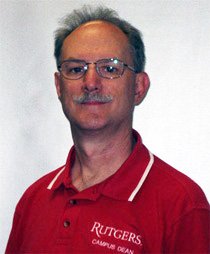
Researcher fights food fraud
Gene Hall, Rutgers University | Food and Beverage
Gene Hall is a crusader. His mission is to find mislabeled food and dietary supplement products, and reveal them to the world.
open
Fine wine-making with the help of HORIBA tech
Adam Gilmore, HORIBA | Food and Beverage
There are a lot of quality characteristics that the winemakers are interested in that relate to the color of the wine and the phenolic content – compounds that affect the wine’s taste, color and mouthfeel.

Back to Top

Request for Information

Do you have any questions or requests? Use this form to contact our specialists.
* These fields are mandatory.

Corporate