
The oxygen stream combustion-infrared absorption method is utilized for carbon and sulfur analysis in various materials. The equipment includes a combustion extraction unit, a detection unit, a gas flow unit and a data processing unit. High-frequency induction heating is employed as the combustion extraction method due to its ease of handling, ability to achieve high-temperature combustion and stirring effect.
Measurement Principle - Carbon/Sulfur Analysis

Technical Journal "Readout": Development of New Model EMIA-Pro and EMIA-Expert Carbon/Sulfur Analyzers
The Gas Flow

In this measurement method, a high-frequency induced current is passed through the surface of a sample held in a magnetic crucible, causing the sample to heat up due to its resistance. This heating process triggers an oxygen combustion reaction, generating combustion heat. Depending on the sample, materials such as tungsten, tin, copper, iron or other fluxes (combustion aids) need to be used.
By burning the sample in an oxygen carrier along with a flux in a high-frequency induction heating furnace, the carbon in the sample gas is converted to carbon dioxide (CO2) and carbon monoxide (CO), sulfur is converted to sulfur dioxide (SO2), and hydrogen is converted to moisture (H2O). After removing H2O using an absorbent, the remaining CO2, CO, and SO2 in the oxygen carrier are detected separately by NDIR detectors.
Key Component 1: Detector

Non-dispersive infrared detector (NDIR)
The main components of an NDIR sensor are an infrared light source, a sample chamber (cell), an optical filter and an infrared detector.
According to the Beer-Lambert law, the gas present in the sample chamber absorbs specific wavelengths of light. The detector measures the attenuation of these wavelengths' intensity, allowing for the determination of the gas concentration.
An optical filter is utilized to isolate the specific wavelength absorbed by the gas molecule of interest. The signal from the source undergoes chopping or modulation to offset thermal background signals from the desired signal. NDIR detectors are employed for the measurement of CO2, CO, SO2, and H2O (when H2 is to be measured by NDIR).
To measure CO2, two detectors are utilized along with two optimized filters, enabling accurate measurement of both low and high concentrations.
HORIBA, a pioneer in NDIR analyzers, has developed NDIR as one of its core technologies, offering market-leading instruments in many fields. It is currently used in not only the elemental analyzers but also multiple instruments covering a wide range of applications: Motor Exhaust Gas Analyzers, Ambient NOx Monitors and Stack Gas Analyzers.
For more detailed technical information about the NDIR gas detection method, please refer to What is Non-Dispersive Infrared Absorption Method (NDIR)?
Key Component 2: Furnace

Carbon and sulfur can be analyzed using induction furnace or resistance furnace for gas generation:
Induction furnace
To measure total carbon and sulfur and achieve high throughput, induction furnaces are preferred. In this method, a sample placed in a ceramic crucible with a flux. Induction heating is employed to achieve high temperatures, typically exceeding 2300°C, with the assistance of oxygen flow. This reaction generates CO, CO2 and SO2. While the exact temperature may not be known, the applied current can be controlled and adjusted during analysis to optimize the method.
Resistance furnace
The resistance furnace enables precise temperature control at the sample location,allowing for adjustments during the measurement process. This setup facilitates controlled and gradual sample combustion, as well as the implementation of programmable temperature curves.
In this method the sample is loaded into a ceramic boat positioned at the center of a horizontally aligned furnace, ensuring uniform temperature distribution. Heating is achieved through resistance and temperature control is monitored using a thermocouple. The maximum heating capability reaches up to 1450°C. Our exclusive furnace is designed to facilitate efficient combustion under high-pressure oxygen and enable the burning of high melting point materials. As a result, minute quantities of gases can be captured within the furnace and then transferred to the detector for analysis.
HORIBA Carbon/Sulfur Analyzers Lineup

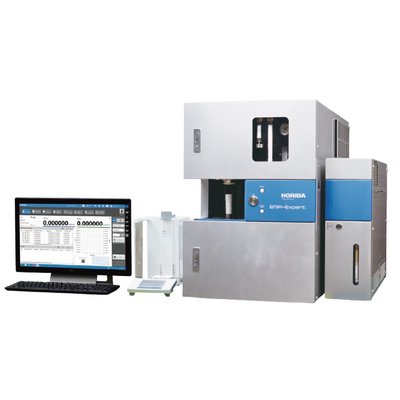
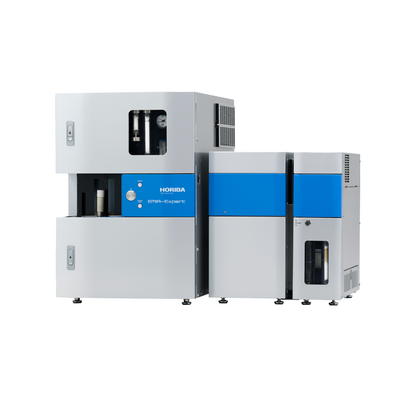
- EMIA-Expert - The Flagship High-Accuracy Model enables accurate and precise measurement in trace analysis.
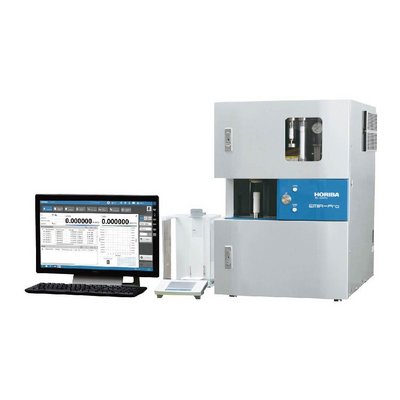
- EMIA-Pro - The Entry Model offers high cost performance and easy operation.
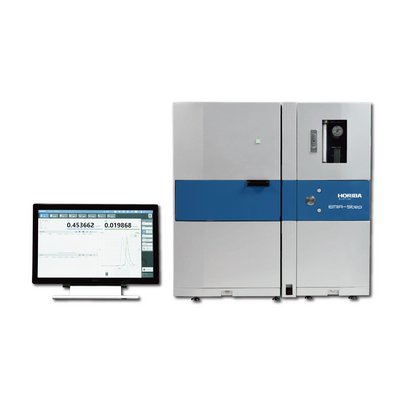
- EMIA-Step - The Tubular Electric Resistance Heating Furnace Model has a variable heating temperature function that enables analysis by separating it by temperature and condition, as well as whole quantity analysis.
留言諮詢
如您有任何疑問,请在此留下詳細需求或問題,我們將竭誠您服務。