Glass

Glass Analysis

Glass materials are pivotal in advanced optical applications, including fiber optics, lenses, optical filters, and laser crystals.

Indeed, their ability to manipulate light through transmission, refraction, and reflection makes them indispensable for telecommunications, imaging systems, precision instrumentation, and laser technology. Additionally, the incorporation of active ions into glass structures enables enhanced optical properties, such as energy transfer processes and light emission characteristics. These capabilities expand the role of glass into cutting-edge domains like quantum computing, medical diagnostics, and photonic devices. Moreover, these properties can be further optimized by applying advanced coatings, which enhance their functionality and performance in demanding applications.

However, they also have their own set of challenges: some are brittle and require careful handling, while others may be sensitive to environmental factors like moisture. In fields relying on advanced glass materials, precise analytical techniques are crucial to understanding their chemical, structural, and optical properties. Unlocking each glass type’s full potential will ensure optimal performance in its applications.

What are the different glass types?

Glass materials encompass a diverse range of compositions and properties, each tailored to specific applications.

Oxyde glasses

Oxide glasses, primarily made with oxygen and other elements such as silicon, boron, or aluminum, are known for their transparency and chemical stability. The inclusion of silica gives these glasses their familiar structure and durability, making them uniquely suited to applications that demand clear, resilient materials.

Key features include high thermal resistance, excellent optical clarity, and chemical inertness. These characteristics make oxide glasses ideal for applications in construction (windows and architectural elements), consumer goods (containers and tableware), and high-tech fields such as nanophotonic devices.

  • Silicate glass: Traditional window glass, made of silica (SiO2), soda (Na2O), and lime (CaO).
  • Borosilicate glass: Used in lab glassware and cookware (e.g., Pyrex), containing silica and boron trioxide (B2O3).
  • Phosphate glass: Contains phosphorus pentoxide (P2O5), used in optical applications.
  • Aluminosilicate glass: Found in smartphone screens and high-temperature applications, includes aluminum oxide (Al2O3).

Non-oxide glasses

Non-oxide glasses are primarily made with elements like sulfur, selenium, or tellurium rather than oxygen. This composition gives them unique light transmission properties, particularly in the infrared spectrum, which oxide glasses cannot match.

Notable features of non-oxide glasses include high refractive indices and the ability to transmit infrared light, making them ideal for specialized optical applications. They are commonly used in fields such as optical amplifiers, where their ability to manage infrared light is critical.

  • Chalcogenide glass: Made with sulfur, selenium, or tellurium, used in infrared optics.
  • Halide glass: Contains fluorides or chlorides, used in low-dispersion optics.
  • Nitride glass: Silicon nitride (Si3N4), used in advanced ceramics and coatings.

Metallic glasses

Metallic Glasses, also known as amorphous metals, are created by rapidly cooling metal alloys to prevent the formation of a crystalline structure. This results in a disordered atomic structure that gives metallic glasses remarkable strength, elasticity, and resistance to wear.

Their unique properties, including high strength-to-weight ratios and excellent corrosion resistance, make them suitable for use in demanding environments. Metallic glasses find applications in electronics, where their magnetic properties are advantageous, as well as in structural components, sports equipment, and medical devices that require durable yet flexible materials.

  • Zr-based metallic glass: Used in aerospace and sports equipment.
  • Fe-based metallic glass: Iron-boron-silicon alloys, applied in transformers and magnetic cores.
  • Pd-based metallic glass: Palladium-copper-silver alloys, often studied for their mechanical properties.

Polymer glasses

Polymer glasses, made from amorphous polymers, resemble traditional glass in appearance but offer a more flexible, lightweight alternative. These materials are impact-resistant and shatterproof, making them especially useful in applications where safety is important.

Key features include lightweight construction, durability, and excellent transparency, albeit with a lower refractive index than oxide glass. Polymer glasses are commonly used in consumer products, including eyewear lenses, smartphone screens, and packaging, and in industrial applications where weight and durability are essential.

  • Polymethyl methacrylate (PMMA): Known as acrylic or Plexiglas, used in optics and glazing.
  • Polystyrene (PS): Found in packaging and insulation materials.
  • Polycarbonate (PC): Used in lenses, safety glasses, and electronics.
  • Polyethylene terephthalate (PET): Common in beverage bottles and food containers.

What are the analytical needs?

Analytical needs range from assessing purity and identifying defects to monitoring changes under different environmental conditions. These insights are essential not only for quality control but also for innovating new applications and enhancing existing ones. Yet, each glass type presents distinct analytical challenges—oxide glasses demand clarity on structural integrity, while non-oxide glasses require specialized methods for assessing infrared transmission. Advanced analytical tools are therefore vital in meeting these needs, supporting research, development, and manufacturing processes across the glass industry.

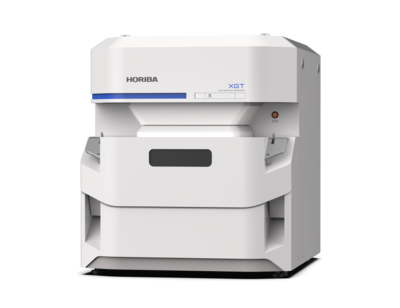
  • X-ray Fluorescence (XRF) is a non-destructive and highly sensitive technique ideal for determining elemental composition and assessing purity in glass materials. Its high sensitivity and rapid analysis ensure that impurities are detected early, preventing structural defects, non-compliance, and safety risks which could compromise material integrity and lead to costly failures.
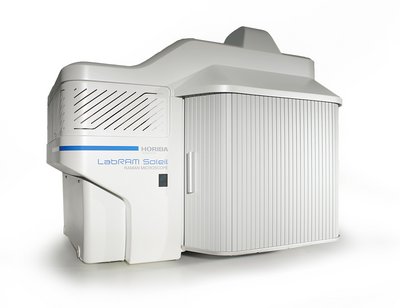
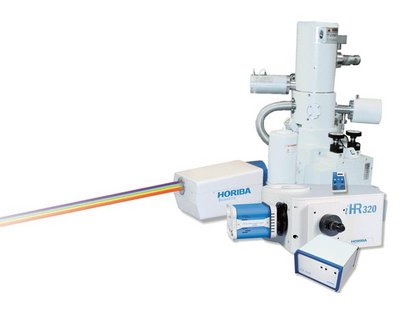
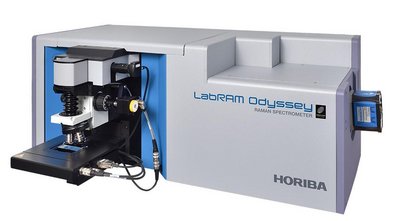
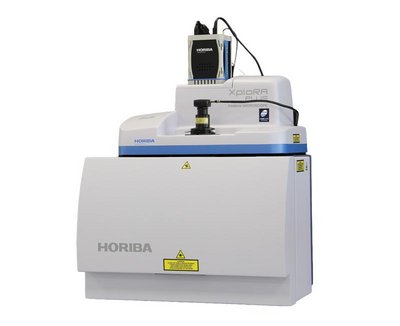
  • Raman Spectroscopy is a powerful technique for analyzing molecular structure in glass matrices (SiO2, B2O3, etc.), identifying inclusions and defects affecting optical and mechanical properties, and even monitoring changes in structure due to thermal treatments or stress, useful for studying glass strength and durability. All of that in a non-destructive and rapid analysis.
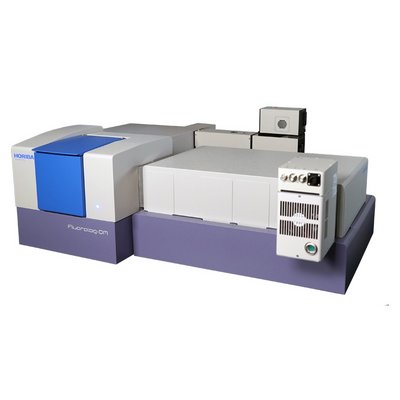
  • Fluorescence Spectroscopy is essential for assessing chemical stability and UV resistance. This method tracks the response of polymer and oxide glasses to specific wavelengths. By tracking fluorescence under specific wavelengths, it ensures the material's resistance to environmental degradation and long-term performance in optical applications. For instance, fluorescence analysis is vital for studying rare-earth-doped laser crystals, which rely on precise energy transfer mechanisms for efficient light emission.
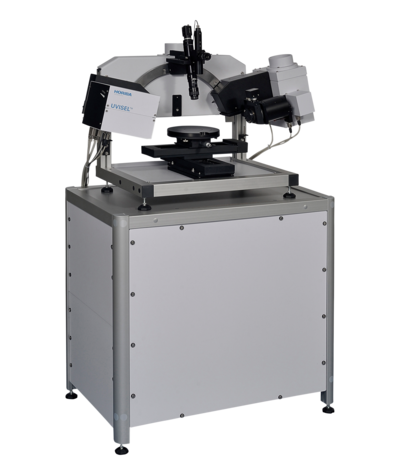
  • Ellipsometry is a precise method for measuring film thickness, refractive index, and other optical properties, ellipsometry is critical for analyzing coatings and optical layers in glass materials. Without accurate ellipsometry data, uneven coatings or incorrect refractive indices could result in compromised product functionality or failure to meet regulatory standards.
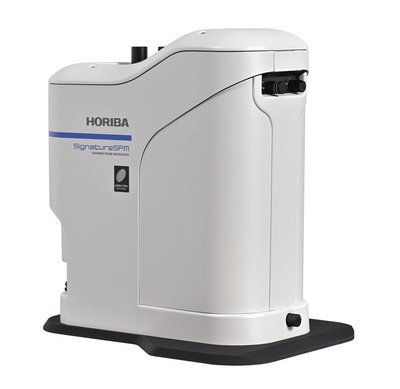
  • Atomic Force Microscopy with Raman (AFM-Raman) combines surface morphology with molecular structure analysis, providing a detailed examination of surface features and defects glass materials. Proper AFM-Raman analysis ensures smooth surfaces and defect-free structures, critical for applications requiring precision and durability.
  • Cathodoluminescence (CL) is ideal for studying optical and electronic properties. CL reveals defect states and impurities and ensures that electronic and optical behaviors align with design specifications.
  • Glow Discharge Optical Emission Spectroscopy (GDOES) offers unmatched insights into the multi-layered structure of materials. This ultra-fast elemental depth profiling technique relies on plasma to sputter a representative area of the investigated material. GDOES is used for instance to follow ion exchange processes for mobile phone glasses, to control the deposition of multilayers on optical glasses or to profile PMMA encapsulation layers to access buried interfaces. Detecting improper layering or compositional mismatches could lead to weak adhesion, unwanted reactions or properties, or reduced durability.
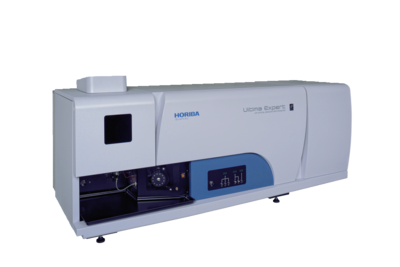
  • Inductively Coupled Plasma Optical Emission Spectroscopy (ICP-OES) enables accurate and precise quantification of trace and major elements, ensuring the comprehensive analysis of glass materials. This precision is essential for achieving desired material properties, such as optical clarity or thermal stability.
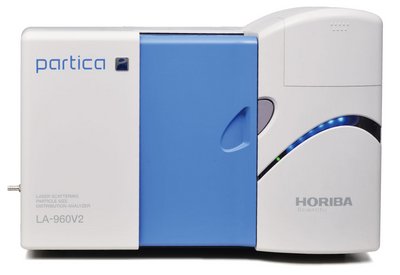
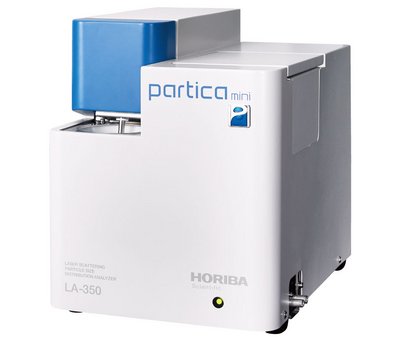
  • Particle Characterization Analysis (PCA) provides detailed information on particle size and shape, particularly for powdered glass forms. This analysis ensures uniformity, flowability, and optimal performance in applications such as additive manufacturing and coatings.

What are the analytical solutions?

HORIBA offers a comprehensive range of analytical techniques that can address the various analytical needs of glass. These techniques help in characterizing the chemical composition, structural properties, surface features, and overall performance of glass materials.

The analysis of glass materials can be performed with instruments using different techniques like X-ray fluorescence, Raman imaging and spectroscopy, AFM-Raman, cathodoluminescence, ICP-OES, GDOES, spectroscopic ellipsometry, particle characterization, and spectrofluorescence.

Videos

Is sample preparation needed to perform Raman analysis of glass defects?

Watch video on HORIBA.com

Application notes

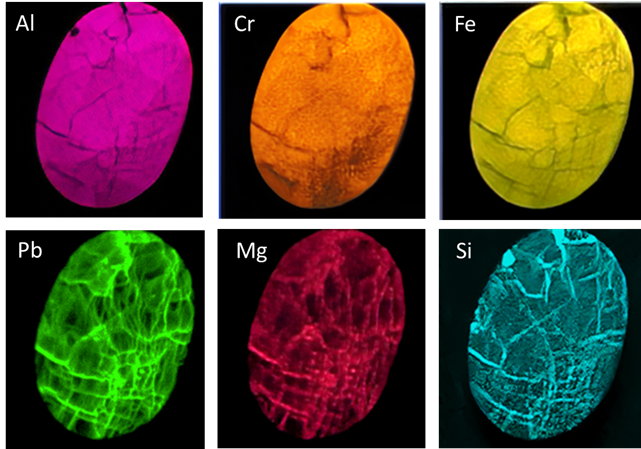
Glass-Filled Ruby Characterization with the XGT-9000, HORIBA’s new micro-XRF

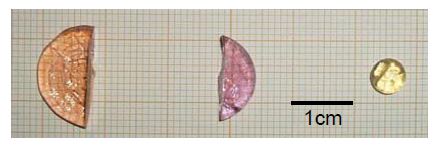
Gemstones for jewelry are treated by heating, irradiation, or filling of cracks to make them flawless. We performed imaging analyses using an XGT-9000 X-ray Analytical Microscope on a ruby provided by Mineralab. The transmission X-ray imaging revealed that the ruby included several internal defects, and the fluorescent X-ray imaging revealed that the ruby surface was treated by filling with Pb, Mg and Si which are representative of lead glass.

Learn more

Do You Know What is Protecting Your Telephone Screen?

Optimization and follow up of manufacturing process of plastics films are easily achieved using Pulsed RF Glow Discharge Optical Emission Spectrometry. This technique allows the fast detection of defects and presence of contaminants. The GD Profiler 2 can be a key instrument during the optimization and follow up of manufacturing process.

Learn more
Optimization and follow up of manufacturing process of plastics films by Pulsed RF GDOES

Analysis of films on glass by pulsed RF GDOES

Some examples of elemental depth profiles of films on glass are shown coming from published data and results from the GD days illustrating the capability of the Pulsed RF GDOES instrument in this domain.

Learn more

What’s Protecting Your Mobile Screen? A Depth Profile of Polymer Protection Covers Using Raman and UFS-GDOES

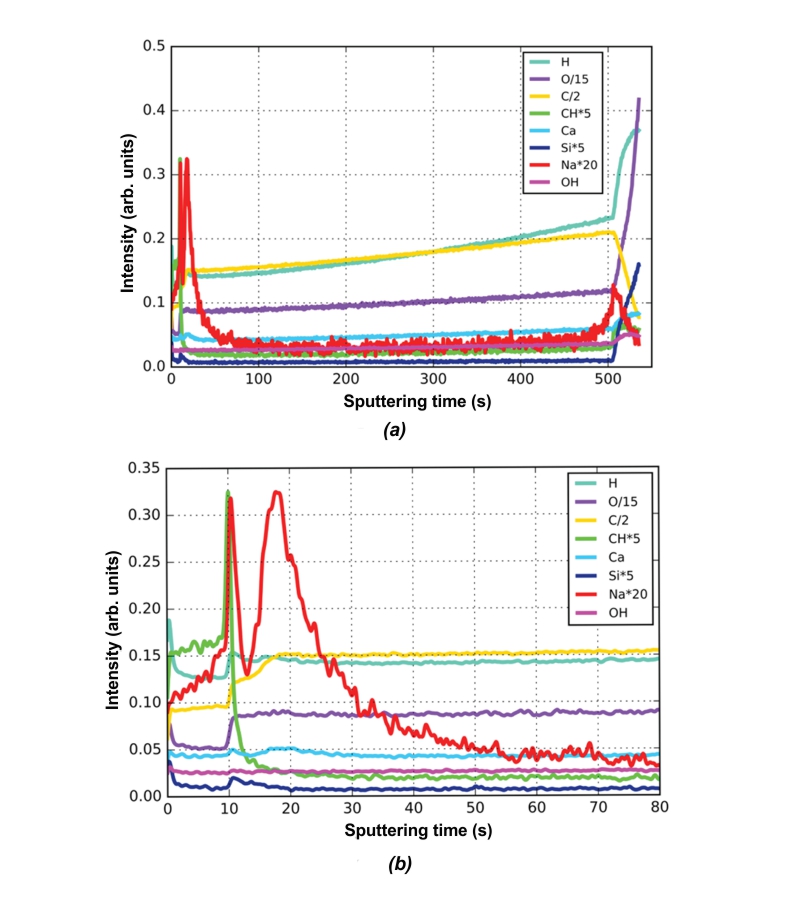
Pulsed RF Glow Discharge Optical Emission Spectrometry, coupled with the Ultra Fast Sputtering system, offers the Ultra Fast Elemental Depth Profiling of plastic thin films Polymer Mobile Screen Protection Covers. By coupling this technique with the Raman spectroscopy z-Scan analysis it is possible to acquire important information concerning the fabrication of smartphone screen protectors.

Learn more
Figure (a) UFS-RF-GDOES depth profile of the PMSPC; (b) zoom on the first 80 s of the analysis.

Raman imaging of a millimetre-sized core-shell SiO2@TiO2 sphere

In recent years, core-shell particles have attracted significant attention due to their smart properties. Size, morphology, and composition are the key features that strongly affect the performance and suitable applications of such structures.

Learn more
Raman imaging of a millimetre-sized core-shell SiO2@TiO2 sphere

Raman analysis of laser-processed glass materials

Laser processing provides a fast, non-contact and flexible method of modifying and patterning materials, from glasses to metals. Micro-machining, thin layers ablation, two-photon polymerization are just a few examples of what has already been demonstrated.

Learn more

Upconversion of Lanthanide-containing glasses using DD-980L excitation

The phenomenon of upconversion is an optical process that takes in lower energy (longer wavelength) photons and emits higher energy (shorter wavelength) photons.

Learn more

PLQY in NIR with Fluorolog-QM and K-Sphere

The Fluorolog-QM fluorescence spectrometer with an integrating sphere option is an excellent choice for PLQY measurements in NIR. The K-Sphere is very convenient and easy to use, as it couples directly to the sample compartment optics and allows a use of external light sources, such as DPSS lasers, which can be attached to the front of the sample compartment. The sphere has holders for cuvettes, slides and powders that can be easily interchanged.

Learn more
K-Sphere accessory fully assembled

Characterizing Lanthanides in Glasses for Optical Applications

Glasses are essential materials with a multitude of uses and many forms. In the area of optoelectronics there is an interest to modify the glass compostion to favor the incorporation of lanthanide elements. Their stability and luminescence properites give the opportunity to fabricate optical materials, such as broadband amplifies, lasers and non linear optical devices. A principal area of interest is that of telecommunications.

Learn more

Požadavek na informaci

Máte nějaké dotazy nebo požadavky? Pomocí tohoto formuláře kontaktujte naše specialisty.

* Tato pole jsou povinná.