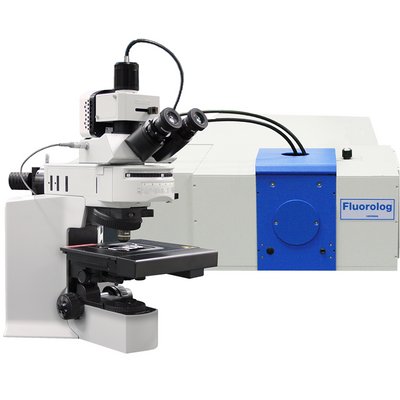
FLIMera

SPAD array imaging camera for dynamic FLIM studies at real time video rates

FLIMera

A New Concept in FLIM Imaging

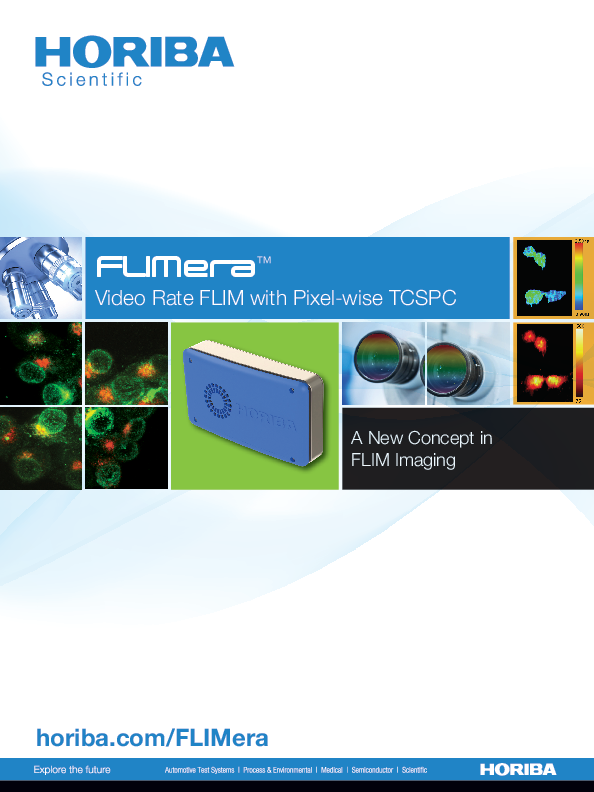
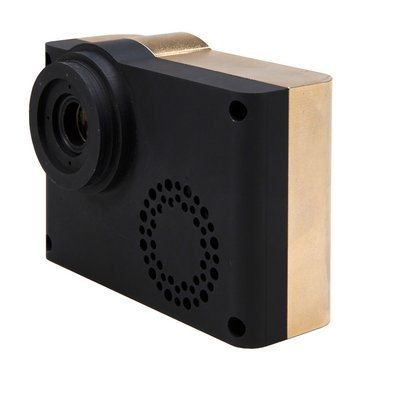
The HORIBA FLIMera camera is a new concept in FLIM technology. It is a wide field imaging camera, rather than a confocal point scanning system, with the intrinsic benefit of being able to study FLIM dynamics at video rates with a simple camera technology.

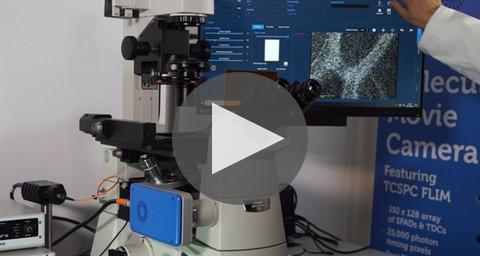
FLIMera Video (1:43)

  • TCSPC per pixel architecture offers 24,576 simultaneous decays
  • Complex multicomponent lifetimes
  • Decay kinetics are acquired directly.
  • Sample analysis with up to 5 exponential decays
  • EzTime Image simple and efficient software interface
  • Perfect for complex and sophisticated molecular analysis like live cell dynamics and detection of biomarkers for disease diagnostics.


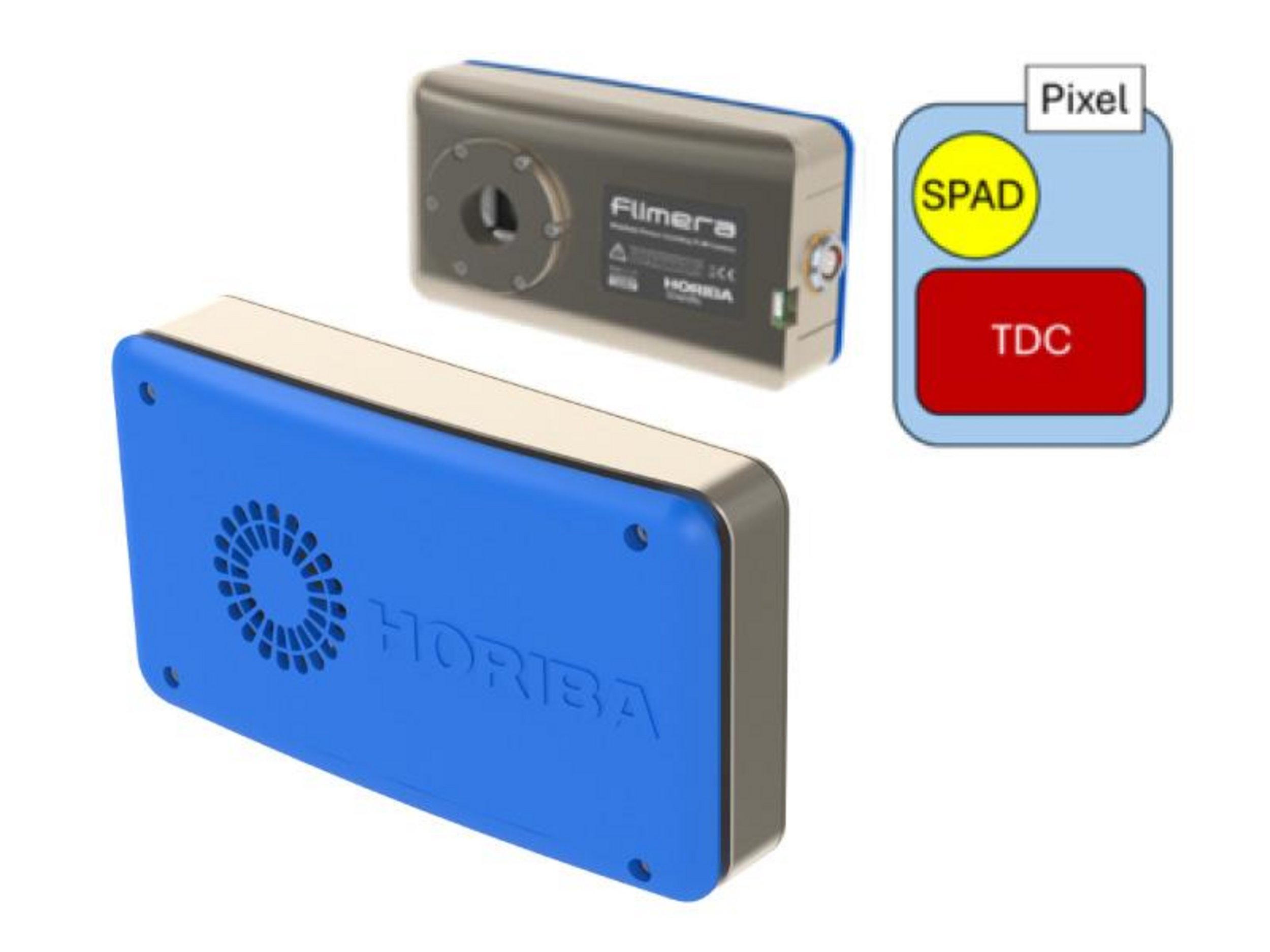
Advances in CMOS technology have led to the development of imaging sensors, based on arrays of pixels, with each pixel containing a single-photon avalanche photodiode (SPAD) and its associated timing electronics, based on a time to digital converter (TDC).

This enables rapid (video rate) fluorescence lifetime determination based on the time-correlated single photon counting technique (TCSPC) realized independently in each pixel (Figure 1).
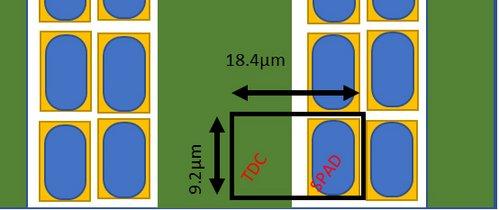
Figure 1: The SPAD and TDC couple

A 192 x 128 pixel image sensor, implemented in 40 nm CMOS technology, is incorporated in a widefield epifluorescence microscope set-up. The sensor has a 13% fill-factor and each 18.4 x 9.2 μm pixel contains a TDC with a resolution <40 ps. This enables up to 24,576 simultaneous fluorescence lifetime measurements each with 4,096 time bins. Through dedicated firmware and the HORIBA EzTime Image software implementation, the fluorescence intensity and the average lifetime as well as the phasor plot generated from the TCSPC imaging measurement, can be simultaneously displayed in real time at video (>30 fps) rates (Figure 2).
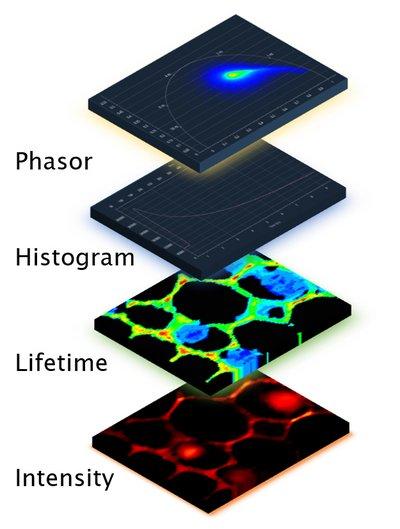
Figure 2: Four simultaneous datasets presented


Modes of operation

The FLIMera is designed for use with HORIBA’s highly intuitive EzTime Image software. This software is used for FLIMera control, data acquisition and analysis. FLIMera provides 4 modes of operation.

  • Manual – User start and stop of acquisition, providing TCSPC intensity image and FLIM data for lifetime analysis.
  • Timed – User defined run time for acquisition, providing TCSPC intensity image and FLIM data for lifetime analysis.
  • Streaming to HDF5 file – TCSPC data can be streamed, for a user-determined time period, to a HDF5 file. This contains full records for each photon in every pixel, so no data is lost, and can be used to reconstruct frames for full decay analysis.
  • Phasor Plot – Complementing the histogram representation is the ability to show and select lifetime data in the form of a phasor plot in real time, as seen in Figure 3. The phasor plot requires initial calibration using a lifetime standard.
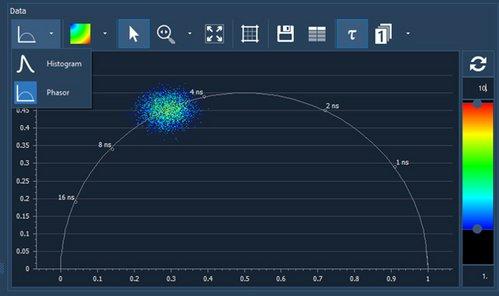
 

Figure 3: Phasor plot


The video-rate capability is demonstrated using standard samples and FUN-1 labelled yeast cells (Figure 4).
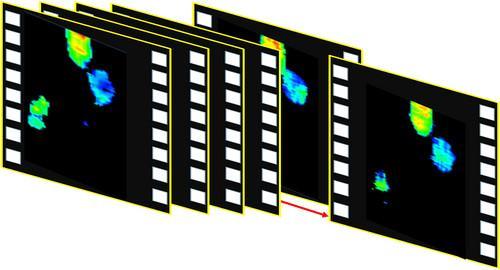

Figure 4: Sequence of images extracted from FUN-1 labeled yeast cell lifetime video https://youtu.be/1Fu7VOCsHuA
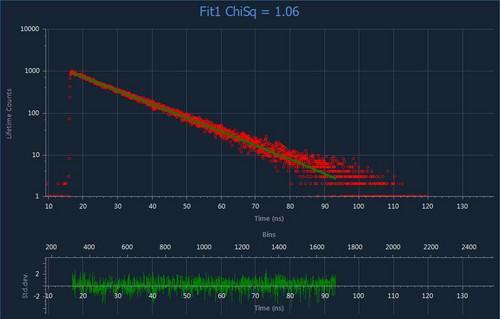
 

Figure 5 a: Decay from DeltaFLEX cuvette system
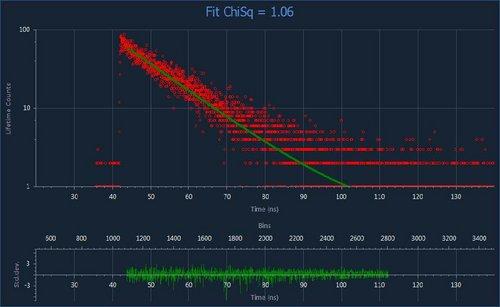
 

Figure 5 b: Decay from just one of 24,578 SPAD pixels demonstrates the very high resolution and TCSPC fidelity of FLIMera

FLIM and HORIBA

The novelty of the in-pixel detection and timing technology enables a widefield imaging approach, which significantly reduces data acquisition times enabling the study of dynamic events. FLIMera contributes to HORIBA’s long history in the field of fluorescence measurement; recognized by winning the prestigious Institute of Physics Business Innovation Award.


FLIMera Camera Specifications
ModalityWidefield Time-Domain TCSPC
SensorSPAD CMOS with In-Pixel TDC
Sensor Wavelength Range400 to 900 nm
Max Total Count RateUp to 295 Mcps theoretical
Max Pixel Count Rate12 kcps
Image Array192 x 128 pixels
Frame Rate (Max.)30 fps
Fill Factor13%
Lifetime RangeFrom 200 ps to 20 ns
Lifetime ResolutionUp to 4096 time bins of 50 ps
Connection TypeC-Mount
Electronics Interface IncludedHORIBA FLIMera Base Unit (includes laser synch input TTL)
Software IncludedHORIBA EzTime Image
Required ComponentsPulsed laser source
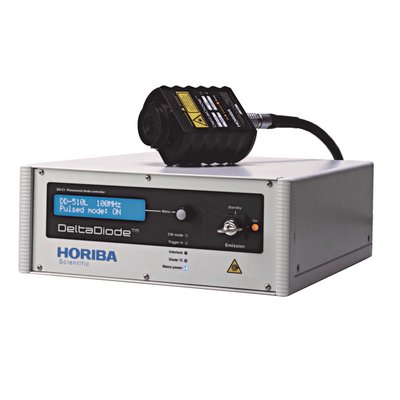
Light Source OptionsDeltaDiode Lasers


    Biotechnology & Biomedical
    Biotechnology | Pharmaceuticals and Medicine Manufacturing

    FLASH-FLIM measurements with the FLIMera TCSPC Camera

    Recent developments CMOS technology allow widefield lifetime imaging, with the ability to measure FLIM in real time, to be employed to investigate mobile samples and kinetics, as well as remote imaging.

    Explore application
    Biotechnology & Biomedical
    Biotechnology | Pharmaceuticals and Medicine Manufacturing

    FLIM Unveiling Molecular Interactions with Fluorescence Lifetime Imaging

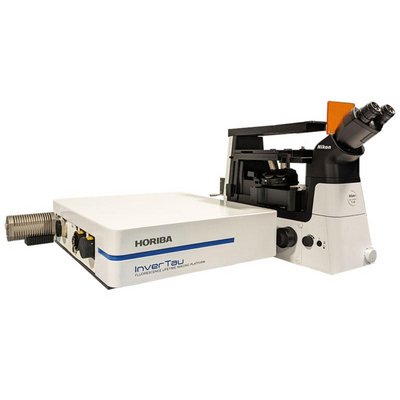
    This application note describes FLIM technology and its implementation using HORIBA's FLIMera and InverTau instruments. These instruments, based on time-correlated single-photon counting (TCSPC), enhance fluorescence microscopy by providing an additional contrast mechanism based on fluorescence lifetime.

    Explore application
    Polymers & Plastics

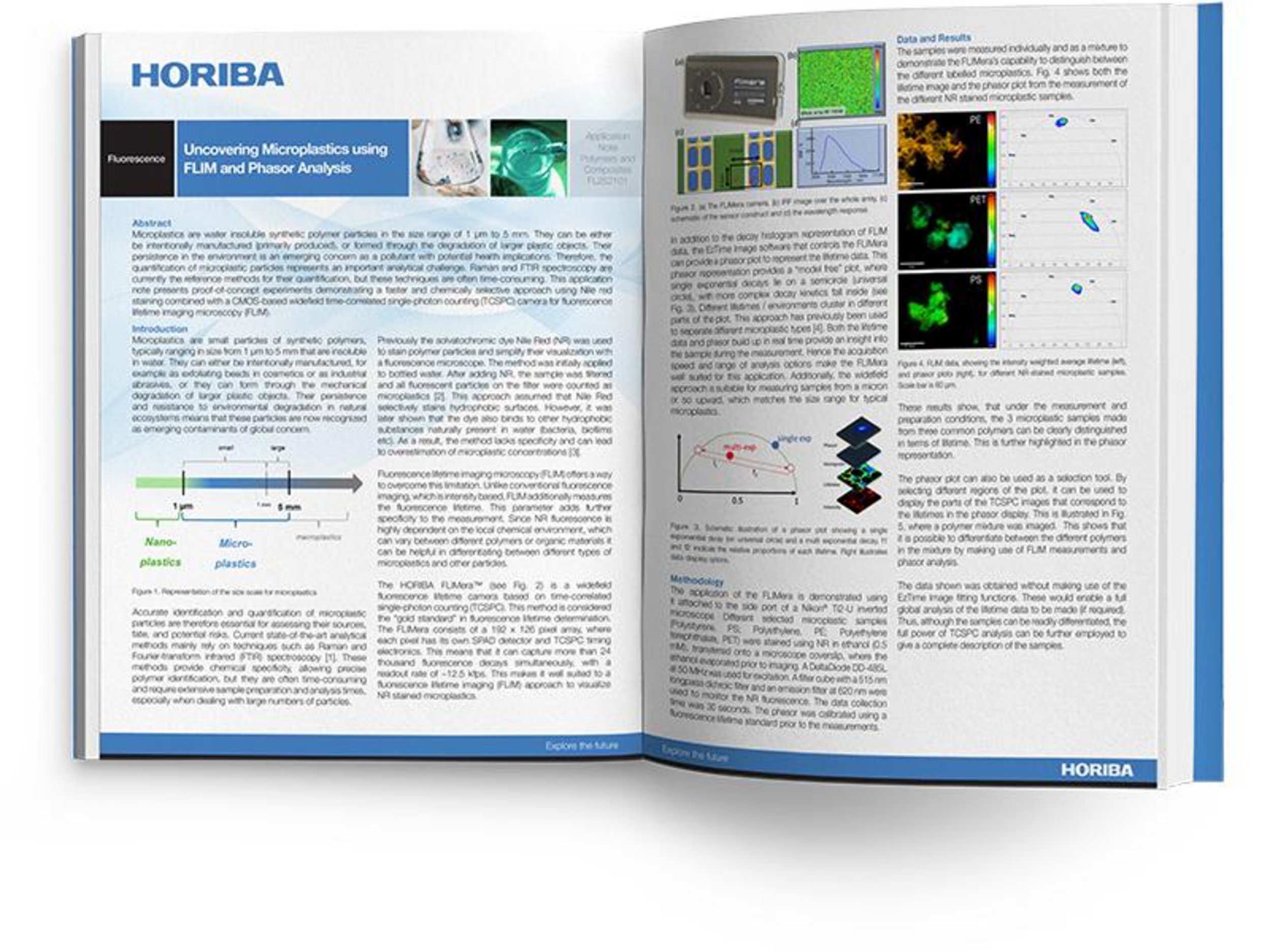
    Uncovering Microplastics using FLIM and Phasor Analysis

    Microplastics are small particles of synthetic polymers, typically ranging in size from 1 µm to 5 mm that are insoluble in water. They can either be intentionally manufactured or they can form through the mechanical degradation of larger plastic objects. Their persistence and resistance to environmental degradation in natural ecosystems means that these particles are now recognized as emerging contaminants of global concern.

    Explore application
    Environment
    Environmental Countermeasures

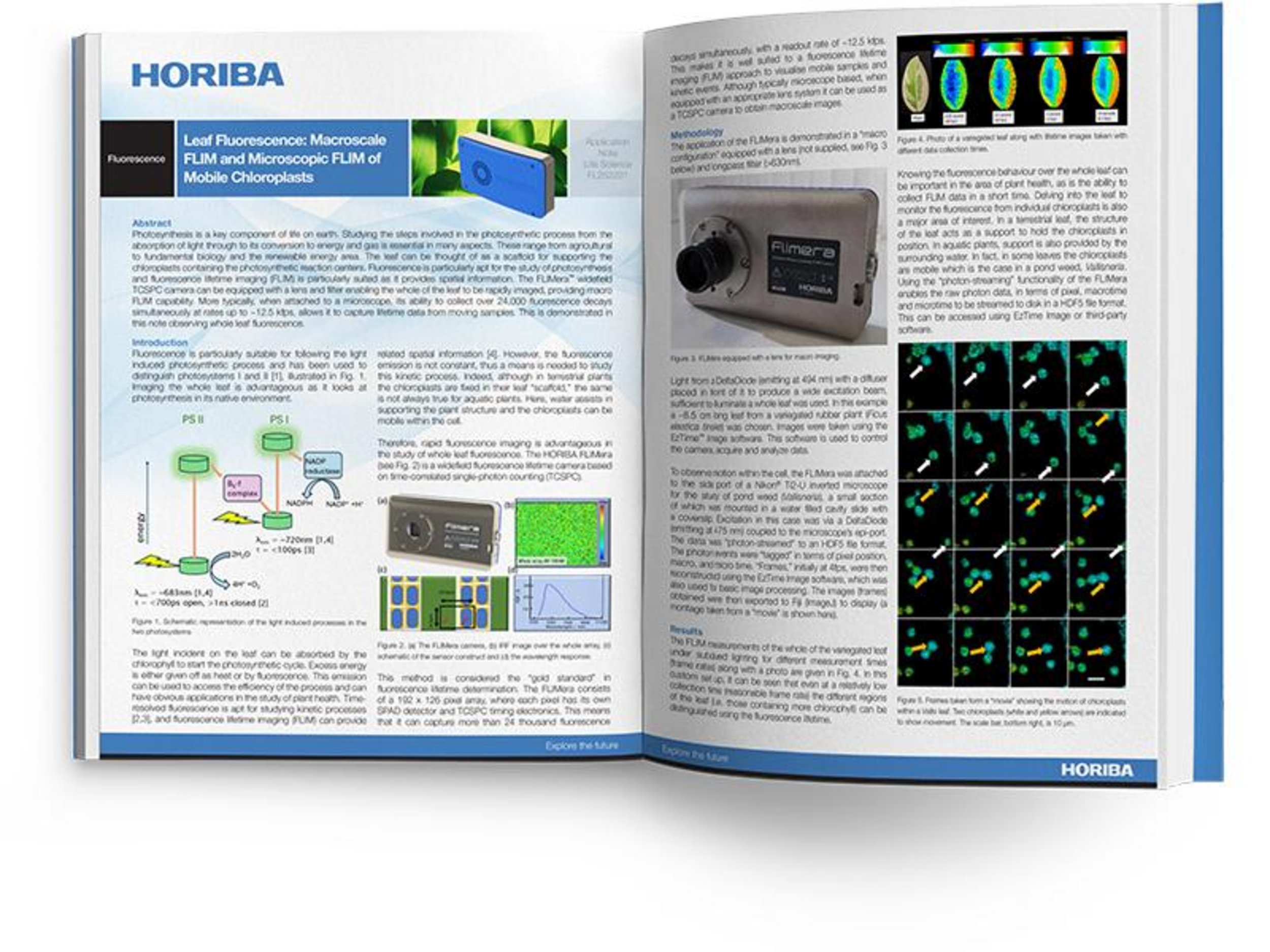
    Leaf Fluorescence: Macroscale FLIM and Microscopic FLIM of Mobile Chloroplasts

    Photosynthesis is a key component of life on earth. Studying the steps involved in the photosynthetic process from the absorption of light through to its conversion to energy and gas is essential in many aspects. These range from agricultural to fundamental biology and the renewable energy area. Fluorescence is particularly apt for the study of photosynthesis and fluorescence lifetime imaging (FLIM) is particularly suited as it provides spatial information.

    Explore application
    FLIMera brochure PDF

    FLIMera brochure PDF

    1.8 MBPDF
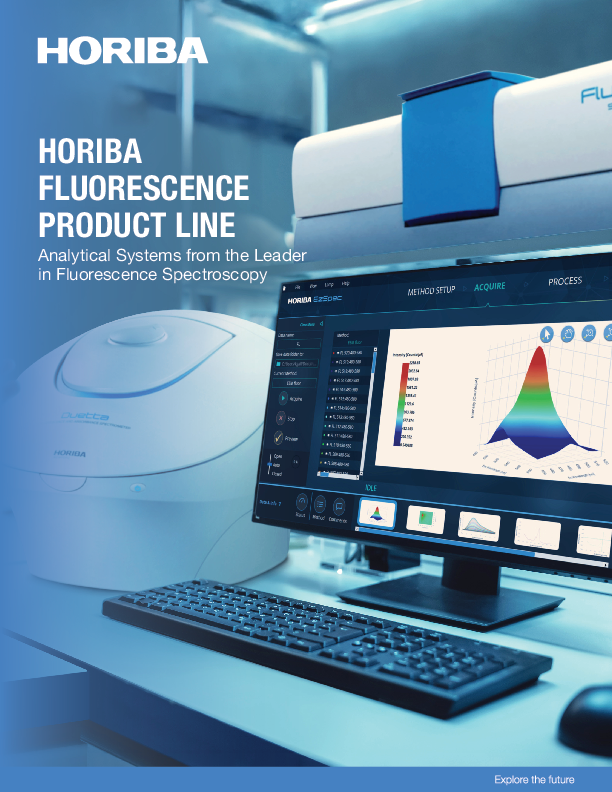
    Fluorescence Product Line Brochure

    Fluorescence Product Line Brochure

    16.83 MBPDF
    Market: Scientific
    Manufacturing Company: HORIBA Scientific

    Solicitud de Información

    Tiene alguna pregunta o solicitud? Utilice este formulario para ponerse en contacto con nuestros especialistas.

    * Estos campos son obligatorios.

    Fluorescence

    What is Fluorescence? The term fluorescence refers to one type of luminescence. Luminescence, broadly defined, is light emission from a molecule. There are several types of luminescence.