Interested in watching the webinar?
Click the image below, fill out the form and enjoy instant access to the on-demand video.
We are pleased to offer this webinar for professionals involved in pH and conductivity measurement in research & development, quality control, and environmental analysis.
This webinar provides a comprehensive introduction to pH measurement, covering the principles of pH meters, proper measurement techniques, calibration, routine maintenance and troubleshooting. Drawing on frequently asked questions received by our customer support team, the session also shares practical tips to help ensure accurate and reliable results.
Whether you are a current user of desktop or portable pH meters or are considering adopting one in the future, this webinar offers valuable insights to support your measurement needs.
Please note: The video content reflects information available as of 7 April 2026.
 Overview of Webinar
What you'll learn:
- pH measurement fundamentals
- Calibration for accurate results
- Electrode selection and maintenance best practices
- Troubleshooting and measurement automation
Webinar Highlights
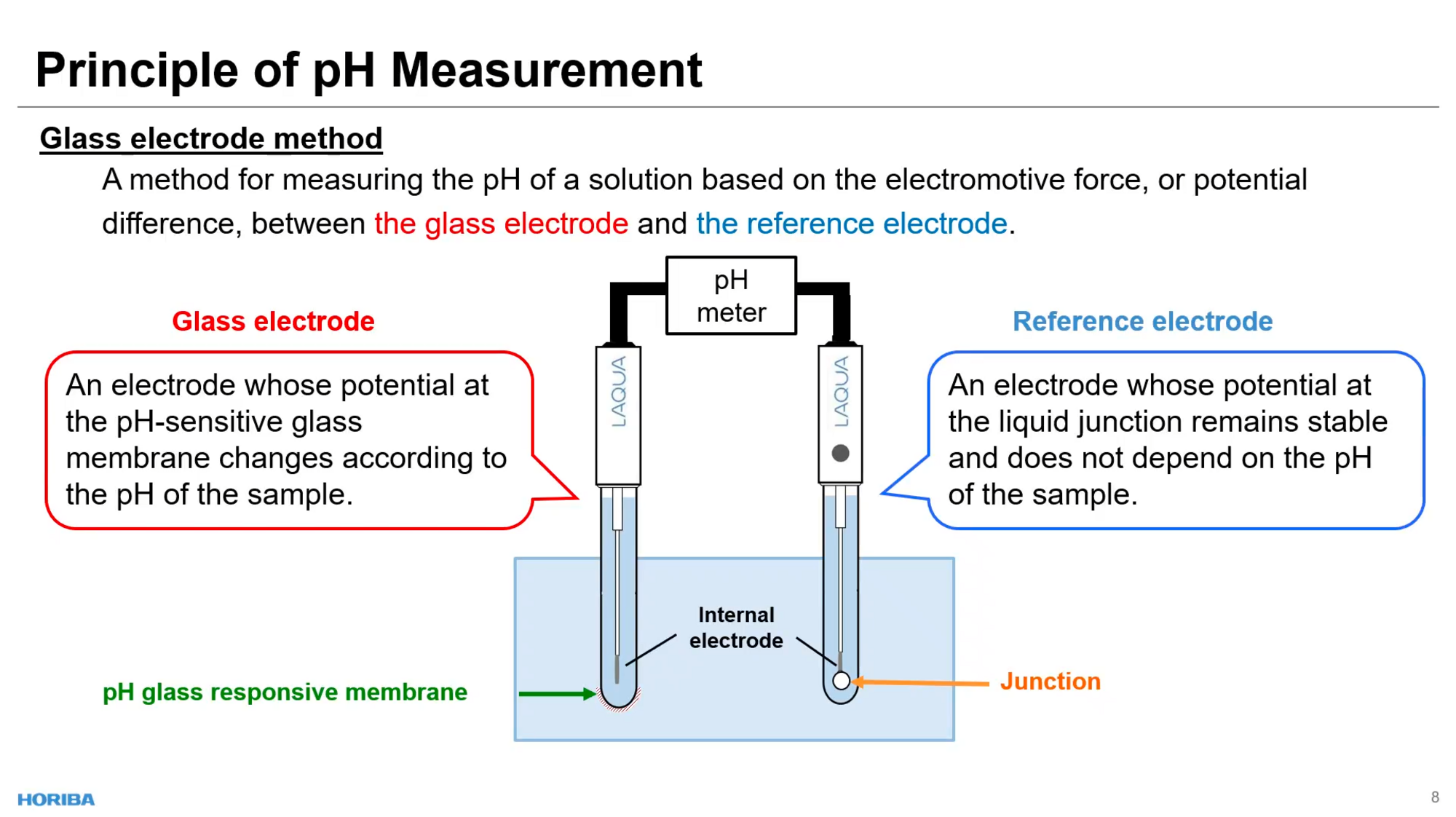
Gain a solid understanding of pH measurement fundamentals, from the basics of pH and the measurement principle of the glass electrode method, the structure of pH electrodes and why calibration is necessary. It's easy to understand even for those learning about pH measurement for the first time.
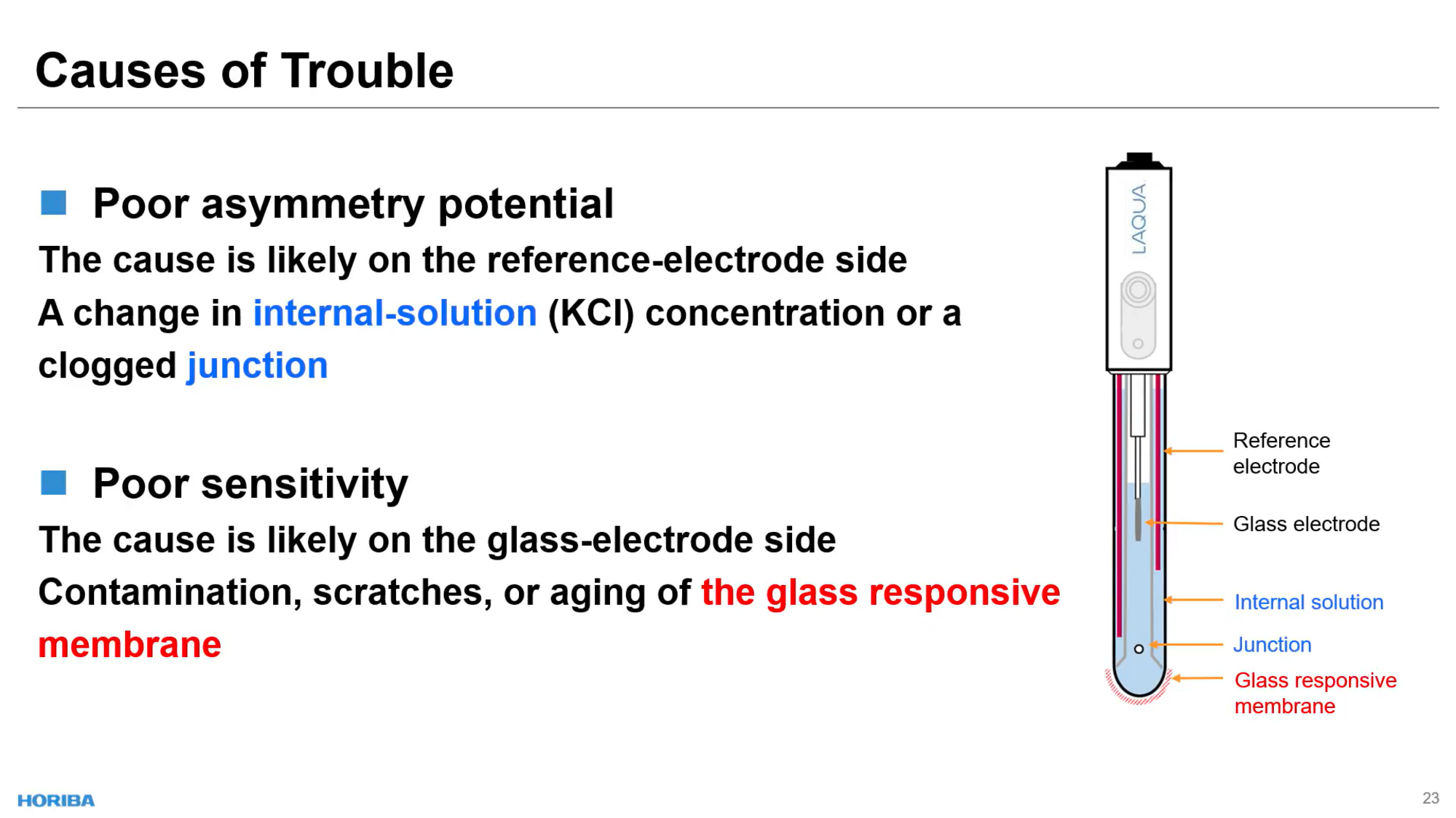
Based on frequently asked questions and real-world troubleshooting cases from our customers, this guide highlights best practices for accurate calibration and measurement. Learn how to resolve common issues such as unstable readings and poor reproducibility, while gaining practical insights into proper electrode maintenance for reliable long-term performance. The guide also covers common measurement problems, their root causes, and effective preventive measures through clear, real-world examples.
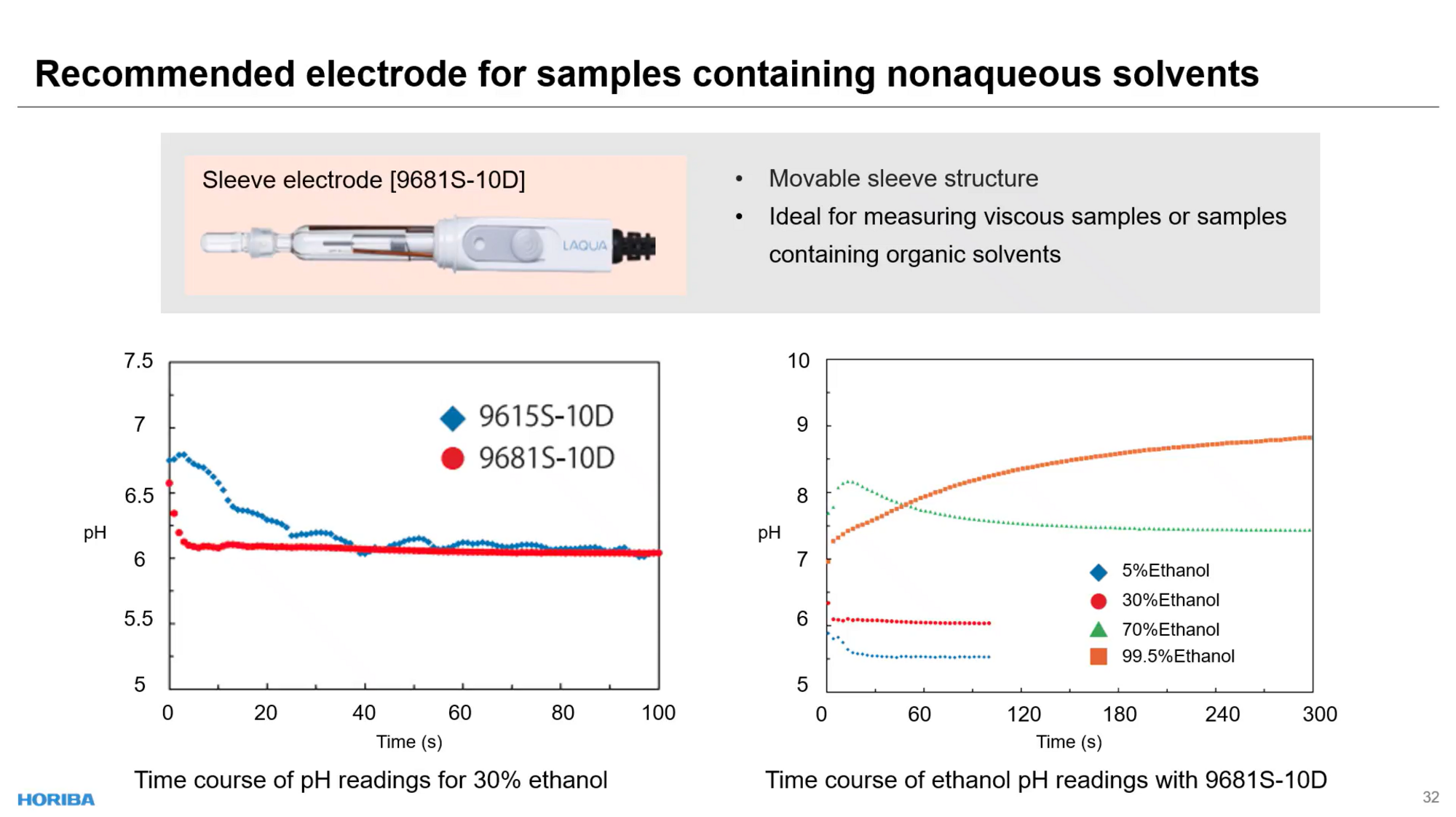
Choosing the appropriate electrode is key to obtaining accurate pH measurements. This guide showcases recommended electrodes for various sample types, including trace-volume samples, highly viscous materials, solvent-containing solutions, and low-conductivity samples, making it easier to find the right electrode for your application.
Discover how automating pH measurement can improve productivity while maintaining measurement accuracy. This guide explains the benefits of automation, including reduced manual effort, faster workflows, optimized measurement capacity, and enhanced operational efficiency, making it ideal for those considering the adoption of automated solutions.
Watch now to get insights into the world of pH measurement.
Click the image below, fill out the form and enjoy instant access to the on-demand video.
Related Products
9615S-10D
- Glass body electrode
- Internal liquid replenishment type
- Dome shape provides strong resistance at all angles, reducing the risk of breakage
- Recommended for a wide range of samples.
9625-10D
- Plastic body electrode
- Internal fluid refillable type
- Ideal for field measurements of river and environmental water
9652-10D
- Plastic body electrode
- No internal fluid refill required
- Gel-type internal fluid eliminates the need for refilling, making maintenance easy
9618N-10D
- Microelectrode
- Measurable from 50 μL
- Compatible with microtubes and other small containers
9681S-10D
- Sleeve electrode:
- For measuring highly viscous samples
- Also compatible with non-aqueous solvent-containing samples
0040N-10D
- ISFET electrode
- For measuring the surface of food such as meat
- For measuring samples in shallow containers such as petri dishes
9600-10D
- PUREIL electrode
- For measuring low conductivity samples such as pure water and river water, samples that react with KCl (e.g., Ag), and high-concentration salt solutions.
