PDF
1.65
MB
Find out how HyEVO can improve your H2 engine testing. Download the Brochure

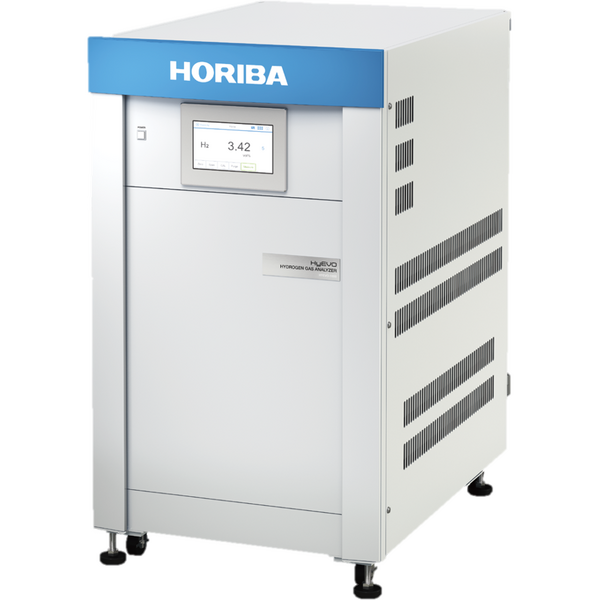
Hydrogen engine testing at the Korea Institute of Machinery and Materials (KIMM) has advanced significantly thanks to HORIBA’s Hydrogen Analyzer HyEVO. In this interview, Dr. Hyunwook Park, Senior Researcher at KIMM, explains how HyEVO has enabled accurate low-concentration measurement, simplified workflows, and improved safety in hydrogen engine research. The Korea Institute of Machinery and Materials (KIMM) is a world-class research institute in South Korea, dedicated to addressing global challenges in carbon neutrality, climate technology, energy conversion, and mobility.
Dr. Hyunwook Park, Dr. Junsun Lee, and HORIBA Korea sales representatives
I develop carbon-free engines for heavy-duty applications.
The overall direction toward carbon-free engines has become clear in recent years. For passenger cars, the trend has shifted to hybrid engines and battery-electric vehicles. In contrast, heavy-duty vehicles such as tractors weighing 20 tons or more—the focus of my research—are increasingly powered by hydrogen engines.
Dr. Hyunwook Park (Senior Researcher, KIMM) with the HyEVO
That’s when I came across HORIBA’s Hydrogen Analyzer HyEVO.
Testing at Korea Institute of Machinery and Materials (KIMM)
One of the biggest challenges in hydrogen engine development is hydrogen’s low ignition threshold—it can ignite at concentration as low as 4%, leading some to refer to this as a “hydrogen bomb” risk.
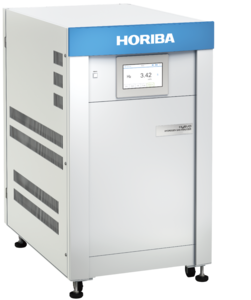
When we measured blow-by gas with HyEVO, the concentration in the engine crankcase exceeded 4%. Although the chance of an ignition source in the crankcase is low, this situation still presents a fire risk.
Thanks to HyEVO’s wide measurement range—from 0–5% and down to 0–2000 ppm—we were able to develop and install additional equipment that improved safety levels significantly.
 Engine technologies are evolving rapidly, with new systems emerging that utilize hydrogen, ammonia, and other carbon-free fuels. These are being applied across biomass systems, carbon-neutral ships, and power generators.
Whenever new technologies arise, new measurement devices are required. As a leading analytical instrument manufacturer with a global customer base, HORIBA is in a strong position to access market trends and technical information early.
We would greatly value HORIBA’s active sharing of such insights. Early access to information about upcoming analytical instruments would be particularly beneficial for researchers like us who work at the initial stages of development.
We look forward to continued collaboration with HORIBA, exchanging information on the latest technologies and advancing the development of next-generation engines.
Optimize Your Hydrogen Engine Research with HyEVO.
Accurately measure low-concentration hydrogen and improve safety in your engine testing.
Contact HORIBA or view the HyEVO product page.
The Korea Institute of Machinery and Materials (KIMM) was established in 1976 as a world-class research organization in South Korea. KIMM addresses global challenges across carbon neutrality, climate technology, energy conversion, and mobility innovation.
A high-precision, rapid-response hydrogen gas analyzer essential for advancing technologies in hydrogen production, transport, and utilization, including ammonia.
Read moreDiscover how HORIBA advances hydrogen and ammonia engine and gas turbine development with precision measurement solutions, driving cleaner power generation.
Read moreAdvanced measurement and analysis technologies from HORIBA optimize hydrogen and ammonia applications across fuel cells, power generation, and production for carbon neutrality.
Read moreDo you have any questions or requests? Use this form to contact our specialists.