HORIBA Scientific and Analytical Instruments
Websites
Corporate Website
  • Corporate
Market Websites
  • Mobility
  • Energy and Environment Solutions
  • Life Science
  • Healthcare
  • Materials
  • Semiconductor
Countries/Regions
Americas
  • Brazil / Brasil
  • United States / United States
Asia
  • China / 中国
  • India / India
  • Japan / 日本
  • Korea / 한국
  • Singapore / Singapore
  • Taiwan / 台灣
  • Thailand / ประเทศไทย
  • Vietnam / Việt Nam
Europe
  • Austria / Österreich
  • Czech Republic / Česko
  • France / France
  • Germany / Deutschland
  • Poland / Polska
  • Russia / Россия
  • Spain / España
  • Türkiye / Türkiye
  • United Kingdom / United Kingdom
Global
  • International
Search
HORIBA Scientific and Analytical Instruments

Contact us

Find us

  • A giant leap in fuel cell engineering
  • AFIS key to catching crook in unlikely match
  • The Alchemist’s Factory – A Particle Characterization Story
  • Alternative light sources and AFIS help identify murder suspects
  • An act of mercy in Baltimore
  • Astrobiologist/Geobiologist uses Earth as a lab to examine possibility of extraterrestrial life
  • A-TEEM™ and fluorescence spectroscopy may offer a better way to feed the world
  • Can Raman microscopy reveal art forgeries?
  • Carbon black lightens your wallet
  • Chilean grape and wine quality assessment with Aqualog A-TEEM analyses
  • Cleaner water through fluorescence spectroscopy and artificial intelligence
  • Companies collaborate for better water treatment
  • Cryogenics and Multimodal Microspectroscopy — Filtering out the Noise
  • Designing a new breed of nuclear reactors
  • Detecting early signs of cancer with Raman microscopy
  • Detection of smoke taint in grapes and wine
  • Developing in-situ, online monitoring tools for radioactive materials using fluorescence spectroscopy
  • Discovering the origins of life
  • Drilling deep to discover life
  • Duetta: fluorescence and absorbance - in the blink of an eye
  • Elemental analysis and a cold brew
  • Exploring biogeochemical cycles, speciation, and primary productivity in the ocean using fluorescence spectroscopy
  • Exposing Counterfeit Drugs
  • Finding ancient life through minerals on earth and beyond
  • Fine wine-making with the help of HORIBA tech
  • Fingerprint database leads to killers
  • Fluorescence sensors contribute to biological and display technologies
  • Fluorescence Spectroscopy: An Alternative to Chromatography in Enhancing the Flavor of Foods
  • Fluorescence spectroscopy becoming key to identifying pain
  • Fluorescence spectroscopy exposes carbon cycle changes
  • Fluorescence spectroscopy exposes carbon cycle changes
  • Fluorescent carbon nanodots: making foldable displays
  • Forensic light sources nab the suspects
  • Glucose Binding Molecules could revolutionize diabetes management
  • The Grape Identity Crisis and How Spectroscopy Separated History’s Most Confusing Cultivars
  • Health benefits of olive oils get boost
  • Historic carbon fluctuations could expose climate change secrets
  • How do thin films help NASA uncover the secrets to the universe?
  • How fusion breakthroughs will lead to clean renewable energy
  • How to measure temperature with light
  • How we customized a spectroscopy solution in the low UV range
  • Investigating missing carbon in Australian caves
  • Ionic Liquids as a Breakthrough for Resource Recycling Issues
  • Is this the next breakthrough in medicine?
  • Killing cancer with lanthanides and air
  • Launch of Mars 2020 to explore Mars using XRF
  • Leading the World with All-Solid-State Batteries
  • Low cost solar power on the horizon
  • Man of science follows business path
  • Making better gas turbines
  • Making carbon nanotubes more accessible
  • Making more efficient solar energy
  • Materials characterization crucial in Silicon Valley systems
  • Medical examiner department ID’s evidence with alternative light sources
  • Micro-XRF uncovers secrets to Van Gogh’s brilliance
  • Microplastics: a big problem for the environment
  • Microplastics explained
  • Mishaps and ski trip lead to laser revolution
  • Museum’s mineral studies improving life
  • MXenes are revolutionizing nanotechnology with the help of Raman Spectroscopy
  • Nano-scale research and technology leads to advanced materials development
  • Nanotechnology a pathway to efficient solar energy
  • Optimizing Wastewater Treatment in South Africa: A-TEEM Fluorescence Spectroscopy for BOD Analysis Amidst Economic Pressures
  • Mars life signs probed by spectroscopy
  • Photodynamic therapy – A non-toxic way to fight cancer
  • Photoluminescence contributes to staggering growth of photovoltaics
  • Photovoltaics and photoluminescence
  • Raman breakthrough recovers erased serial numbers from plastic guns
  • Raman and X-ray fluorescence spectroscopies reveal the mysteries behind ancient Japanese art form
  • Raman gets the goods on counterfeiters
  • Raman spectroscopy breakthroughs make CSI real
  • Research into ion transport through cell membranes aided by fluorescence spectroscopy
  • Researcher fights food fraud
  • Researcher developing (non) linear nano-optical methods to characterize heterogenous interfaces
  • Researcher traces path of potentially toxic nanoparticles
  • Scientist pioneers wastewater treatments to fight global warming effects
  • Should you be worried about nanotoxicity?
  • SPEX Forensics algorithms used to solve cold cases
  • Study validates fluorescence spectroscopy with A-TEEM for fast and precise wine authentication
  • Targeting toxic waste with minerals
  • The ARC Program: Forging Appalachia's Future Workforce
  • The baker’s son
  • The best nanoparticle
  • The mystery of gemstone colors has finally been revealed
  • The science of food
  • Thin film analysis reveals secrets to renewable energy
  • Tracing toxic heavy metals in organisms using X-ray fluorescence (XRF)
  • Understanding two-dimensional material interfaces with AFM Raman/TERS will transform computing
  • Unlocking the Secrets of the Deep Ocean’s Carbon Engine
  • Using AFM-Raman to understand defects in two-dimensional semiconductor materials
  • Using low temperatures to probe 2D materials for device applications
  • Using renewable and alternative sources for value-added products production
  • Versatile Aqualog saves chemical costs at treatment plants
  • Weeding out Over-the-Counter Frauds
  • Welcome to the dawn of a paradigm shift in technology
  • What are microplastics?
  • Where do microplastics come from?
  • Yellowstone’s treasures may hold clues to life
  1. Home
  2. Scientific
  3. Resources
  4. Carbon black lightens your wallet

Carbon black lightens your wallet

Rafael Vargas Ph.D.
Rafael Vargas Ph.D.

Rafael Vargas helps get you to work everyday.

Vargas, a Ph.D., is the Lead Scientist for the Analytical and Materials Analysis Laboratories at Birla Carbon. And the Marietta, Georgia-based company’s world revolves around carbon black.

Carbon black is a unique substance. Manufacturers make it through the partial combustion or thermal decomposition of gaseous or liquid hydrocarbons. Its physical appearance is that of a black, finely divided pellet or powder.

Getting you home

Many applications depend on carbon black. None is more important in its use in the tires on your vehicle. Carbon black makes up about 40 percent of your tire’s composition by weight, with rubber accounting for most of the balance.

Carbon black has many properties, depending on how it’s manufactured. For tires, it improves tread wear, reduces rolling resistance and maintains traction.

“About 150 years ago, someone discovered if you combine carbon black with rubber, you can actually toughen that rubber,” Vargas said. “There's special relationship between the two materials and hence, now we have black tires for many, many years.”

From manager to lead scientist

Vargas is a senior scientist with Birla Carbon, where he’s been for nine years. His role has gone through a transformation.

“When I joined Birla Carbon, I actually managed a laboratory,” he said. “So my role was to supervise five chemists to do all this testing and method development.”

That technology laboratory does mostly assessments of products, quality control, new product development, and addresses health and safety and environmental issues.

More recently, the company moved into some new products, other carbon containing materials besides carbon black. The company needed to do some new science.

Vargas took on the role as lead scientist, where he gets to focus on developing new products and processes as opposed to the managing the day to day running of the technology laboratory.

“I'm the subject matter expert,” Vargas said. “The go-to guy on how to make things work and figure out what testing is needed.”

Applications

About 80% of the volume of the material Birla Carbon produces goes into tires. Another portion goes into other rubber products. The rest goes into coatings, inks and plastics as well as some electrical applications.

Those applications include:

  • Tires
  • Specialty blacks: black pigment for exceptional color and properties including UV protection, viscosity and conductivity that dramatically improve form and function in plastics, coatings, and inks
  • Mechanical rubber goods: sealing systems, belts, hoses, gaskets, and molded parts
  • Plastics
  • Inks
  • Colors and tints for automotive finishes
  • Adhesives, sealants, batteries, solid carbon and metallurgy


All those applications demand different properties from the carbon black. It’s a toughening agent in tires, so the rubber can remain elastic yet it also becomes a lot more durable.

“If you just had a tire made of rubber and it didn't have any carbon black in it, it would probably only last a thousand miles before it fell apart,” Vargas said. “Whereas when you cure the rubber with carbon black present, now the tire can go a hundred thousand miles because it's much tougher, more durable product. It's what we call a reinforcing filler.”

And that shiny black sports car you admired the other day? It uses carbon black as a pigment in its finish. “It’s a material that would make the black paint job very black,” Vargas said. “It's not just going to be black, it's going to be a really deep jet black. It's going to have a nice bluish undertone. And the material is also going to be flawless because you can't have any other materials in it.”

In fact, carbon black is used if you're trying to put black into any material to help protect it from the ultra violet rays of the sun. Trash bags have carbon black in to give it its opacity and UV protection. It only takes about a 1 or 2 percent of carbon black as an additive to get that black color.

Vargas said that practically anything you see as black contains carbon black. That includes many computer parts like your keyboard and the frame of your monitor. It all contains carbon black in the plastic.

Manufacturers of overhead power lines coat it in a black rubber containing carbon black. That black is there to protect the insulation from breaking down from the UV rays of the sun.

Electrical applications

Carbon black is conductive. With the right structure, it can add conductivity to materials.

“In a tire, you may want that rubber to have a little bit of conductivity if you're trying disperse static electricity,” Vargas said.

Battery manufacturers use carbon black as electrodes, due to its conductivity properties.

Anatomy of carbon black

A typical passenger tire may have up to 16 different types of carbon black, each manufactured with slightly different properties. One goes into the tread of the tire to make it hard and durable. And there's one that goes into the sidewall of the tire to maintain its flexibility.

Carbon black has different structures, particle sizes and surface areas to achieve its various properties. The carbon black that goes into a tread has a minimal structure. The one that goes into the sidewall of the tire has a lot of structure.

“If you imagine a bunch of grapes, a bunch of balls connected by arms and legs into a cluster. That's what a carbon black aggregate looks like. So the more structure, the more arms and leg, then the different performance you'll get out of the carbon black,” he said.

And since carbon black is 99 percent carbon, it's not going to oxidize or react easily.

“It's pretty inert material,” Vargas said.

The lab

Rafael Vargas, Ph.D. in his Birla Carbon technology lab with a HORIBA Ultima Expert ICP-OES

Oil is the raw material used to make carbon black. That oil must be tested for impurities, measured in the parts per million, that could interfere with the eventual production output of the carbon black.

The Birla Carbon lab uses a HORIBA Ultima Expert ICP-OES (inductively coupled plasma optical emission spectrometer). The instrument features high resolution, high sensitivity and high stability. It’s used for the determination of metal content in raw materials and quality control of its finished product.

Birla Carbon uses the Ultima Expert for both monitoring the properties of raw materials it receives and for quality control of its carbon black production.

Birla Carbon also uses HORIBA’s EMGA-920 for oxygen and nitrogen analysis in their products. Those elements are not possible to measure with ICP. 

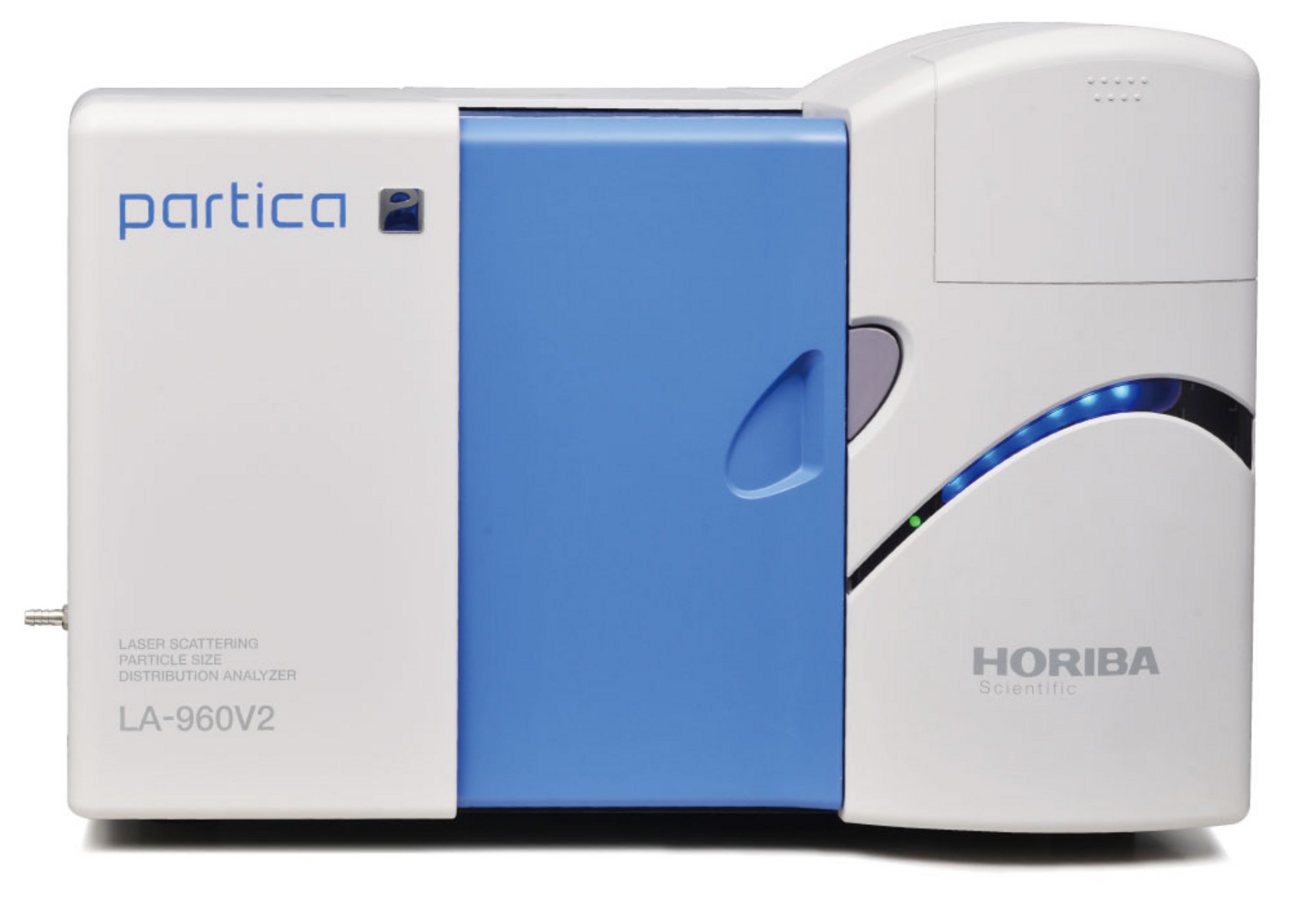
Finally, Birla Carbon’s technology lab uses HORIBA’s Partica LA-960 Particle Size Analyzer laser scattering particle size distribution analyzer.

Without carbon black, the world would be a lot more expensive, Vargas said.

“Our rubber goods wouldn't last as long,” he said. And when you want a tire to have minimal rolling resistance, you will also save fuel.”

HORIBA’s EMGA-920 oxygen/nitrogen analyzer
LA-960V2
HORIBA’s Partica LA-960 Particle Size Analyzer

Follow Us 


제품 문의

HORIBA제품의 자세한 정보를 원하시면, 아래의 양식에 내용을 입력을 부탁드립니다.

* 는 필수입력항목입니다.

Products

  • All Products (A-Z)
  • Mobility
  • Energy and Environment
  • Life Science
  • Healthcare
  • Materials
  • Semiconductor

Applications

  • Drinking Water Utilities
  • Automotive Manufacturing
  • Semiconductor Manufacturing Process
  • Research and Testing Laboratories

Technology

  • Glow Discharge Spectroscopy
  • Pressure-based Flowmetry
  • Quadrupole Mass Spectrometry
  • Raman Spectroscopy

Service

  • On-Site Support
  • Spare Parts and Consumables

Company

  • News
  • Events
  • Career
  • History
  • Corporate Culture

Contact

  • Career Contact
  • Contact Form
  • Worldwide Locations
  • Investor Relations Contact

Terms and Conditions Privacy Notice Cookies HORIBA Group Social Media

© Copyright 2026 - All Rights Reserved