HORIBA Scientific and Analytical Instruments
Websites
Corporate Website
  • Corporate
Market Websites
  • Mobility
  • Energy and Environment Solutions
  • Life Science
  • Healthcare
  • Materials
  • Semiconductor
Countries/Regions
Americas
  • Brazil / Brasil
  • United States / United States
Asia
  • China / 中国
  • India / India
  • Japan / 日本
  • Korea / 한국
  • Singapore / Singapore
  • Taiwan / 台灣
  • Thailand / ประเทศไทย
  • Vietnam / Việt Nam
Europe
  • Austria / Österreich
  • Czech Republic / Česko
  • France / France
  • Germany / Deutschland
  • Poland / Polska
  • Russia / Россия
  • Spain / España
  • Türkiye / Türkiye
  • United Kingdom / United Kingdom
Global
  • International
Search
HORIBA Scientific and Analytical Instruments

Contact us

Lokalizacja

  • Static Light Scattering (SLS) / Laser Diffraction Particle Size Distribution Analysis
  • Dry Powder Laser Diffraction
  • Refractive Index Selection
  • Optimizing Concentration Range
  • Optimizing Ultrasonic Dispersion
  • System Verification
  • Gauge Repeatability and Reproducibility
  • Method Development Top 10 Lists
  • Bibliography
  • Related products
  1. Home
  2. Scientific
  3. Technologies
  4. Optimizing Ultrasonic Dispersion

Back to Particle Characterization Products Overview
Back to Particle Webinar List
Back to Particle Applications

Optimizing Ultrasonic Dispersion with the Method Expert

Table of Contents

  • Finding the Best Ultrasonic Dispersion
  • Stress Testing the Method
  • Related Products

Finding the Best Ultrasonic Dispersion

One goal in method development is to disperse aggregates to the single particle state prior to measurement. Ultrasound is frequently used to disperse aggregated particles, but it is critical to determine the exact amount of energy required. In the past it was required to design an experiment to assess the effect of ultrasound on the state of dispersion. This is now automated with the Method Expert software features, exclusive to the LA-960 particle size analyzer. A case study of how the Method Expert was used during a structured method development process is explained below.

The Ultrasonic Optimization setup screen in the Method Expert

The sample used in the case study is a pigment that arrived in the lab as a powder to be dispersed in water. First, it was determined that no surfactant was required to wet the powder. Next, an initial experiment generated a bimodal result, indicating aggregation. The internal ultrasonic probe in the LA-960 was turned on for 10 seconds and the larger peak diminished, suggesting that ultrasound aids dispersion. Then the Method Expert function was opened and the screen below shows how the effect of ultrasound experiment was easily setup in three steps for automatic execution.

Ultrasonic Treatment Wizard results from the Method Expert

Using these settings the system automatically took 5 measurements with 30, 60, 90, 120, and 150 seconds of ultrasound at the highest power level of 7.  After all measurements are completed, the results are displayed in various formats so the user could select the optimum amount of energy (time).

The particle size distribution overlays and D10, 50, 90 vs. time plots can be viewed in greater detail, as seen below. Note that after 150 seconds a second larger peak (light blue) appears, indicating re-aggregation of the particles. This is also clearly seen by the sharp increase in D50 and 90 in the second plot.

The Method Expert provides Expert Advice information to guide the inexperienced user in selecting the best possible ultrasonic treatment.

Saving, exporting, and printing Method Expert results

It is always a good idea to document decisions made during method development. This is also automated with Method Expert, as seen below where the operator choose which results to save in various formats.

Stress Testing the Method

Automated coefficient of variation (CV%) calculation to evaluate method precision with the LA-960

After the complete method is created, the next step is to test for repeatability. These calculations as defined in ISO 13320 are also automated calculations in the LA-960 software.

The user can then perform the other automated tests within the Method Expert software including structured tests to select the optimum:

  • Pump and stirrer speed
  • Experiment duration
  • Concentration
  • Refractive Index

Back to top

Browse Products

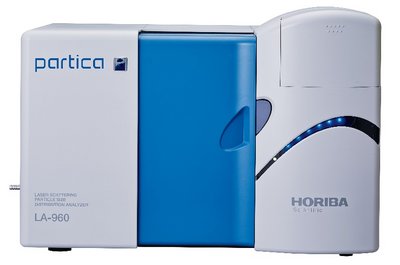
Partica LA-960

Partica LA-960

Laser Scattering Particle Size Distribution Analyzer

Pokaż mniej
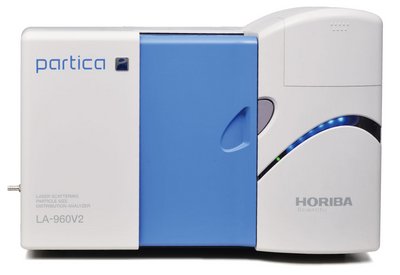
Partica LA-960V2

Partica LA-960V2

Laser Scattering Particle Size Distribution Analyzer

Pokaż mniej

Wniosek o udzielenie informacji

Masz pytania lub prośby? Skorzystaj z tego formularza, aby skontaktować się z naszymi specjalistami.

* Te pola są obowiązkowe.

Produkty

  • Wszystkie produkty HORIBA od A do Z
  • Mobility
  • Energy and Environment
  • Life Science
  • Healthcare
  • Materials
  • Semiconductor

Aplikacje

  • Drinking Water Utilities
  • Automotive Manufacturing
  • Semiconductor Manufacturing Process
  • Research and Testing Laboratories

Technologia

  • Glow Discharge Spectroscopy
  • Pressure-based Flowmetry
  • Quadrupole Mass Spectrometry
  • Raman Spectroscopy

Serwis

  • Wsparcie na miejscu
  • Części zamienne i materiały eksploatacyjne

Firma

  • Aktualności
  • Wydarzenia
  • Kariera
  • Historia
  • Kultura korporacyjna

Kontakt

  • Kontakt ws kariery
  • Formularz kontaktowy
  • Lokalizacje na całym świecie
  • Kontakt z relacjami inwestorskimi

Terms and Conditions Privacy Notice Cookies HORIBA Group Social Media

© Copyright 2026 - All Rights Reserved