

Applications
Protein Aggregation and Size Analysis
Protein Aggregation
The study of protein aggregation encompasses a broad range of interactions and mechanisms. Many studies into this subject area investigate the aggregation of misfolded proteins, which is thought to be responsible for many degenerative diseases. Since aggregation typically leads to a physical change in protein size, particle size analysis has proven to be a useful experimental technique in this field. Although dynamic light scattering (DLS) is widely used to characterize proteins in many instances the aggregates are too large to be reliably measured by that technique. The LA-960 laser diffraction particle size analyzer possesses the unique ability to measure from 10 nanometers to 5 millimeters, accurately detecting the aggregates and, in some cases, the primary protein size.
Measuring Large Aggregates with the LA-960
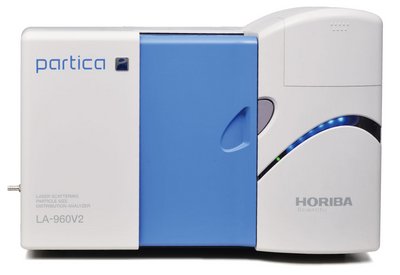
Of particular interest to protein scientists is to quantify the size, volume, and number of aggregates in a particular material. The LA-960V2 particle size analyzer provides accurate measurement of size and volume for aggregates between 10 nanometers and 5 millimeters at ultra-low concentrations for traditional laser diffraction devices.
An example result is shown in the figure below using material from the U.S. FDA.
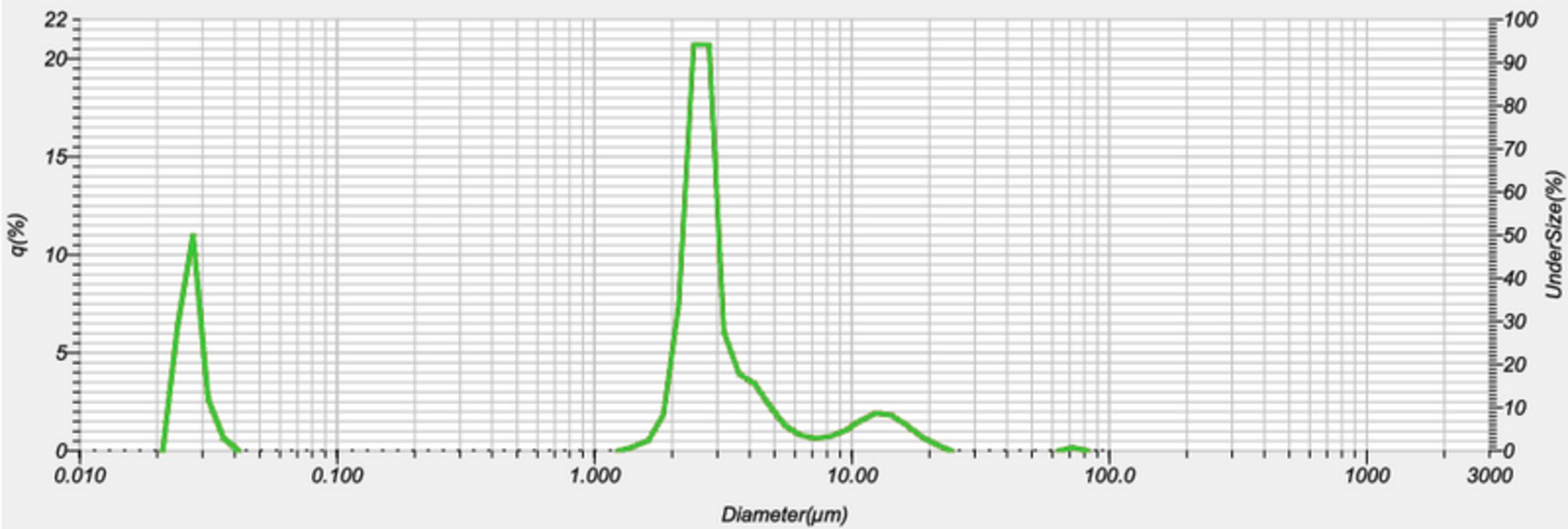
Example data showing primary protein size and aggregates above 1 micron. Results acquired with the LA-960.
Measuring Protein Aggregation Dynamics with DLS
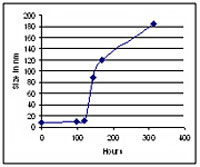
Many different types of studies are possible with a dynamic light scattering instrument such as the SZ-100V2 Nanoparticle Analyzer. Again, because aggregation can typically be detected by changing size results the SZ-100 is useful for aggregates smaller than a certain critical size where Brownian motion still dominates gravitational settling. Additional studies may be carried out with the SZ-100 to characterize how factors such as temperature, pH, salinity, surfactant, and time affect protein folding.
Dynamic light scattering (DLS) is now widely used to study protein aggregation as described in the application notes below.
Related Notes

Accurate Protein Aggregation Analysis
Protein aggregation is an important concern when developing and manufacturing biotherapeutics since these subvisible aggregate particles have been associated with adverse drug reactions. Protein aggregates may provoke adverse events through an unwanted immune response. And, regardless of mechanism of reaction, subvisible particle contamination has been a concern for manufacturers and regulators.

Zeta Potential of Proteins
Zeta potential is a key physical parameter that describes surface charge on proteins. Although there has been interest in measuring the zeta potential of proteins for many years, the measurements were often difficult due to a variety of reasons including the “cooking” of proteins on the cell electrodes when using light scattering techniques. This application note presents data from the SZ-100 using cells with unique, patented carbon coated electrodes that facilitate zeta potential measurements of proteins.

Characterization of sub-visible particles in protein therapeutic formulations
Biologic formulations are complex and under certain circumstances can experience protein aggregation or poor stability. Understanding triggers of these phenomena and their complex effects are important for the development and optimization of protein formulations. The ViewSizer® 3000 enables scientists to visualize and quantify the kinetics of protein aggregation in real-time for biologic therapeutics under a variety of stress conditions including agitation, temperature and the addition of contaminants. The case study featured here validates these capabilities for agitation and temperature stress conditions with the 100 mg/mL mAb A. These insights support the development of stable, effective and safe biologic products.

留言諮詢
如您有任何疑問,请在此留下詳細需求或問題,我們將竭誠您服務。