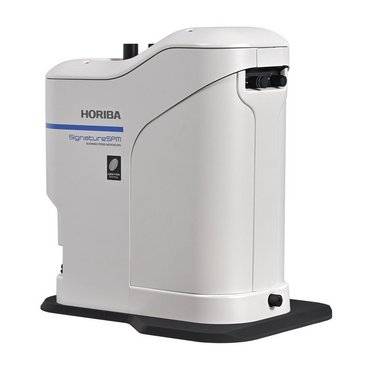
SignatureSPM
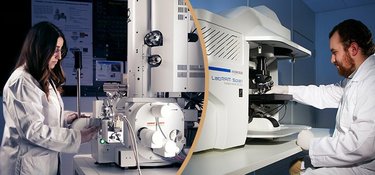
AFM-Raman: Combining Physical and Chemical Characterization
What if you could correlate a material's surface properties with its chemical composition in the same area of interest?
In this educational webinar, discover how Atomic Force Microscopy (AFM) and Raman spectroscopy complement each other to provide a more complete understanding of materials.
The webinar begins with the fundamentals of AFM and basic scanning modes, to later introduce advanced AFM techniques for investigating topography, nanomechanical, electrical, piezoresponse and magnetic properties.
It then explores the principles of Raman spectroscopy and the chemical and structural information contained in Raman spectra, including molecular composition, crystallinity, defects and stress.
Finally, it presents the benefits of correlative AFM-Raman microscopy, where high-resolution physical information from AFM is combined with Raman chemical maps to get an accurate knowledge of the sample properties and of how they influence each other. Application examples illustrate how this approach can be used to investigate, among others, bio contaminants, battery materials and 2D materials.
In conclusion, you will learn how correlating AFM and Raman data can reveal relationships between surface morphology, physical properties and chemical composition that cannot be obtained from either technique alone.
Language: English | Duration: Approximately 38 minutes
AFM-Raman is a correlative microscopy approach that combines Atomic Force Microscopy (AFM) with Raman spectroscopy. AFM provides high-resolution information about surface morphology and physical properties, while Raman spectroscopy provides chemical and structural information.
AFM can characterize surface topography at very high spatial resolution (down to few nanometers). Depending on the measurement mode, it can also investigate other material properties, such as its stiffness, electric charge distribution, or the presence of piezoresponse magnetic domains.
Raman spectroscopy retrieves the characteristic molecular vibrations of a sample, which give information about its nature and composition, but also about its structures. Namely, Raman spectra can help evaluate the sample degree of crystallinity, the presence of defects or tensile stress, as well as other structural properties.
Although AFM provides very detailed and accurate physical information over the sample surface, it cannot directly identify the chemical nature of the structures observed. The correlation with Raman spectroscopy adds this chemical identification and helps connect the two kinds of information.
AFM-Raman can be applied to a wide variety of materials. Examples presented in this webinar include 2D materials (graphite and derivates, TMDs, etc.), lithium-ion battery components, and biological materials.
AFM can investigate the morphology and nanomechanical properties of battery materials, while Raman spectroscopy can characterize their chemical composition. Together, the techniques can help evaluate the physical and chemical changes before and after battery cycling and understanding the causes of the loss of efficiency.
AFM can reveal surface morphology, while advanced modes such as Kelvin Probe Force Microscopy can investigate surface potential. Coupling these results with Raman and photoluminescence spectroscopy can then provide complementary information about the material's chemical and optoelectronic properties.
Alice Fiocco is a Product Application Specialist in AFM, Raman, AFM-Raman and TERS, with expertise in advanced materials and nanoscale characterization. At HORIBA, she supports customers through application development, demonstrations and training, while collaborating with R&D on advanced Raman and nanoRaman solutions. Her work includes applications in 2D materials, batteries, electroactive materials and nanomaterials.
Aleksei Temiriazev is a Product Application Specialist with expertise in Atomic Force Microscopy (AFM) and nanoscale materials characterization. His work focuses on AFM techniques for investigating surface topography and physical properties, helping researchers use advanced AFM methods to better understand complex materials at the micro- and nanoscale.
Do you have any questions or requests? Use this form to contact our specialists.