
HORIBA Scientific and Analytical Instruments
Websites
Corporate Website
  • Corporate
Market Websites
  • Mobility
  • Energy and Environment Solutions
  • Life Science
  • Healthcare
  • Materials
  • Semiconductor
Countries/Regions
Americas
  • Brazil / Brasil
  • United States / United States
Asia
  • China / 中国
  • India / India
  • Japan / 日本
  • Korea / 한국
  • Singapore / Singapore
  • Taiwan / 台灣
  • Thailand / ประเทศไทย
  • Vietnam / Việt Nam
Europe
  • Austria / Österreich
  • Czech Republic / Česko
  • France / France
  • Germany / Deutschland
  • Poland / Polska
  • Russia / Россия
  • Spain / España
  • Türkiye / Türkiye
  • United Kingdom / United Kingdom
Global
  • International
Search
HORIBA Scientific and Analytical Instruments

Fale conosco

Localização

  • A giant leap in fuel cell engineering
  • AFIS key to catching crook in unlikely match
  • The Alchemist’s Factory – A Particle Characterization Story
  • Alternative light sources and AFIS help identify murder suspects
  • An act of mercy in Baltimore
  • Astrobiologist/Geobiologist uses Earth as a lab to examine possibility of extraterrestrial life
  • A-TEEM™ and fluorescence spectroscopy may offer a better way to feed the world
  • Can Raman microscopy reveal art forgeries?
  • Carbon black lightens your wallet
  • Chilean grape and wine quality assessment with Aqualog A-TEEM analyses
  • Cleaner water through fluorescence spectroscopy and artificial intelligence
  • Companies collaborate for better water treatment
  • Cryogenics and Multimodal Microspectroscopy — Filtering out the Noise
  • Designing a new breed of nuclear reactors
  • Detecting early signs of cancer with Raman microscopy
  • Detection of smoke taint in grapes and wine
  • Developing in-situ, online monitoring tools for radioactive materials using fluorescence spectroscopy
  • Discovering the origins of life
  • "Disruptive" carbon research deepens climate change understanding
  • Drilling deep to discover life
  • Duetta: fluorescence and absorbance - in the blink of an eye
  • Elemental analysis and a cold brew
  • Exploring biogeochemical cycles, speciation, and primary productivity in the ocean using fluorescence spectroscopy
  • Exposing Counterfeit Drugs
  • Finding ancient life through minerals on earth and beyond
  • Fine wine-making with the help of HORIBA tech
  • Fingerprint database leads to killers
  • Fluorescence sensors contribute to biological and display technologies
  • Fluorescence Spectroscopy: An Alternative to Chromatography in Enhancing the Flavor of Foods
  • Fluorescence spectroscopy becoming key to identifying pain
  • Fluorescence spectroscopy exposes carbon cycle changes
  • Fluorescence spectroscopy exposes carbon cycle changes
  • Fluorescent carbon nanodots: making foldable displays
  • Forensic light sources nab the suspects
  • Glucose Binding Molecules could revolutionize diabetes management
  • The Grape Identity Crisis and How Spectroscopy Separated History’s Most Confusing Cultivars
  • Health benefits of olive oils get boost
  • Historic carbon fluctuations could expose climate change secrets
  • How do thin films help NASA uncover the secrets to the universe?
  • How fusion breakthroughs will lead to clean renewable energy
  • How to measure temperature with light
  • How we customized a spectroscopy solution in the low UV range
  • Investigating missing carbon in Australian caves
  • Ionic Liquids as a Breakthrough for Resource Recycling Issues
  • Is this the next breakthrough in medicine?
  • Killing cancer with lanthanides and air
  • Launch of Mars 2020 to explore Mars using XRF
  • Leading the World with All-Solid-State Batteries
  • Low cost solar power on the horizon
  • Man of science follows business path
  • Making better gas turbines
  • Making carbon nanotubes more accessible
  • Making more efficient solar energy
  • Materials characterization crucial in Silicon Valley systems
  • Medical examiner department ID’s evidence with alternative light sources
  • Micro-XRF uncovers secrets to Van Gogh’s brilliance
  • Microplastics: a big problem for the environment
  • Microplastics explained
  • Mishaps and ski trip lead to laser revolution
  • Museum’s mineral studies improving life
  • MXenes are revolutionizing nanotechnology with the help of Raman Spectroscopy
  • Nano-scale research and technology leads to advanced materials development
  • Nanotechnology a pathway to efficient solar energy
  • Optimizing Wastewater Treatment in South Africa: A-TEEM Fluorescence Spectroscopy for BOD Analysis Amidst Economic Pressures
  • Mars life signs probed by spectroscopy
  • Photodynamic therapy – A non-toxic way to fight cancer
  • Photoluminescence contributes to staggering growth of photovoltaics
  • Photovoltaics and photoluminescence
  • Raman breakthrough recovers erased serial numbers from plastic guns
  • Raman and X-ray fluorescence spectroscopies reveal the mysteries behind ancient Japanese art form
  • Raman gets the goods on counterfeiters
  • Raman spectroscopy breakthroughs make CSI real
  • Research into ion transport through cell membranes aided by fluorescence spectroscopy
  • Researcher fights food fraud
  • Researcher developing (non) linear nano-optical methods to characterize heterogenous interfaces
  • Researcher traces path of potentially toxic nanoparticles
  • Scientist pioneers wastewater treatments to fight global warming effects
  • Should you be worried about nanotoxicity?
  • SPEX Forensics algorithms used to solve cold cases
  • Study validates fluorescence spectroscopy with A-TEEM for fast and precise wine authentication
  • Targeting toxic waste with minerals
  • The ARC Program: Forging Appalachia's Future Workforce
  • The baker’s son
  • The best nanoparticle
  • The mystery of gemstone colors has finally been revealed
  • The science of food
  • Thin film analysis reveals secrets to renewable energy
  • Tracing toxic heavy metals in organisms using X-ray fluorescence (XRF)
  • Understanding two-dimensional material interfaces with AFM Raman/TERS will transform computing
  • Unlocking the Secrets of the Deep Ocean’s Carbon Engine
  • Using AFM-Raman to understand defects in two-dimensional semiconductor materials
  • Using low temperatures to probe 2D materials for device applications
  • Using renewable and alternative sources for value-added products production
  • Versatile Aqualog saves chemical costs at treatment plants
  • Weeding out Over-the-Counter Frauds
  • Welcome to the dawn of a paradigm shift in technology
  • What are microplastics?
  • Where do microplastics come from?
  • Yellowstone’s treasures may hold clues to life
  1. Home
  2. Científico
  3. Recursos
  4. "Disruptive" carbon research deepens climate change understanding

"Disruptive" carbon research deepens climate change understanding

The Kamienczyk waterfall in the Karkonosze National Park in Poland
The Kamienczyk waterfall in the Karkonosze National Park in Poland, a biosphere reserve

The Earth’s carbon is distributed between terrestrial, oceanic and atmospheric reservoirs.

The transport of carbon between these stores operate on timescales from seconds to millennia. It includes a variety of familiar processes, such as respiration and photosynthesis, weathering and sedimentation, gas exchanges, and transportation by water.

Consequently, these “biologically active” zones - referred to as the biosphere - have a fundamental role in the climate system, providing both positive and negative feedback to climate change.

The advent of the industrial age has changed the way carbon is transported between the major carbon stores on the Earth. It does so by disturbing natural fluxes and creating new pathways and potential feedback mechanisms that influence Earth’s climate. For example, the impacts of global land use changes alone may have increased the amount of carbon stored as carbon dioxide (CO2) in the atmosphere by one third of pre-industrial estimates.

The increase of atmospheric CO2 is now of growing concern, as it is causing significant warming of the Earth by changing the heat and water balances between the surface and atmosphere.

Cycle of life

The carbon cycle is inter-linked with the water cycle through various chemical, biological, and physical processes. Understanding the relationship between carbon and the water cycles is essential to gain a comprehensive understanding of the role that humans and ecosystems have in their overall function and in global climate.

Understanding the mechanisms that control the transport and fate of carbon and nutrients, collectively known as organic matter (OM) in Earth’s biogeochemical cycles is a global challenge underpinning the United Nations’ sustainable development goals (UN SDGs). It’s also the key focus of the Carbon-Water Dynamics group, led by Ryan Pereira, Ph.D., at the Lyell Centre, Heriot-Watt University, Edinburgh, UK.

While much progress has been made to quantify carbon stores and fluxes, our ability to model carbon and nutrient fluxes is not well constrained. That increases the uncertainty of future projections and our ability to respond and adapt to these changes. This is in part due to our limited knowledge of the source, composition and reactivity of OM during mobilization and transport between terrestrial, oceanic and atmospheric reservoirs, and how human activities modify natural cycles. These complex interactions impact short- and long-term food and water security, a central goal of the UN SDGs.

The carbon conundrum

Unfortunately, carbon doesn’t just float along as an individual molecule. It's extremely heterogeneous. A variety of other elements are associated with it, including phosphorus and potassium, along with other macro elements like iron. That makes carbon an extremely complex molecule to track.

In water, carbon can be transported as a particle or dissolved substance called dissolved organic matter (DOM), and gas (such as greenhouse gases CO2 and methane (CH4).

Dissolved organic matter

DOM has three key characteristics:

  1. DOM is a key function of net primary productivity - how much carbon dioxide biological organisms such as vegetation and phytoplankton take in during photosynthesis, minus how much carbon dioxide it releases during respiration. It supports and is a primary producer in an environment, and a core source of foodstuffs.
  2. DOM can be re-mineralized or transformed into climate-active gases such as CO2, CH4 and nitrous oxide (N2O).
  3. DOM can impact our safe drinking water supply by interacting with disinfection processes.

Researching the carbon cycle

Like every good scientist, Pereira’s group begins with a question and then develops some hypotheses to assess that question in an objective and robust way.

“I often liken my work to looking for questions rather than looking for answers,” he said. “Because once you identify better questions, you tend to get more reasonable answers.”

To do that, the team takes water, soil and sediment samples from diverse locations on Earth, including the Arctic, temperate, and tropical zones.

“To test our scientific questions, we have to travel to different parts of the world to be able to assess those questions,” he said. “We also need to incorporate a unique blend of fundamental and applied research that takes full advantage of novel technologies in collaboration between academic and industrial partners to drive this research forward.”

Taking measurements

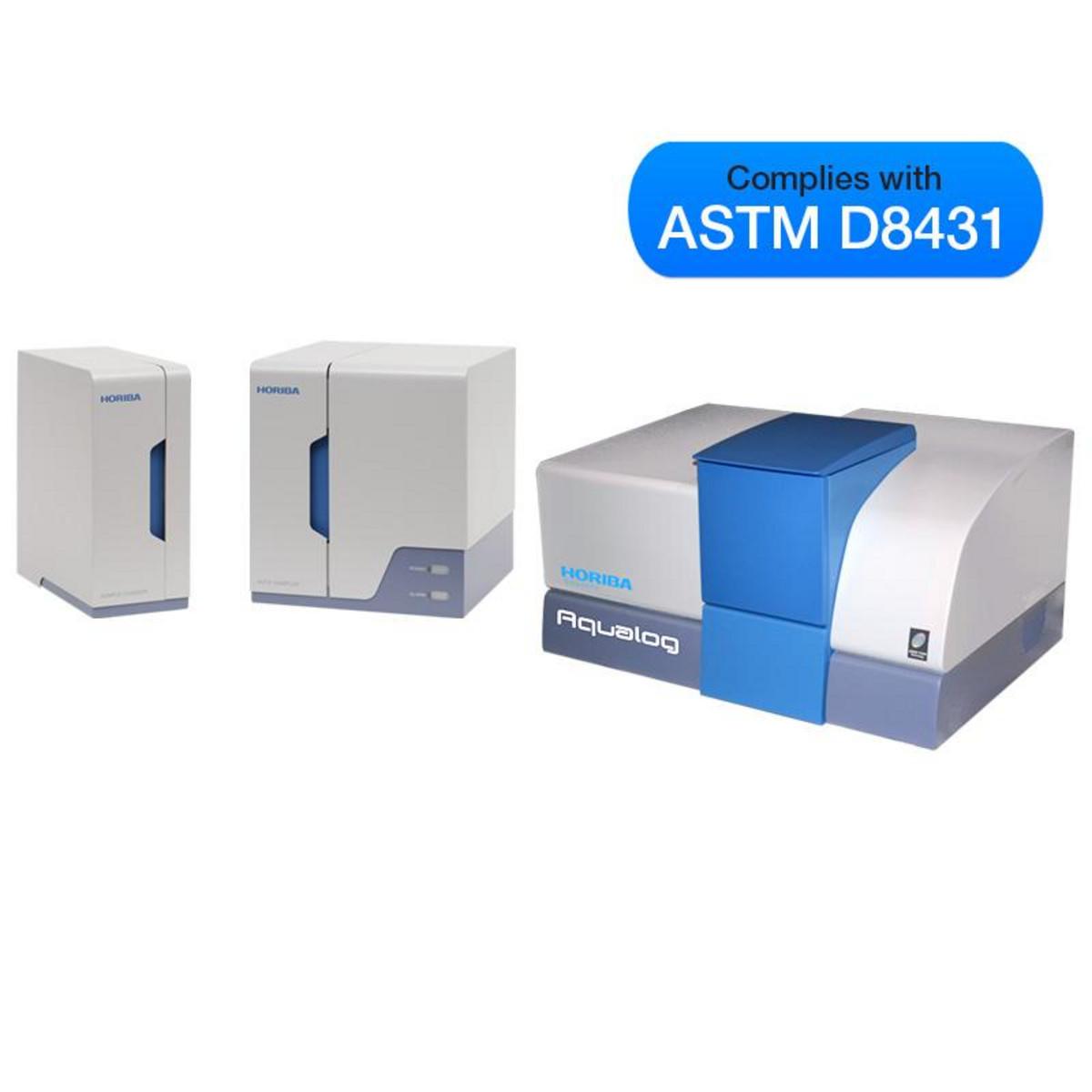
Aqualog Water Treatment Plant Analyzer

Pereira and his team use elemental quantification of carbon, fluorescence spectroscopy and next-generation liquid chromatography techniques to conduct measurements.

He uses a HORIBA Aqualog® spectrofluorometer to investigate the composition of DOM in water. The Aqualog is an ideal instrument for Pereira’s team, as it simultaneously measures both absorbance spectra and fluorescence Excitation-Emission Matrices, a proprietary technology known as A-TEEM™. His Aqualog is connected to an autosampler that allows seamless queueing of samples to provide high throughput and minimise technician time to acquire molecular fingerprints of DOM under study.

The research team makes numerous field measurements, although the higher-end instruments based in the university’s labs get its share of samples to examine. That’s where he uses the Aqualog.

“These carbon pools of DOM are extremely complex,” Pereira said. “We are interested in the coloured dissolved organic matter, but also the ‘invisible’ dissolved organic matter. These two different pools of carbon in the environment impact climate aspects of ecosystem function, greenhouse gas emission and uptake in aquatic systems, and the impact on drinking water supply.”

The Aqualog’s speed of processing samples played a key role in Pereira’s data collection.

“The Aqualog accounted for some of the high throughput of samples that were required,” he said. “For example, last year we were working in the tropics, and I think we brought something close to 3,000 samples back with us over a three-month period.”

That speed was needed because of this high time resolution that they were trying to capture.

By combining both fluorescence spectroscopy, elemental analysis and liquid chromatography, Pereira gets the top-down ability to quantify the amount of carbon in a particular system and an indication of its potential reactivity to a given process.

Carbon-Water Dynamics group

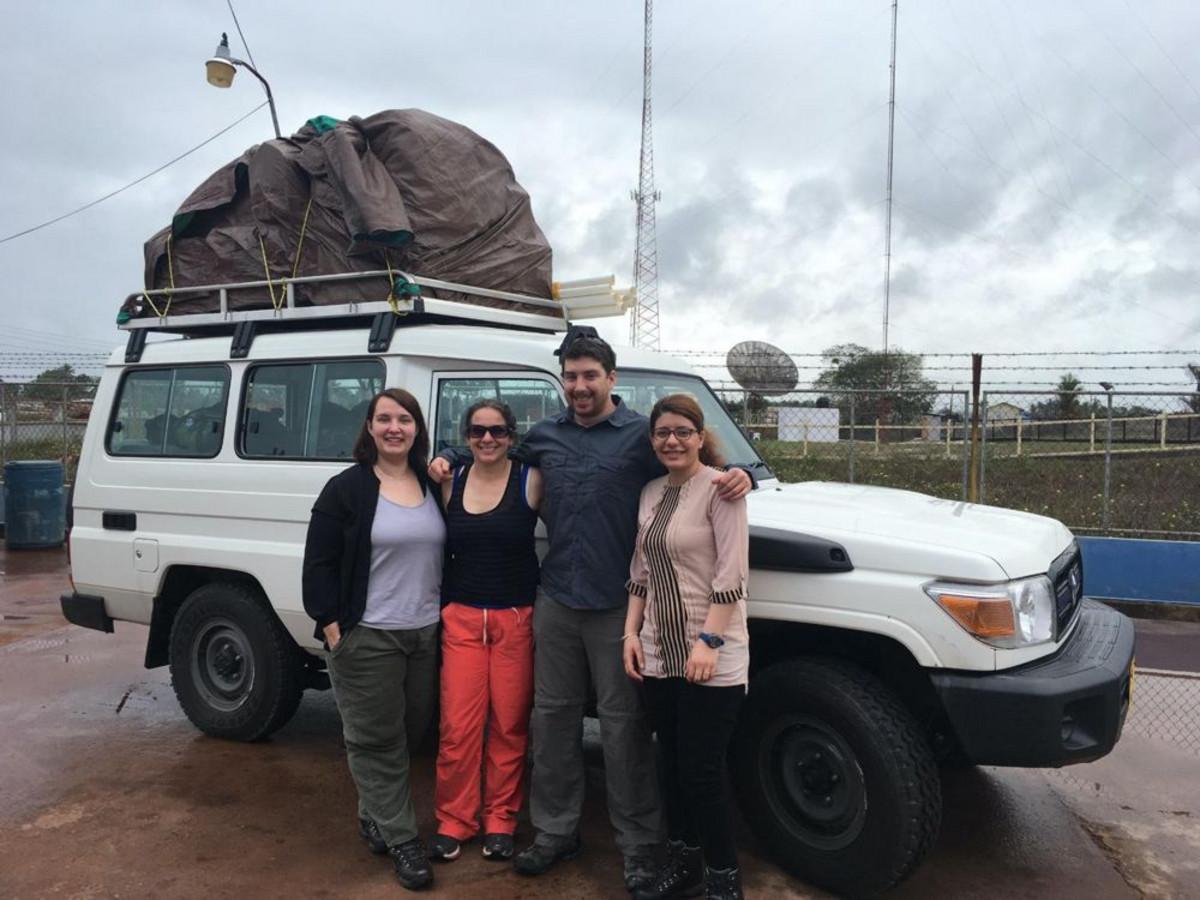
Members of Pereira’s research team
Members of Pereira’s research team – from left to right, Sara Trojahn, Juliane Bischoff, Ph.D., James Spray, Ph.D., and Sevda Norouzi

The Carbon-Water Dynamics group have two focus areas of research - rivers and surface water layers of the ocean.

Storm-chasing to characterize rivers

Pereira’s research took his team to the tropical rain forests in South America. The tropics are a hotspot of untapped knowledge waiting to be uncovered.

“We spend a lot of time actually storm-chasing,” he said. “Unfortunately, this is not as glamorous as in the movies. We're looking for rain events, and when it starts raining, I send my poor students out to start taking samples every hour. And of course, in the tropics during the wet season, it rains a lot.”

In that particular project, Pereira and his team are trying to identify the sources of invisible, DOM in the system, and its rate of transformation into more labile, or easily altered organic substances or gases.

Ocean Skin layer

Oceans are a global reservoir of greenhouse gases, estimated to account for 20 to 40 percent of the post-industrial sink for anthropogenic CO2, according to Pereira.

However, quantifying the exchange of gases such as CO2, CH4, and N2O between the ocean and atmosphere is a major challenge. There are different layers within a body of water, each one with different physical and chemical properties. The surface microlayer, also called the skin layer, is around 400 μm thick, approximately twice the thickness of paper.

The ocean skin layer, known as the ocean surface microlayer, supports a unique bacterial community, and has an enrichment of carbon compounds - dissolved organic matter. This layer is more concentrated than the underlying water layers.

Because of the concentration, and that the surface is directly interacting with the atmosphere, it has a direct control on any process between the atmosphere and a body of water, and in particular, the uptake of greenhouse gases like CO2. Understanding how the ocean’s organic skin layer modulates this exchange is critical to estimating the intrinsic oceanic sinks and sources of these key greenhouse gases both now and in the future.

The carbon exchange challenge

Some of Pereira’s work has been looking at DOM’s influence on gas exchange.

“These processes that are ongoing can be impacted by DOM,” he said. “Organic substances in the skin layer, known as surfactants, span across traditional operational definitions and are derived from multiple sources undergoing biotic and abiotic transformations along the land-ocean continuum.”

Work by Pereira and other investigators in the UK have shown that reduced gas exchange by surfactants, known as the “surfactant suppression effect,” (SSE), has been shown to reduce the amount of CO2 annually stored by about 9 percent in the Atlantic Ocean (Pereira et al., 2018), and to control the spatio-temporal flux of N2O (Holding et al., 2019).

Importantly, there appears to be a strong relationship to ocean temperature, suggesting that warmer surface oceans may absorb less atmospheric greenhouse gases due to the increased presence of DOM in the ocean skin layer.

Pereira and his team have demonstrated that organics like DOM have a very large role to play in the process.

Why is the speed of exchange significant?

“If we are overestimating, it means that the amount of gas being taken up by the ocean is not what we're expecting,” Pereira said. “That means that the rate of ocean acidification may not be as high as we previously thought. It may also mean that there is more of a buffer to the ocean in its ability to absorb greenhouse gases.”

Blazing new paths

Pereira considers himself an environmental scientist in the midst of a long journey.

“I do feel that in a lot of what I do, whether or not this is the microlayer work or the invisible carbon story, we are very much in the early stages of our scientific understanding in where these are contributing to climate change matters,” he said. “And I think that's because of our limited understanding.”

It's a difficult area to get into because there are so many unknowns, and you need to convince a lot of people, he said.

“But I find that it’s the most exciting stuff - my science, which a colleague and friend described, is disruptive rather than iterative. And well, that was quite a compliment.”

“I'm trying to add new knowledge in a way that we didn't know anything about beforehand, which then obviously challenges our perceptions.”

Follow Us 


Pedido de Informação

Você tem alguma dúvida ou solicitação? Utilize este formulário para entrar em contato com nossos especialistas.

* Esses campos são obrigatórios.

Products

  • All Products (A-Z)
  • Mobility
  • Energy and Environment
  • Life Science
  • Healthcare
  • Materials
  • Semiconductor

Applications

  • Drinking Water Utilities
  • Automotive Manufacturing
  • Semiconductor Manufacturing Process
  • Research and Testing Laboratories

Technology

  • Glow Discharge Spectroscopy
  • Pressure-based Flowmetry
  • Quadrupole Mass Spectrometry
  • Raman Spectroscopy

Service

  • On-Site Support
  • Spare Parts and Consumables

Company

  • News
  • Events
  • Career
  • History
  • Corporate Culture

Contact

  • Career Contact
  • Contact Form
  • Worldwide Locations
  • Investor Relations Contact

Terms and Conditions Política de Privacidade Cookies HORIBA Group Social Media

© Copyright 2026 - All Rights Reserved