Ozone has strong oxidation properties and easily dissolved in water. Leveraging these characteristics, it is widely used at drinking water, wastewater, and recycled water plants for disinfection, decolorization, and oxidation of organic and inorganic substances. However, ozone even in low concentrations is irritating and toxic for all living beings. Exposure to high concentrations may impair lung function, cause airway inflammation, and lead to other respiratory disorders. Therefore, to protect occupational health and safety of employees, each country’s responsible organization establishes permissible exposure limits (PEL) and short-term exposure limits (STEL).
For example, Occupational Safety and Health Administration (OSHA) in the U.S. has established a permissible exposure limit for ozone of 0.1 ppm and a short-term permissible limit of 0.3 ppm*1. Other such as European Union countries also established permissible exposure limit (TWA*2) for ozone of 0.1 ppm and short-term permissible limit of 0.3 ppm. Global trend for permissible exposure limit for ozone is 0.1 ppm.
Drinking water treatment plants use ozone analyzers for ozone concentration monitoring in the ambient air of the working environment and ozone leak detection from ozone generation equipment, ozone reactor and piping. Each water treatment plant has occupational health and safety management guidelines and takes prescribed actions in case of ozone leakages.
Ozone analyzer is used for monitoring of leakages and issuing alarm in case ozone concentration exceeds PEL. This alarm is used for ensuring the safety of employees, if required - evacuation, and stopping ozone generation system.
One significant challenge faced by drinking water treatment plant operators is not sufficient local service support of ozone analyzer by manufacturer. Analyzer service and parts procurement takes long time, making it difficult to keep analyzers in good working conditions.
*1 Occupational Safety and Health Administration Permissible Exposure Limits – Annotated Tables Permissible Exposure Limits – OSHA Annotated Table Z-1 | Occupational Safety and Health Administration
*2 TWA: Time-Weighted Average. The average concentration of a hazardous substance in the air over a specified period of time, usually an 8-hour workday and 40-hour work week, to which employees may be repeatedly exposed without adverse health effects.
Many ozone analyzers are installed by plant engineering companies and do not come with adequate local service support. As a result, analyzers often need to be shipped back to the manufacturer for calibration and maintenance, making it difficult to keep them in good working condition without interrupting continuous monitoring.
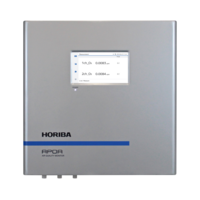
We developed wall-mount type ozone monitor for detection trace concentration leakages of ozone into the ambient air.
Advantages of APOA-380WM Ozone Monitor
Easy onsite replacement of measurement module helps reduce downtime and keeps monitoring running.
Remote access makes it easier to identify issues quickly and support maintenance without delay
Backed by HORIBA’s worldwide support for dependable local assistance.
Specifications
Gas Measured | Ozone (O3) |
Measurement ranges | 0 - 0.1 / 0.2 / 0.5 / 1.0 / 2.0 / 5.0 / 10* ppm |
LDL (2σ) | < 0.3 ppb |
Repeatability | ±1.0% of full scale |
Linearity | ±1.0% of full scale |
Zero drift (day) | < 0.5 ppb |
Span Drift (day) | < 0.5% of full scale |
* 0 - 2.0 / 5.0 / 10 ppm are optional ranges
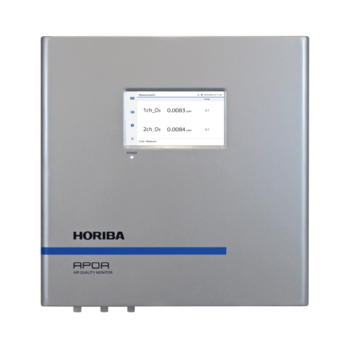
Ozone Monitor (Wall Mount Type)
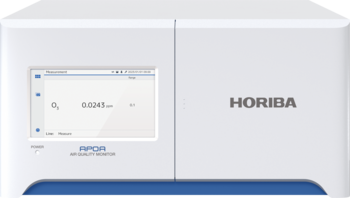
Ozone Monitor
Máte nějaké dotazy nebo požadavky? Pomocí tohoto formuláře kontaktujte naše specialisty.