HORIBA Scientific and Analytical Instruments
Websites
Corporate Website
  • Corporate
Market Websites
  • Mobility
  • Energy and Environment Solutions
  • Life Science
  • Healthcare
  • Materials
  • Semiconductor
Countries/Regions
Americas
  • Brazil / Brasil
  • United States / United States
Asia
  • China / 中国
  • India / India
  • Japan / 日本
  • Korea / 한국
  • Singapore / Singapore
  • Taiwan / 台灣
  • Thailand / ประเทศไทย
  • Vietnam / Việt Nam
Europe
  • Austria / Österreich
  • Czech Republic / Česko
  • France / France
  • Germany / Deutschland
  • Poland / Polska
  • Russia / Россия
  • Spain / España
  • Türkiye / Türkiye
  • United Kingdom / United Kingdom
Global
  • International
Search
HORIBA Scientific and Analytical Instruments

Contact us

Lokalizacja

  • A giant leap in fuel cell engineering
  • AFIS key to catching crook in unlikely match
  • The Alchemist’s Factory – A Particle Characterization Story
  • Alternative light sources and AFIS help identify murder suspects
  • An act of mercy in Baltimore
  • Astrobiologist/Geobiologist uses Earth as a lab to examine possibility of extraterrestrial life
  • A-TEEM™ and fluorescence spectroscopy may offer a better way to feed the world
  • Can Raman microscopy reveal art forgeries?
  • Carbon black lightens your wallet
  • Chilean grape and wine quality assessment with Aqualog A-TEEM analyses
  • Cleaner water through fluorescence spectroscopy and artificial intelligence
  • Companies collaborate for better water treatment
  • Cryogenics and Multimodal Microspectroscopy — Filtering out the Noise
  • Designing a new breed of nuclear reactors
  • Detecting early signs of cancer with Raman microscopy
  • Detection of smoke taint in grapes and wine
  • Developing in-situ, online monitoring tools for radioactive materials using fluorescence spectroscopy
  • Discovering the origins of life
  • "Disruptive" carbon research deepens climate change understanding
  • Drilling deep to discover life
  • Duetta: fluorescence and absorbance - in the blink of an eye
  • Elemental analysis and a cold brew
  • Exploring biogeochemical cycles, speciation, and primary productivity in the ocean using fluorescence spectroscopy
  • Exposing Counterfeit Drugs
  • Finding ancient life through minerals on earth and beyond
  • Fine wine-making with the help of HORIBA tech
  • Fingerprint database leads to killers
  • Fluorescence sensors contribute to biological and display technologies
  • Fluorescence Spectroscopy: An Alternative to Chromatography in Enhancing the Flavor of Foods
  • Fluorescence spectroscopy becoming key to identifying pain
  • Fluorescence spectroscopy exposes carbon cycle changes
  • Fluorescence spectroscopy exposes carbon cycle changes
  • Fluorescent carbon nanodots: making foldable displays
  • Forensic light sources nab the suspects
  • Glucose Binding Molecules could revolutionize diabetes management
  • The Grape Identity Crisis and How Spectroscopy Separated History’s Most Confusing Cultivars
  • Health benefits of olive oils get boost
  • Historic carbon fluctuations could expose climate change secrets
  • How do thin films help NASA uncover the secrets to the universe?
  • How fusion breakthroughs will lead to clean renewable energy
  • How to measure temperature with light
  • How we customized a spectroscopy solution in the low UV range
  • Investigating missing carbon in Australian caves
  • Ionic Liquids as a Breakthrough for Resource Recycling Issues
  • Is this the next breakthrough in medicine?
  • Killing cancer with lanthanides and air
  • Launch of Mars 2020 to explore Mars using XRF
  • Leading the World with All-Solid-State Batteries
  • Low cost solar power on the horizon
  • Man of science follows business path
  • Making better gas turbines
  • Making carbon nanotubes more accessible
  • Making more efficient solar energy
  • Materials characterization crucial in Silicon Valley systems
  • Medical examiner department ID’s evidence with alternative light sources
  • Micro-XRF uncovers secrets to Van Gogh’s brilliance
  • Microplastics: a big problem for the environment
  • Microplastics explained
  • Mishaps and ski trip lead to laser revolution
  • Museum’s mineral studies improving life
  • MXenes are revolutionizing nanotechnology with the help of Raman Spectroscopy
  • Nano-scale research and technology leads to advanced materials development
  • Nanotechnology a pathway to efficient solar energy
  • Optimizing Wastewater Treatment in South Africa: A-TEEM Fluorescence Spectroscopy for BOD Analysis Amidst Economic Pressures
  • Mars life signs probed by spectroscopy
  • Photodynamic therapy – A non-toxic way to fight cancer
  • Photoluminescence contributes to staggering growth of photovoltaics
  • Photovoltaics and photoluminescence
  • Raman breakthrough recovers erased serial numbers from plastic guns
  • Raman and X-ray fluorescence spectroscopies reveal the mysteries behind ancient Japanese art form
  • Raman gets the goods on counterfeiters
  • Raman spectroscopy breakthroughs make CSI real
  • Research into ion transport through cell membranes aided by fluorescence spectroscopy
  • Researcher fights food fraud
  • Researcher developing (non) linear nano-optical methods to characterize heterogenous interfaces
  • Researcher traces path of potentially toxic nanoparticles
  • Scientist pioneers wastewater treatments to fight global warming effects
  • Should you be worried about nanotoxicity?
  • SPEX Forensics algorithms used to solve cold cases
  • Study validates fluorescence spectroscopy with A-TEEM for fast and precise wine authentication
  • Targeting toxic waste with minerals
  • The ARC Program: Forging Appalachia's Future Workforce
  • The baker’s son
  • The best nanoparticle
  • The mystery of gemstone colors has finally been revealed
  • The science of food
  • Thin film analysis reveals secrets to renewable energy
  • Tracing toxic heavy metals in organisms using X-ray fluorescence (XRF)
  • Understanding two-dimensional material interfaces with AFM Raman/TERS will transform computing
  • Unlocking the Secrets of the Deep Ocean’s Carbon Engine
  • Using AFM-Raman to understand defects in two-dimensional semiconductor materials
  • Using low temperatures to probe 2D materials for device applications
  • Using renewable and alternative sources for value-added products production
  • Versatile Aqualog saves chemical costs at treatment plants
  • Weeding out Over-the-Counter Frauds
  • Welcome to the dawn of a paradigm shift in technology
  • What are microplastics?
  • Where do microplastics come from?
  • Yellowstone’s treasures may hold clues to life
  1. Home
  2. Scientific
  3. Resources
  4. Fine wine-making with the help of HORIBA tech

Fine wine-making with the help of HORIBA tech

Fine wine-making with the help of HORIBA tech

Take a typical Chardonnay. It’s rich, full-bodied and buttery.

Those qualities don’t happen by accident. It’s the combination of a variety of ingredients, and controlling those ingredients could be the difference between a celebratory toast and a glass of vinegar.

It’s also the reason that testing the grape harvest is so important as the grapes mature. But it’s been a laborious, expensive process.

Most wineries have multiple brands and growing fields. Each needs to be monitored for the ingredients in the grape that will give it the desired color, flavor and mouthfeel.


Equipment constraints

Wineries typically send out samples of the grapes to analytical labs to be tested on costly, hard to maintain equipment. The traditional devices are slow, and since so many samples must be run to monitor multiple harvests, it becomes an expensive and time-consuming process.

“Primarily it's a matter of cost, time and flexibility in terms of overall characterization of the wine,” HORIBA Scientific Aqualog Product Manager Adam Gilmore, Ph.D., said. “The conventional methods that most laboratories employ are things like Gas Chromatography-Mass Spectrometry, Liquid Chromatography-Mass Spectrometry, and Fourier Transform Infrared Spectroscopy. Those types of equipment are quite expensive. There are significant difficulties in terms of calibrating the systems and maintaining calibration, and transferring calibrations to field locations and places where analysis is very important.”

And there's always a significant work overload in terms of characterizing the grapes scientifically as they're being delivered or prepared for wine making. It’s a critical period in the winemaking process.

There are a lot of quality characteristics that the winemakers are interested in that relate to the color of the wine and the phenolic content – compounds that affect the wine’s taste, color and mouthfeel. Mouthfeel is usually referred to as silky, smooth, velvety and rough.

All of these characteristics, including the pH and sugar content, are routinely evaluated by instruments for each batch of grapes. The intention is to have a survey that's representative of the particular vineyard and different locations in the vineyard.

It takes between 35 and 90 minutes to analyze a single sample in an independent laboratory using the conventional methods to fingerprint the grapes.  And it can cost hundreds of dollars per sample.

A typical small winery would like to test each wine field location many times during the veraison, the wine making season, and the large wine companies have many different vineyards from which they are collecting grapes.Thus, it’s clearly expensive for most small vineyards, let alone very large vineyards and wine companies to have to manage a comprehensive characterization of all the key parameters.

The next innovation

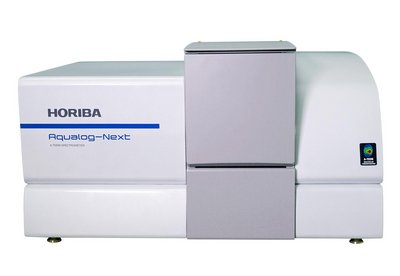
Aqualog Water Treatment Plant Analyzer

HORIBA Scientific recently patented an instrument called the Aqualog®, which makes this process faster and less costly.

“With the Aqualog, you can actually collect the entire composition of all the colored and phenolic compounds,” Gilmore said. “And the acquisition time is roughly around 30 seconds. Further, in less than a minute, the analysis can also be fully automated in terms of the phenolic identity and concentration.”

The Aqualog is an instrument that acquires Absorbance, Transmittance and the fluorescence Excitation-Emission Matrices. (A-TEEM) simultaneously. EEMs are acquired up to 100 times faster than with conventional scanning PMT based fluorescence instruments. The Aqualog was initially developed for water treatment facilities, but its portability, speed, functionality, flexibility, and cost are now appealing to several world-renowned winemakers around the globe. These winemakers have begun to adopt the technology, especially since its portability and cost allow it to be deployed in multiple locations.

Decentralization and speed

Most big wineries are dealing with multiple vineyards often in different regions.  Each region may have a laboratory that can operate the Aqualog for quality control, as opposed to sending samples to one central internal or external, contract laboratory.

“It’s really about speed. Clearly we can do it much faster,” Gilmore said. “It's a solid state instrument that's fully externally validated with NIST traceability. Laboratories can thus establish multiple units that have matching calibrations, and they can have these at convenient field locations, as opposed to having to send everything to another laboratory and wait for results.”

Phenolic information highway

How is all this characterization information used?

Generally, winemakers have something akin to laboratory information management systems (LIMS). It catalogs this fingerprinting information, and statisticians and winemakers evaluate the data to predict the flavor characteristics, storage, stability and blending operations.

The information yielded by the grape analysis is often immediately relayed to the growers to advise them when to harvest, or hold off. It’s also used by the winemakers in terms of final processing, quality control and assurance, blending, bottling, and storage.

“The HPLC (high-performance liquid chromatography) and LC (liquid chromatography) is really the primary discriminatory method for identifying the different phenolics and anthocyanins,” he said. “But day in and day out, for day-to-day operations, it's very difficult to train somebody in the field, or in a remote laboratory, how to maintain this (HPLC and LC) type of equipment.”

The Aqualog uses fluorescence, which produces orders of magnitude higher sensitivity compared to UV-Vis absorbance.  And it also produces a molecular fingerprint in the form of the Excitation-Emission Matrix.  Analysis of the A-TEEM data separates the spectrum in terms of the emission energy, as well as the absorption, which gives the user the ability to identify and create libraries with wide varieties of chemicals.

If a grape sample doesn’t meet the standards of its particular brand, it might influence a blending plan. The grape would go into another type of wine or another blend of something else the winery was making. Grapes are rarely thrown away.

Sampling

The rate of sampling with the Aqualog is very fast.

“We can run hundreds of samples a day with the Aqualog,” Gilmore said. “They can be working in shifts around the clock.”

Wineries are finding out they can’t keep up with the samples with the costlier analytical tools or get the discriminatory phenolic profiles they want with simpler equipment such as UV-Vis absorbance.

“With the Aqualog, it’s a very simple standard operating protocol,” he said. “It can be automated with our auto-sampling systems. We can fully automate the data collection and analysis, and we can generate complete profile reports.”

Follow Us 


Related Products

Aqualog®-Next: The Future of Water Analysis is Here

Aqualog®-Next: The Future of Water Analysis is Here

Unlock Unprecedented Insights into Water Quality and Environmental Health

Pokaż mniej
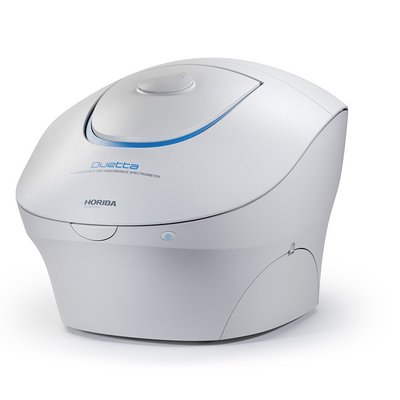
Duetta: 2-in-1 Fluorescence & Absorbance Spectrometer

Duetta: 2-in-1 Fluorescence & Absorbance Spectrometer

Full Spectra in Milliseconds for Industry and Academia

Pokaż mniej

Wniosek o udzielenie informacji

Masz pytania lub prośby? Skorzystaj z tego formularza, aby skontaktować się z naszymi specjalistami.

* Te pola są obowiązkowe.

Produkty

  • Wszystkie produkty HORIBA od A do Z
  • Mobility
  • Energy and Environment
  • Life Science
  • Healthcare
  • Materials
  • Semiconductor

Aplikacje

  • Drinking Water Utilities
  • Automotive Manufacturing
  • Semiconductor Manufacturing Process
  • Research and Testing Laboratories

Technologia

  • Glow Discharge Spectroscopy
  • Pressure-based Flowmetry
  • Quadrupole Mass Spectrometry
  • Raman Spectroscopy

Serwis

  • Wsparcie na miejscu
  • Części zamienne i materiały eksploatacyjne

Firma

  • Aktualności
  • Wydarzenia
  • Kariera
  • Historia
  • Kultura korporacyjna

Kontakt

  • Kontakt ws kariery
  • Formularz kontaktowy
  • Lokalizacje na całym świecie
  • Kontakt z relacjami inwestorskimi

Terms and Conditions Privacy Notice Cookies HORIBA Group Social Media

© Copyright 2026 - All Rights Reserved