
Lithium-ion (Li-ion) batteries power modern technologies from smartphones to electric vehicles. But they also carry a critical risk: battery thermal runaway. This self-sustaining chemical reaction generates heat, releases hazardous gases, and in extreme cases, can cause fires or explosions.
Understanding and measuring battery thermal runaway emissions is essential for improving safety, advancing battery design, and reducing environmental and health risks.
Battery thermal runaway occurs when a lithium-ion battery experiences an uncontrollable increase in temperature caused by internal short circuits, overcharging, mechanical damage, or manufacturing defects. The reaction releases heat, flammable gases, and particles that can lead to fires or explosions if not properly managed.
During a thermal runaway event, lithium-ion battery components decompose and release a complex mixture of gases and particulates. Common emissions may include:

Each emission carries unique implications for safety, environmental impact, and regulatory compliance.
By studying these emissions in real time, researchers can:
Accurate measurement of these emissions provides valuable insights into the chemical reactions occurring during battery failure.
HORIBA leverages decades of expertise in emissions measurement technology to deliver a comprehensive view of battery thermal runaway behavior. Our systems integrate:
Combined with proprietary system designs for initiating and evaluating thermal runaway, HORIBA provides a complete solution for safety, research, and regulatory compliance.
This patented HORIBA system introduces a controlled, enclosed approach to battery emissions dilution and sampling, enabling accurate real-time measurement of gases released during normal operation and extreme events such as thermal runaway. By splitting heated and ambient dilution air paths, the system maintains proper battery test temperatures while delivering analyzer-safe sample conditions. Integrated mass flow measurement allows direct calculation of true emission rates, not just diluted concentrations. Active airflow through the enclosure ensures fast, repeatable extraction of emissions without delays or localized concentration errors.
The result is higher-confidence data for battery safety, materials evaluation, and regulatory research.
Advance Battery Safety Testing: Talk to a Battery Testing Expert
Our suite of test equipment provides high-resolution analysis of thermal runaway emissions, supporting EV manufacturers, researchers, and regulatory bodies:
FTX-ONE RS
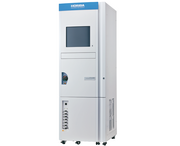 FTIR Exhaust Gas Analyzer: 5Hz sampling rate and simultaneously measure the concentrations of multiple components including NH3, CH4, and CO2.
HyEVO
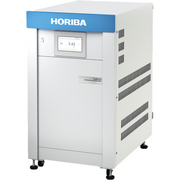 Hydrogen Gas Analyzer: High-accuracy, high-resolution hydrogen gas analyzer designed to support the development of the hydrogen supply chain.
SPCS-ONE
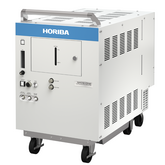 Solid Particle Counting System: Can complete engine/vehicle certification testing for PN defined in the latest regulations, which requires complied dilution systems.
PX-375
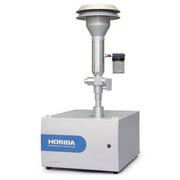 Continuous Particulate Monitor with X-ray Fluorescence: Combines X-Ray Fluorescence & Beta-ray attenuation for accurate measurement of inorganic compounds.
Beyond real-time measurement, HORIBA offers advanced particle analyzers for post-test evaluation of thermal runaway emissions. These tools enable detailed morphology, chemical composition, and elemental mapping of battery particles:
Partica LA-960V2
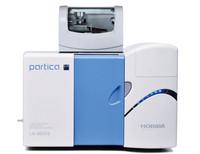 Laser Scattering Particle Size Distribution Analyzer: Measures particle size distribution of emissions using laser diffraction and image analysis.
XploRA™ PLUS
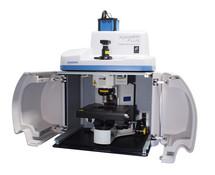 Particle-Correlated Confocal Raman Microscope: Performs particle morphology analysis and automated chemical identification of each particle.
XGT-9000
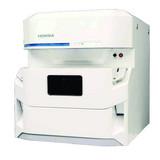 X-Ray Analytical Microscope (Micro-XRF): Automated analysis of elemental composition of each particle. Data can be correlated with Raman microscopy data for complete particle morphology-chemical identification analysis.
nanoGPS navYX™
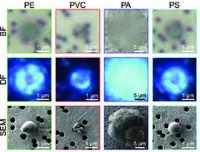 Particle-Correlated SEM Imaging & Analysis Solution: Automated analysis of each particle with multiple characterization methods, including SEM, AFM, FTIR, Raman, and more.
Thermal runaway can release gases such as hydrogen, carbon dioxide, methane, ammonia, and other volatile compounds depending on the battery chemistry.
Measuring emissions helps researchers understand battery failure mechanisms, improve safety systems, and evaluate environmental and health risks.
Emissions are measured using instruments such as FTIR analyzers, mass spectrometers, hydrogen analyzers, and particle measurement systems.
Thermal runaway can be triggered by internal short circuits, overcharging, mechanical damage, manufacturing defects, or excessive heat.
Battery off-gas analysis measures gases released during battery operation or failure to understand degradation, detect early failure signs, and improve safety.
Thermal runaway can release solid particles from decomposed battery materials. Measuring these particles helps researchers study material degradation and environmental impact.
Measuring battery thermal runaway emissions is key to safer, cleaner energy storage. HORIBA delivers the insights to move electrification forward with confidence.
如您有任何疑问,请在此留下详细需求信息,我们将竭诚为您服务。
