
The automotive industry is rapidly evolving as manufacturers balance stricter global emissions regulations, electrification, hybridization, and changing consumer expectations. HORIBA supports light-duty engine development and certification with advanced emissions measurement technologies designed for internal combustion, hybrid, alternative fuel, and emerging propulsion systems.
Our high-accuracy analyzers, dynamometer systems, and laboratory automation platforms help manufacturers improve testing efficiency, reduce development risk, and validate compliance with evolving global regulations including CO2 and criteria pollutant requirements. From engine refinement and certification to hybrid powertrain validation and intermittent zero-flow measurement, HORIBA delivers scalable and future-ready testing solutions for every stage of vehicle development.
HORIBA supports modern light-duty engine development with high-accuracy emissions measurement, certification testing, dynamometer systems, and laboratory automation solutions.
Light-duty engine testing now extends far beyond conventional internal combustion engine development. Manufacturers must validate increasingly complex propulsion systems that combine combustion engines, electrification technologies, energy recovery systems, and alternative fuels while continuing to meet tightening emissions and efficiency standards.
HORIBA supports the complete development and certification process through precision exhaust gas analysis, transient emissions measurement, hybrid powertrain validation, and integrated laboratory automation solutions.
Reliable emissions data is critical for optimizing engine efficiency, reducing development time, and validating compliance with global regulations. HORIBA emissions analyzers are designed to deliver stable, repeatable, and highly accurate measurements across a wide range of operating conditions.
HORIBA systems support both current certification requirements and future propulsion development through advanced emissions measurement technologies engineered for evolving testing environments.
Contact HORIBA to discuss your vehicle development and testing challenges.
HORIBA supports light-duty engine development with flexible dynamometer solutions designed for engine calibration, emissions testing, durability testing, and certification workflows.
Integrated testing environments help manufacturers improve testing efficiency, support repeatable procedures, and streamline data acquisition across evolving propulsion technologies including hybrid and alternative fuel systems.
HORIBA offers multiple DYNAS3 engine dynamometer configurations to support a wide range of testing applications, including high-speed hybrid and electric powertrain testing, dynamic gasoline engine development, and high-torque engine certification workflows.
HORIBA laboratory automation software helps manufacturers manage complex testing workflows while improving efficiency, repeatability, and data management across the testing environment.
Our platforms support:
By connecting analyzers, dynamometers, and test systems into a unified environment, laboratories can improve productivity while maintaining confidence in measurement accuracy and regulatory compliance.
Engine testing is only part of the process. HORIBA also provides light-duty chassis testing for complete vehicle validation.
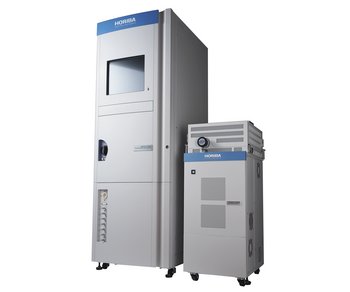
整车排放气体分析仪
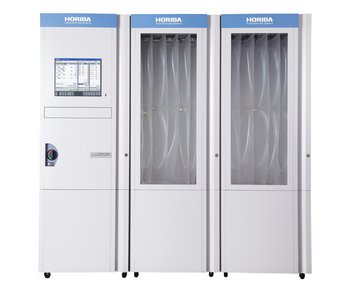
定容取样
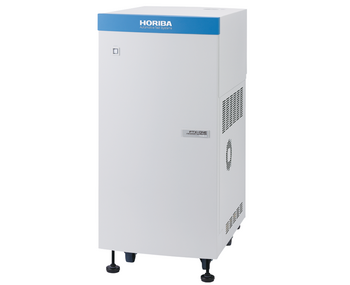
FTIR-傅里叶变换红外光谱气体分析仪-直采型
交流电力测功机
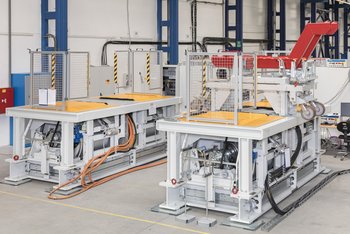
底盘测功机
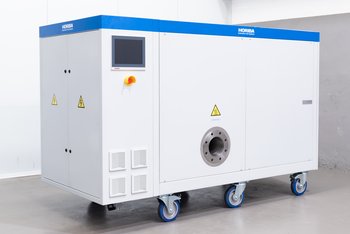
发动机进气海拔模拟
发动机测试自动化解决方案
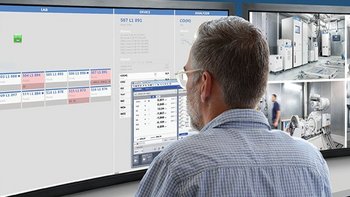
实验室管理测试自动化软件
Explore HORIBA solutions for heavy-duty engine development, emissions measurement, and certification testing.
Light-duty engine testing evaluates engine performance, fuel efficiency, exhaust emissions, and regulatory compliance for passenger vehicles and smaller commercial vehicle applications.
HORIBA provides testing and emissions measurement solutions for internal combustion engines, hybrid and plug-in hybrid powertrains, alternative fuel technologies, hydrogen combustion engines, and electrified powertrain development.
Heavy-duty engine test cells typically require larger and more robust infrastructure than light-duty engine test cells. This may include higher-capacity dynamometers, larger test stands, increased cooling capacity, higher-flow fuel systems, and exhaust handling systems designed to accommodate greater engine power and torque outputs. Measurement and automation systems must also be scaled to support the larger operating ranges and longer-duration testing often associated with heavy-duty applications.
如您有任何疑问,请在此留下详细需求信息,我们将竭诚为您服务。
