HORIBA
Search English
Korea
  • Products
    • Mobility
    • Energy and Environment
    • Process and Environmental
    • Life Science
    • Healthcare
    • Materials
    • Semiconductor
    • Scientific
    • Water & Liquid
    • All HORIBA Products from A to Z
  • Applications
    • Arts, Entertainment and Recreation
      • Art Conservation
      • Museums, Historical Sites and Similar Institutions
    • Biopharma and Pharma
    • Biotechnology and Biomedical
    • Cosmetics
    • Education, R&D and Government Institutions
      • Universities
      • Research and Testing Laboratories
    • Energy Solutions
      • Why HORIBA
      • Hydrogen Energy
        • Global Initiatives
        • Fuel Cell Evaluation
        • FCEV / FCV Evaluation
        • Stationary Fuel Cells
        • Sintering and Reduction Test Station
        • Glow Discharge Optical Emission Spectroscopy: GD-Profiler 2™
        • Evaluation of Hydrogen and Ammonia Engine / Gas Turbine for Power Generation
        • Hydrogen Station Evaluation
        • Water Electrolysis Evaluation
        • Hydrogen Production Evaluation
      • Energy Usage Optimization
        • Energy Management System
        • Environmental Impact Assessment (LCA and GHG Protocol)
        • Battery Manufacturing/Recycling
      • CO2 Capture and Carbon Resource Circulation
        • Reduce
        • Direct Carbon Capture
        • Carbon Resource Circulation
      • Coal and Consumable Fuels
      • Electric Utilities
      • Energy Fuel Oil
      • Environmental Countermeasures
      • Petroleum and Coal Products Manufacturing
        • Petrochemicals
      • Photovoltaics
      • Oil and Gas
      • RoHS and ELV
    • Food and Beverage
    • Healthcare
    • Industrials
      • Battery
      • Commercial and Professional Services
        • Gas mass flow control and measurement for reference value of PM2.5 measurement
      • Construction & Engineering
      • Electrical Equipment
      • Machinery
    • Information Technology
      • Semiconductors
        • 2D Materials
        • Graphene
        • Photovoltaics
        • Display Technologies
        • Data Storage
        • Nanomaterials
      • Semiconductor Manufacturing Process
      • Technology Hardware and Equipment
    • Marine
    • Materials
      • Carbon
      • Polymers and Composites
      • Raw Materials for Semiconductors
      • Metals
      • Minerals
      • Corrosion
      • Ceramics
      • Glass
      • Chemicals
      • Chemical Manufacturing
      • Construction Materials
      • Containers and Packaging
      • Paper, Forest Products and Manufacturing
      • Material Research
      • Photovoltaics
      • Forensic Science
    • Mobility and Transportation
    • Waste Management
      • Solid Waste Management and Remediation Services
      • Water Waste Management and Remediation Services
        • Waste Water and Soil Analysis
        • Waste Water Treatment and Disposal
      • Plastic Waste
    • Water
      • Drinking Water Utilities
      • Water Reuse
        • Water Testing
  • Technology
    • Elemental Analysis
      • Energy Dispersive X-ray Fluorescence (ED-XRF)
        • What is X-ray Fluorescence (XRF)
        • What is X-ray Fluorescence Spectroscopy (micro-XRF)?
        • XRF Key Components
        • XRF Analysis
        • XRF Articles
        • HORIBA XRF Analyzers
      • Glow Discharge Optical Emission Spectroscopy
        • What is Glow Discharge Optical Emission Spectroscopy GDOES?
        • Sample Measurement with GDOES
        • Sample Test and Analysis
        • Comparison with Other Techniques: Surface Analysis
        • Comparison with Other Techniques: Bulk Analysis
        • Instrument Introduction
        • Benefits and Features of Pulsed RF GDOES
        • Join the GD Community
        • Bibliography
      • Inductively Coupled Plasma - Optical Emission Spectroscopy (ICP-OES)
        • Inductively Coupled Plasma - Optical Emission Spectroscopy (ICP-OES)
        • Scientific ICP Spectrometers
        • Applications for ICP-OES
        • ICP-OES and other techniques
        • Principles and Theory
        • Instrumentation
        • Excitation Source
        • Dispersive System
        • Detection Systems Used with ICP-OES
        • Performances in ICP-OES
      • Carbon/Sulfur & Oxygen/Nitrogen/Hydrogen Analysis
    • Health Care
      • Multi Distribution Sampling System (MDSS)
      • Reticulocytes Analysis
      • CBC + CRP
      • Slide Production
      • Automatic Rerun
      • Absorbance
      • Fluorescence
      • Flow cytometry
      • Impedance / Resistivity
      • Sedimentation
      • Spectrophotometry
      • Potentiometry
      • INR screening
      • Clotting
      • Turbidimetric
      • Chromogenic
    • Particle Analysis
      • Dynamic Light Scattering (DLS) Particle Size Distribution Analysis
      • Molecular Weight
      • Nanoparticle Tracking Analysis
      • Static Light Scattering (SLS) / Laser Diffraction Particle Size Distribution Analysis
      • Zeta Potential
      • Centrifugal Sedimentation
    • Fluid Control
      • Vaporization of Critical Process Chemistries
      • Coriolis Flowmetry
      • Thermal Mass Flowmetry
    • Mass Spectrometry
      • Quadrupole Mass Spectrometry
    • Microscopy and Imaging
      • AFM-Raman
        • AFM-Raman
        • What is Tip Enhanced Raman Spectroscopy?
        • What information does TERS provide?
        • How does enhancement of the Raman signal occur in TERS?
        • What are the TERS instrumental configurations?
        • What are the TERS tips materials and morphology?
        • What kind of substrates can be probed with TERS?
        • What is the SPM feedback used for TERS?
        • What is the spatial resolution of TERS?
        • What is the definition of TERS Enhancement factor?
        • What is nonlinear TERS?
        • What are the degradation issues and artifacts in TERS?
        • What are the main TERS applications in Materials Sciences?
        • What are the main Life Sciences TERS applications?
        • References
        • Products
      • Atomic Force Microscopy [AFM]
      • Cathodoluminescence
      • Image Analysis of Particles
      • Micro X-ray Fluorescence
      • Raman Microscopy
    • Spectroscopy
      • Cathodoluminescence Spectroscopy
        • Cathodoluminescence Spectroscopy
        • Electron Microscope
        • SEM, ESEM, SEM-FIB, (S)TEM
        • EM Add-on detector
        • SEM-Cathodoluminescence (SEM-CL)
      • AFM-Raman
      • Detectors
        • Introduction to the detectors techniques
        • What is a CCD Detector?
        • What is an EMCCD Detector?
        • Selecting a CCD Camera for Spectroscopic Applications
        • The Relationship Between Wavelength and Pixel Position on an Array
        • Spectroscopy Detector Products
        • Scientific CCD Camera Products
      • 50 years of Diffraction Gratings
      • Diffraction Gratings Ruled and Holographic
      • Fluorescence Spectroscopy
        • Fluorescence Spectroscopy
        • Principles and Theory of Fluorescence Spectroscopy
        • What is the Jablonski Diagram?
        • What is a Fluorescence Measurement?
        • Steady State Fluorescence Techniques
        • What is Fluorescence Anisotropy or Fluorescence Polarization?
        • What are Luminescence Quantum Yields?
        • What is Ratiometric Fluorescence?
        • What is an Excitation Emission Matrix (EEM)?
        • What is A-TEEM spectroscopy?
        • What is Singlet Oxygen?
        • How to Calculate Signal to Noise Ratio
        • Fluorescence Lifetime Techniques
        • Products Using Fluorescence Spectroscopy
      • Quantum Cascade Laser (QCL) Spectroscopy
        • Optical Hardware
        • Concentration Calculation Algorithm
        • Application Fields
      • Raman Imaging and Spectroscopy
        • Raman Spectroscopy
        • History of Raman Spectroscopy
        • Application field
        • [Translate to Korea - Korean:] Comparison with other techniques
        • Raman analysis
        • Recording spectral images and profiles
        • Description: Combined/hybrid/hyphenated Raman system
        • Confocal Raman microscopy
        • Raman Spectrometer Presentation
        • How the technique is used
        • Raman Image Gallery
        • Related Products
      • Spectrometers and Monochromators
        • Monochromator System Optics
        • Bandpass and Resolution
        • Order, Resolution, and Dispersion
        • Choosing a Monochromator/ Spectrograph
        • Spectrometer Throughput and Etendue
        • Optical Signal to Noise Ratio and Stray Light
        • Entrance Optics
        • Spectrometer, Spectrograph and Monochromator Products
      • Spectroscopic Ellipsometry
        • Spectroscopic Ellipsometry
        • Advantages
        • Instrumentation
        • Measurement Techniques
        • Data Analysis
        • Cauchy dispersion module
        • Products
      • Vacuum Ultra Violet Spectroscopy
        • Vacuum Ultra Violet Spectroscopy
        • VUV technology
        • High Vacuum (HV), Ultra High Vacuum (UHV), gas purge
        • Light sources in VUV
        • VUV system: Detector
        • Aberration
        • References - Articles
      • X-ray Fluorescence
    • Surface Plasmon Resonance
      • Surface Plasmon Resonance imaging
        • Surface Plasmon Resonance Imaging (SPRi)
        • Brief History of the Technique
        • SPR Measurements, Application Field and Comparison with Other Techniques
        • The Basics of Label-free Biomolecular Interactions
        • Instrument Presentation
        • How SPRi is Used
        • Key Accessories. Sensorchips. Surface Chemistry
        • How are the Molecules Immobilized on the biochip?
        • Conclusion & Bibliography
  • Service
    • Analysis Services
      • Analysis Centers and Services
      • EMC Analysis Service
    • Calibration and Certification
    • Customer Support
      • HORIBA Medical Documentation Database
      • Medical Customer Support
      • On-Site Support
      • Software Support
    • Spare Parts and Consumables
    • Testing and Consulting
      • Automotive Testing Centers
    • Training
      • Product Training
        • Scientific Product Training
        • Automotive Product Training
        • Medical Product Training
      • Technology Training
  • Company
    • About HORIBA
      • Home
      • Message
      • Company Profile
      • Corporate Philosophy
      • Code of Ethics
      • Our Future (Vision, Mission, Values)
      • Corporate Governance
      • Board of Directors
      • Culture
      • History
        • 1945–1960s
        • 1970s
        • 1980s
        • 1990s
        • 2000s
        • 2010s
        • 2020s
      • HORIBA Report
      • Technical Journal "Readout"
        • Readout No. E60 - HORIBA’s Digital Transformation
        • Readout No. E59 - Analytical and Measurement Technologies for a Clean Water Environment and Sustainable Society
        • Readout No. E58 - Analysis and Measurement Technologies that Contribute to the Development of Next Generation Semiconductor Devices
        • Readout No. E57 - HORIBA’s Initiatives in the Next-Generation Energy and Environment Fields
        • Readout No. E56 - Analytical Solutions in Megatrends
        • Readout No. E55 - 2021 Masao Horiba Awards - Spectroscopic analysis and measurement technology in the life science field
        • Readout No. E54 - Microplastics and Nanoplastics: Analysis and Method Development
        • Masao Horiba Awards Research Articles
        • Readout No. E53 - 2019 Masao Horiba Awards - Advanced Analytical and Measurement Technologies for Efficient Control System to Maximize the Performance of Electric Power and Batteries Usage
        • Readout No. E52 - Green Innovation for Marine Shipping Industry
        • Readout No. E51 - 2018 Masao Horiba Awards Advanced analytical and measurement technologies in semiconductor manufacturing processes
        • Readout No. E50 - Low-Carbon Society and Environmental Improvement
        • Readout No. E49 - Photonic Instrumentation in Life Science
        • Readout No. E48 - Water Measurement Experts
        • Readout No. E47 - Application for Semiconductor Manufacturing Process
        • Readout No. E46 - New Development for Automotive Test Systems
        • Readout No. E45 - Application Technology in Analysis
        • Readout No. E44 - Contribution of Diagnostics to Total Medical Care/Healthcare
        • Readout No. E43 - Watching the Environmental and Society with Measurements
        • Readout No. E42 - More Efficient Testing on Automotive Development, Improving the Accuracy of Fuel Consumption Measurement
        • Readout No. E41 - Application
        • Readout No. E40 - Application
        • Readout No. E18 - EUROPE
        • Readout No. E17 - AMERICA
        • Readout No. E16 - Chinese (Asia)
        • Readout No. E15 - Technologies for HORIBA STEC
        • Readout No. E14 - Masao HORIBA Awards"Measurement of Bioparticles" and "Measurement of Internal Combustion"
        • Readout No. E13 - Technologies for Automotive Testing
        • Readout No. E12 - Masao Horiba Awards "X-ray Analysis Technology"
        • Readout No. E11 - The Second Masao Horiba Awards
        • Readout No. E10 - Environmental Analysis Technologies for the Management of Global Environment and the Development of Industry
        • Readout No. E09 - The First Dr.Masao Horiba's Award and the 50th Anniversary Products
        • Readout No. E08 - Products and Technologies of HORIBA ABX
        • Readout No. E07 - Products and Technologies of Jobin Yvon HORIBA Group
        • Readout No. E06 - 50th Anniversary of HORIBA, Ltd. Products and Technology of HORIBA Group
        • Readout No. E05 - Semiconductor Instruments
        • Readout No. E04 - Hematology Instruments
        • Readout No. E03 - Paticulate Matter
        • Readout No. E02 - The Technology Alliance for X-ray Analysis
        • Readout No. E01 - the Analysis of the Global Environment
      • Group Companies
      • Virtual Patent Marking
      • HORIBA Talk
    • Events
    • Career
    • Investor Relations
      • Home
      • Investor Relations News
      • IR Library
        • Financial Statements
        • Presentation Materials
        • HORIBA Report
      • Message from the CEO
      • Mid-Long Term Management Plan
      • Stock Information
      • Shareholders Meeting
      • Other IR Information
        • Investor Relations Calendar
      • Investor Relations Contact
    • HORIBA News
    • Social Responsibility
      • Sustainability
      • Topics
      • Message
      • Sustainable Management
        • Policy and Promotion System
        • Integrated Management System
        • Health and Productivity
        • UN Global Compact
      • HORIBARIANs
        • HORIBARIANs
        • Human Rights and Labor Management
        • Development of HORIBARIANs
        • Empowerment of Diverse HORIBARIANs
        • Occupational safety and health
      • Environment
        • Environment
        • Environmental Management
        • Climate Action
        • Reduction of Environmental Impact
        • Actions for RoHS Directive, REACH Regulation and GHS Regulations
        • Eco-Friendly Products
      • Social
        • Quality
        • Material Procurement
        • Social Activities
      • Governance
        • Governance
        • Corporate Governance
        • Internal Controls
        • Compliance Promotion Systems
        • Code of Ethics
        • Risk Management
      • HORIBA and the SDGs
      • HR and ESG related Data
      • HORIBA Report
      • Editing Policy
  • Contact
    • Contact Form
    • Worldwide Locations
Career open open
    HORIBA » Company » Career

Working as Service Engineer at HORIBA

Grow as a Technical Professional

At HORIBA, you work with high‑performance instruments from life sciences and medical diagnostics to automotive, environmental, semiconductor, and advanced materials applications. As a HORIBA Service Engineer, your mission is to keep the world’s most advanced scientific instruments performing at their best. You are trusted to diagnose, repair, and restore complex, high‑precision systems—often in demanding environments where accuracy, uptime, and reliability matter. From optics and electronics to mechanics and software, your hands‑on expertise ensures that critical instruments delivering dependable results. 

Drive Progress through Precision Service

Service is foundational to the trust HORIBA has earned with customers around the world. Guided by our belief that all business is connected to life, keeping our high‑quality, high‑precision instruments running reliably helps enable safer mobility, protect the environment, and support patient care worldwide. As a HORIBA Service Engineer, your impact goes beyond repair: you identify issues, uncover needs, and share field insights with Sales and R&D to continuously improve our technologies—making solutions more accurate, reliable, and valuable for the scientists, manufacturers, and clinicians who depend on them. 

Thrive in an Empowering, Collaborative Culture

Service engineering at HORIBA means working side by side with teams across the organization—from sales and applications to R&D and global support—to deliver the best possible outcomes for our customers. You operate in an open, international environment where collaboration is natural, communication is direct, and your ideas are valued. When you’re ready to take on new challenges—whether through global projects, expanded responsibilities, or new roles—you’ll find opportunities to step forward, backed by colleagues and leaders who are invested in your success. 

Growing Your Career at HORIBA

Career Paths

Discover a career without limits—where your path can evolve across roles, locations, technologies, and business fields. As a HORIBA Service Engineer, you develop a wide-range skill set that opens doors across the company and around the world. 

Learning and Development

HORIBA supports Service Engineer growth with a range of global learning opportunities—from structured programs to self‑guided resources—so you can keep building skills throughout your career.

■ Annual Training
Our HQ-led annual training brings Service Engineers together across regions for hands-on learning and knowledge sharing. Through workshops and troubleshooting sessions, you sharpen core skills, stay current with new technologies, and build a global network. 

■ E-learning

HORIBA’s global e-learning platform lets you learn anytime, anywhere, at your own pace. With structured courses and refreshers across products, applications, software, and service fundamentals, you can continuously build skills for your next step.  

Why don’t you join us?

Head of Service and Sales

Career: Service Engineer → Sales Manager → Head of Sales & Service

I joined HORIBA about 20 years ago after working at an automotive manufacturer. In a global, multicultural environment, I spent around 10 years as a Service Engineer supporting emissions measurement systems on the front line. After that, I took on the role of Sales Manager, developing proposals and customer relationships. Today, as Head of Sales & Service for MTS (Mobility Test Solutions), I lead sales and service together to deliver value across the full customer lifecycle—from initial consultation to long-term support. 
The deep equipment knowledge and problem-solving mindset I built in the field remain the foundation of my work. At HORIBA, a culture that encourages challenges and develops people for the next role enables you to grow your possibilities, starting from service experience. 

Assistant Service Manager

Career: Service Engineer → Senior Service Engineer → Assistant Service Manager

I joined HORIBA in 2014 and began my career as a Service Engineer, building hands-on experience across key products in our semiconductor business. Today, as Assistant Service Manager for the Semi Service Division, I support the team from an organizational perspective—driving skill mapping, training development, and service revenue growth. Through international interactions, I’ve also seen how HORIBA values a fair, supportive workplace and a healthy work–life balance. I’m proud to strengthen service by developing both technology and people as part of a trusted brand. At HORIBA, I believe the capabilities built in the field can be a starting point to expand my role into training, organization building, and management—while shaping a career fits me. 

Inside Sales Section Leader

Career: Service Engineer → Inside Sales

I started my career as a Service Engineer and spent many years gaining hands-on experience. I take pride in supporting customers on the front line so their instruments can keep running. Solving customers’ problems and being thanked for it has been the driving force behind my next challenge.  

Later, I took on roles supporting the team and learned how to “run the whole operation.” I now serve as a key customer contact, using my field experience to make technically grounded proposals and coordinate with internal teams. The long field experience is the foundation of my career today, and at HORIBA I feel I can continue to apply those skills and customer perspectives even as my role or field changes. 
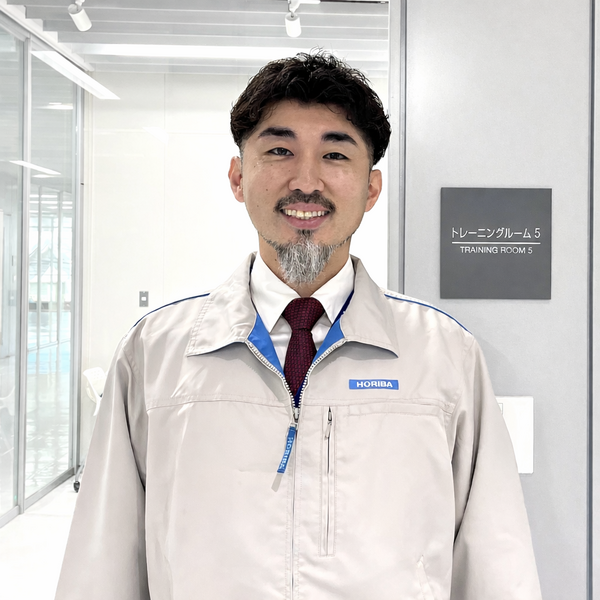
Training Section Leader

Career: Service Engineer → Product Planning → Training

I joined HORIBA as a Service Engineer and built my experience in the automotive field. Early on, I proactively raised my hand for global opportunities. During my assignment in Brazil, I not only carried out field work but also delivered training for local engineers and helped launch a team for new testing needs. When the country and market change, even the same product comes with very different assumptions and challenges. Facing those differences helped me develop a broader perspective. 
Today, I drive training for engineers and customers in Japan and overseas. The ability I built in the field has also become a key strength in education. At HORIBA, I believe you can take on diverse challenges and bring those experiences back to strengthen service. 

Job Categories and Openings

  • In-house Service
  • Field Service
  • Training
  • Application Engineer

In-house Service

Based at one of our service centers or manufacturing facilities, In‑House Service Engineers play a critical role in supporting HORIBA’s high‑performance instrumentation. Performing precise testing, alignment, and calibration to restore instruments to peak accuracy. Working with manufacturing and quality you conduct root‑cause analysis and rigorous quality checks to ensure fast turnaround, consistent reliability, and uncompromising performance before equipment returns to customers. 

Field Service

Field Service Engineers are HORIBA’s front line at customer sites worldwide. You travel to leading laboratories, manufacturing facilities, and R&D centers to install, maintain and repair advanced instrumentation. Through hands‑on technical support, precision maintenance, and rapid response to critical issues, you help minimize downtime and keep mission‑critical systems performing at their best. Working with leading customers in science, industry, and technology, you build trusted relationships through clear communication, technical expertise, and a customer‑first mindset. This role offers variety, global exposure, and a firsthand view of how your work enables innovation across industries. 

Training

Training Specialists play a vital role in connecting HORIBA’s global service and customer community. In this role, you design and deliver technical training for customers and internal teams across regions, working closely with colleagues from around the world to ensure the safe, confident, and effective operation of our products. You create and continuously refine training materials, lead hands‑on sessions, and collaborate with global product, service, and application teams to keep programs aligned with the latest technologies. Through this international collaboration, you help build technical confidence, share best practices across borders, and reduce service incidents worldwide. 

Application Engineer

Application Engineers help bridge HORIBA’s technology and customer needs across diverse fields. You help customers apply HORIBA solutions to achieve their goals and generate accurate, reliable data. You guide system configuration, support evaluations and demonstrations, and ensure each solution is optimized for the customer’s specific application and performance requirements. 
Working closely with customers, R&D, and Sales, you translate application insight into action—sharing field knowledge and contributing directly to the evolution of HORIBA’s products and solutions. Your work enables customers to deliver high‑quality results, advance innovation and confident, data‑driven decisions across critical industries. 

  • Products
    • All Products (A-Z)
    • Mobility
    • Energy and Environment
    • Life Science
    • Healthcare
    • Materials
    • Semiconductor
  • Applications
    • Drinking Water Utilities
    • Automotive Manufacturing
    • Semiconductor Manufacturing Process
    • Research and Testing Laboratories
  • Technology
    • Glow Discharge Spectroscopy
    • Pressure-based Flowmetry
    • Quadrupole Mass Spectrometry
    • Raman Spectroscopy
  • Service
    • On-Site Support
    • Spare Parts and Consumables
  • Company
    • News
    • Events
    • Career
    • History
    • Corporate Culture
  • Contact
    • Career Contact
    • Contact Form
    • Worldwide Locations
    • Investor Relations Contact

Terms and Conditions Privacy Notice Cookies HORIBA Group Social Media