

Combustion Optimization
Control hydrogen combustion, abnormal events, fuel delivery, and combustion efficiency.
A hydrogen internal combustion engine (Hydrogen ICE) uses hydrogen as its primary fuel while retaining many of the operating principles and development methods associated with conventional internal combustion engines. This makes hydrogen ICE (H2 ICE) a potential pathway for reducing direct carbon-based emissions in heavy-duty, off-highway, and other applications where complete electrification can be challenging.
Hydrogen engine development also introduces distinct measurement and facility requirements. Hydrogen combustion produces exhaust with high concentrations of water vapor and potentially unburned hydrogen. Nitrogen oxides (NOx) can still form during combustion, while ammonia (NH3), nitrous oxide (N2O), particulate matter (PM), and particle number (PN) may also require evaluation depending on the engine, aftertreatment configuration, and test objective.
HORIBA supports hydrogen ICE development with integrated solutions for combustion analysis, emissions measurement, aftertreatment evaluation, test automation, and hydrogen-compatible test facilities. These capabilities help engineers generate accurate data, manage hydrogen-specific safety requirements, and prepare for evolving emissions regulations.
For a clear introduction to how hydrogen combustion engines work, see What Is H2 ICE (Hydrogen ICE)?
Key measurement challenges and HORIBA solutions.
Hydrogen combustion holds real promise for decarbonizing transportation, but it introduces technical and engineering demands that don't exist in conventional gasoline or diesel test programs. Those demands group into three core areas — combustion optimization, aftertreatment development, and safety — each critical to performance, regulatory compliance, and long-term reliability. We'll take each in turn, along with the specific measurement and safety considerations they raise for a test program.
Hydrogen has a wide flammability range, low ignition energy, and high flame speed. These characteristics can support lean combustion and rapid energy release, but they also require precise control of fuel delivery, ignition, air–fuel ratio, and in-cylinder conditions.
Hydrogen ICE combustion development can include:
• Air–fuel ratio and lambda (λ) measurement
• Pre-ignition, knock, and abnormal-combustion analysis
• Port-fuel and direct-injection strategy development
• Boosting and high-pressure injection optimization
• Engine mapping for hydrogen-specific fuel characteristics
• Evaluation of moisture-related effects on engine and exhaust components
• Measurement of unburned hydrogen and combustion efficiency
Validating any of this requires accurately measuring combustion efficiency and unburned hydrogen in an exhaust stream carrying much higher moisture concentrations than engineers are used to working with — which is where wet-basis hydrogen measurement becomes essential (see Solutions, below).
H2 ICE exhaust contains little or no fuel-derived carbon when the engine operates on pure hydrogen, but it is not free of regulated or technically relevant emissions. NOx can form when nitrogen and oxygen react at high combustion temperatures. Additional compounds may be generated by the aftertreatment system, lubricating oil, urea dosing, or other engine processes.
Aftertreatment development can include:
• NOx reduction using three-way catalysts (TWC), selective catalytic reduction (SCR), oxidation catalysts, and exhaust gas recirculation (EGR)
• NH3 formation from reactions between hydrogen and NOx over a TWC
• NH3 slip from urea-SCR systems
• N2O formation across aftertreatment components, including ammonia slip catalysts
• PM and PN evaluation where lubricating oil or other sources may contribute to particle formation
• CO2 measurement where lubricating oil, urea, pilot fuel, or other carbon-containing sources are present
• Evaluation during transitions between lean and stoichiometric operation
NH3, N2O, and NOx often need to be measured simultaneously, in real time, in the same wet, hydrogen-rich exhaust stream — a demanding combination for standard analyzer setups.
Safety is the challenge area that most clearly distinguishes H2 ICE testing from conventional engine development, requiring deliberate investment in building or adapting safe test environments. H2 ICE exhaust can contain high concentrations of water vapor and residual unburned hydrogen. Combined with hydrogen’s low ignition energy and wide flammability range, these conditions require measures including:
• Hydrogen detection and ventilation
• Fuel-system, injector, and crankcase monitoring
• Purging, emergency isolation, and automated interlocks
• Ignition-source control
• Hydrogen-compatible materials and components
• Safe handling of moisture-rich exhaust and residual hydrogen
• Integration with test-cell automation and shutdown systems
The appropriate solution depends on the existing facility, engine configuration, hydrogen supply, test procedures, and applicable safety requirements. HORIBA can support both targeted upgrades and complete H2 ICE test-cell development.
HORIBA works with customers to address hydrogen ICE measurement, test-system, regulatory, and facility requirements.
Hydrogen ICE Development Challenges and Solutions
Planning an engine development program or adapting a test cell? Talk with HORIBA about emissions measurement, hydrogen handling, and the systems needed for your application.
Integrated Test-System Technologies
HORIBA can integrate the measurement and control systems needed to evaluate the complete engine and aftertreatment system.
Example hydrogen ICE test configuration showing how fuel measurement, engine testing, exhaust analysis, and automation work together. Equipment selection depends on the test objective.
These three measurement technologies address unburned hydrogen, NOx and NH3, and other exhaust components in hydrogen ICE development.
HyEVO
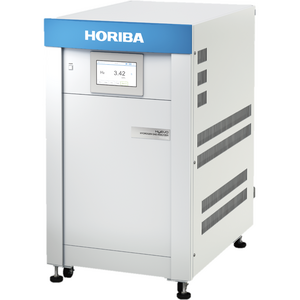 Correctly measure H2 in exhaust gas containing high moisture with Wet
Accurate determination of combustion efficiency from unburned hydrogen
• Highly accurate wet measurement eliminates error factors due to dry-wet conversion
• High-speed response enables transient hydrogen gas concentration measurement
• Safety design considering hydrogen characteristics
MEXA-ONE IRLAM
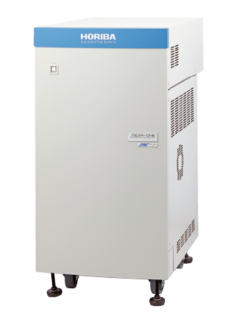
Supports exhaust gas reduction by correctly evaluating NH3 generated during SCR reduction
• Unparalleled response to stoichiometric and lean combustion changes
• Wide range to accurately evaluate the peak during stoichiometric and lean combustion
• Sampling technology to correctly measure NH3 is also proposed (patent registered)
*IRLAM is a registered trademark or trademark of HORIBA
FTX-ONE series
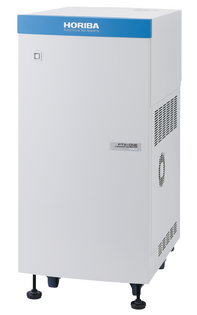 Simultaneous multi-component measurement to correctly measure combustion conditions and aftertreatment performance
Simultaneous measurement of H2O and NOx/NH3/N2O with a single unit
• Unparalleled response to stoichiometric and lean combustion changes
• Low flow sampling to minimize turbulence in the measurement field
• Measurement of up to 28 components, including high-concentration moisture
Hydrogen internal combustion engine test requirements vary by vehicle category, market, and certification pathway. These resources can help teams plan their measurement approach:
Looking beyond hydrogen ICE? See HORIBA’s hydrogen energy measurement and analysis solutions across production, storage, and use.
Hydrogen ICE testing must account for moisture-rich exhaust, potential unburned hydrogen, and hydrogen-specific combustion behavior. Measurement systems may need to support direct wet analysis and fast transient response. Test facilities also require appropriate hydrogen detection, ventilation, purging, crankcase monitoring, safety interlocks, and hydrogen-compatible materials and components.
Measurement requirements depend on the engine, combustion strategy, aftertreatment system, and test objective. Relevant components can include unburned H2, H2O, NO and NO2, NH3, N2O, PM, PN, CO, CO2, and total hydrocarbons. NOx can form during high-temperature combustion, while NH3 and N2O may form across aftertreatment systems. Simultaneous measurement helps engineers evaluate combustion efficiency, catalyst conversion, and secondary-emission formation.
Although hydrogen contains no carbon, burning it with air at high temperatures can cause nitrogen and oxygen in the air to form nitrogen oxides (NOx). Measuring NOx across operating conditions helps engineers evaluate combustion strategies and exhaust aftertreatment. The U.S. Department of Energy explains how NOx can form during hydrogen combustion.
Many existing engine test cells can be adapted, but each facility must be evaluated individually. Potential upgrades include hydrogen supply and isolation systems, leak detection, ventilation, purging, crankcase monitoring, hydrogen-compatible components, wet-exhaust handling, measurement equipment, test automation, and emergency shutdown functions. The required scope depends on the facility, engine configuration, hydrogen supply, and planned test procedures.
HORIBA제품의 자세한 정보를 원하시면, 아래의 양식에 내용을 입력을 부탁드립니다.


