LabRAM Soleil
Raman Microscope
Analyze chemical composition, molecular structure, and material uniformity to support the development and evaluation of sorbents, catalysts, membranes, and other functional materials.
CCUS development requires accurate measurement at every stage—from material characterization and carbon capture evaluation to process monitoring and system integration.
HORIBA brings together analytical technologies, gas measurement systems, testing equipment, and engineering expertise to support CCUS research, scale-up, and industrial implementation.
UPCOMING WEBINAR
Discover how emissions monitoring, trace-gas analysis, real-time amine monitoring, and automation can support more efficient, data-driven control of chemical absorption processes.
October 29, 2026 | 4:00–5:00 p.m. CET
HORIBA specialists can help identify the appropriate combination of analytical instruments, process measurement technologies, testing systems, and engineering support for your CCUS application.
Evaluation typically combines material characterization with performance testing under controlled process conditions. Important parameters include CO2 capture capacity, selectivity, adsorption and desorption rates, regeneration behavior, stability over repeated cycles, and tolerance to moisture and process-gas impurities.
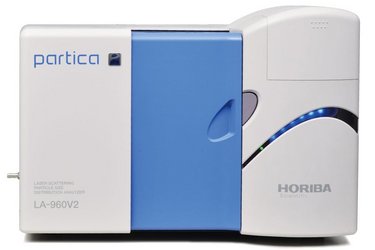
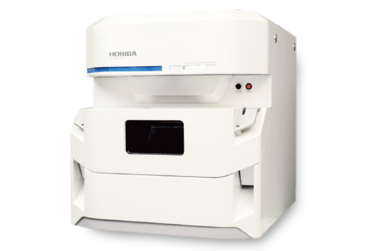
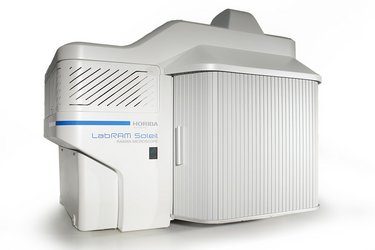
HORIBA technologies support different stages of this evaluation. The LabRAM Soleil analyzes chemical and molecular structure, the Partica LA-960V2 measures particle size distribution, and the XGT-9000 provides non-destructive elemental analysis and mapping.
The CCEVA Carbon Capture Evaluation System extends this analysis by evaluating solid adsorbents, separation membranes, and CO2 separation and recovery modules under controlled operating conditions, including variations in humidity and gas composition.
Gas composition should be measured at locations such as the untreated gas stream, capture-unit inlet and outlet, treated exhaust, purified CO2 stream, and relevant conversion processes. The required components depend on the application and may include CO2, O2, CO, NOx, SO2, NH3, CH4, water vapor, and other impurities.
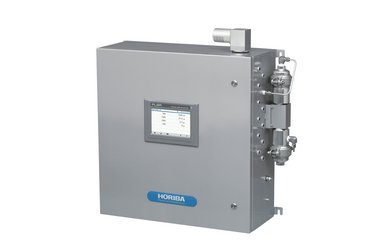
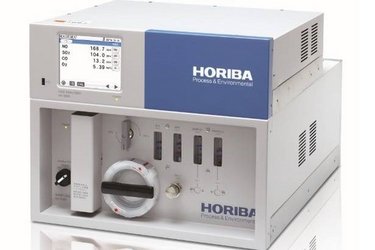
HORIBA offers several technologies for these requirements. The PLGA-1000 provides continuous, high-sensitivity measurement of low-concentration impurities in hydrocarbon-rich process streams. The VA-5000 Series enables configurable multi-component gas measurement, while the ENDA-7000 Series continuously monitors stack gas components.
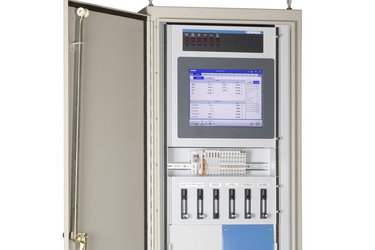
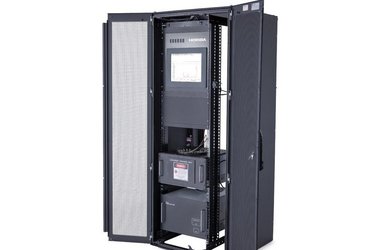
For distributed process environments, the PI-200-I Process Raman Analyzer can monitor multiple sampling points and process streams using a single analyzer. In amine-based carbon capture systems, it can also monitor amine degradation and the formation of heat-stable salts. This information helps operators assess solvent condition, reduce risks to pumps and heat exchangers, and make better-informed decisions about amine replacement.
CO2 conversion processes require technologies that can evaluate electrochemical performance and monitor changes in chemical composition throughout the process. The appropriate measurements depend on whether captured CO2 is being converted into synthesis gas, fuels, chemicals, or other products.
HORIBA FuelCon rovides configurable test systems for electrochemical technologies, including solid oxide electrolysis cells (SOECs) used for CO2 electrolysis and co-electrolysis. These systems support performance, efficiency, durability, and degradation testing under controlled and application-relevant operating conditions.
The PI-200-I Process Raman Analyzer complements this testing by providing real-time chemical information from multiple sampling points. This supports process development and optimization across CO2 conversion pathways, including synthesis reactions and Power-to-X applications.
如您有任何疑問,请在此留下詳細需求或問題,我們將竭誠您服務。