
Rubber fragments are a common type of foreign matter encountered in industrial manufacturing and can lead to quality issues when found in final products. Identifying the rubber material using analytical instruments is important for root-cause investigation and recurrence prevention.
FT-IR and Raman spectroscopy are commonly used for rubber material identification; however, black rubber containing carbon black is difficult to analyze due to strong light absorption and scattering. In such cases, elemental information derived from inorganic components and additives can provide complementary clues for estimating rubber materials. In this context, micro–X-ray fluorescence (micro-XRF) offers an alternative for non-destructive elemental analysis of inorganic components and additives, even in small rubber fragments.
XRF is a non-destructive analytical technique used to obtain elemental information by detecting fluorescent X-rays emitted from a sample under primary X-ray excitation. Micro-XRF is based on the same principle but enables micro-area analysis at the microscopic level by using X-ray capillary optics (Figure 1(a)). This enables the analysis of small fragments.
Figure 1 (a) The internal structure and (b) the instrument set up of HORIBA’s micro-XRF XGT-9000.
As a demonstration, we prepared a small rubber fragment and analyzed it using a HORIBA micro-XRF XGT-9000 X-ray Analytical Microscope. Despite the limited fragment size, we could detect clear fluorescent X-ray peaks derived from elements originating from the rubber material and its additives (Blue line in Figure 2). In addition, we analyzed five commercial black rubber materials, including the one we used to generate the fragment, to build a user-defined XRF spectrum library for spectrum matching. Figure 2 shows the XRF spectra of the commercial black rubber materials, where the spectrum of Rubber B exhibits the highest similarity to that of the fragment.
Figure 2. XRF spectrum of the fragment, Reference Rubber A, B, C, D, and E. (Condition: XGT-9000 Expert, 15 kV, 1000 µA, None Filter, whole vacuum condition, 60 sec/sample)
Furthermore, the spectrum matching function implemented in the XGT-9000 software (Figure 3) enables objective comparison based on similarity scoring, where smaller values closer to zero indicate better agreement with an unknown sample. It allows users to create their own material database for foreign matter spectrum matching purpose. Among the five reference rubbers, the rubber fragment showed the best match with Reference Rubber B, which is consistent with the fragment preparation.
These results demonstrate that micro-XRF can be effectively used for elemental analysis of small rubber fragments and for identification of their origin through spectrum matching.
Figure 3. Spectrum matching function in XGT-9000 Software.
Application note XGT47 (2026)
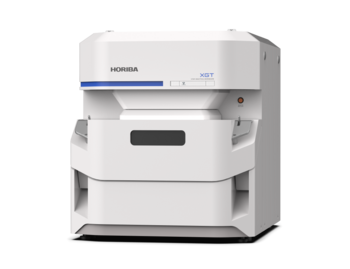
X-ray Analytical Microscope (Micro-XRF)
如您有任何疑問,请在此留下詳細需求或問題,我們將竭誠您服務。


