
In practice, most particles exist in an aggregated state. Moreover, such aggregation is not always stable—it changes over time and can be influenced by dispersion treatment or mixing conditions. As a result, even repeated measurements of the same sample at different times may yield different results. Additionally, applying ultrasonic dispersion can significantly alter the shape of the particle size distribution.
However, there are methods available to achieve consistent and reliable analysis. A common approach is to dilute the sample and apply dispersion treatment before measurement. This promotes a state where particles are as close to their primary (non-aggregated) form as possible. Dilution increases the distance between particles, and the addition of dispersants or ultrasonic treatment helps break up aggregates. By minimizing the influence of aggregation, more accurate and reproducible measurements can be obtained.
Another method is to measure the sample under conditions as close as possible to its actual usage, such as in its original concentration or formulation. Particles are often designed to be stable under specific application conditions. Therefore, measurements performed under real-world conditions (e.g., concentration, temperature) may offer better stability. Understanding the sample's dispersion behavior and how to restore it to the desired state beforehand is critical for ensuring consistent particle size measurements.
For particles smaller than a few tens of nanometers, dynamic light scattering (DLS) and electron microscopy (SEM/TEM) are the most commonly used analytical techniques. However, the results obtained from these two methods can differ significantly, often leading to confusion.
| Technique | Electron Microscopy | Dynamic Light Scattering |
| Measured Diameter | Geometric diameter | Hydrodynamic diameter |
| Size Basis | Number-based | Intensity-based |
| Measurement Condition | Dry, under vacuum | In liquid |
Electron microscopy provides number-based geometric sizes and often focuses on the smaller particles, since the operator selects areas to observe. Because particles are dried and measured in a vacuum, it is unclear whether the observed aggregates were originally dispersed in the liquid phase or not.
On the other hand, DLS yields an intensity-weighted size distribution. As discussed earlier, for nanoparticles, the scattering intensity is proportional to the sixth power of particle diameter. Therefore, even a small number of large particles can heavily skew the distribution. If any aggregates are present in the liquid, their contribution to the scattering intensity is significantly amplified. Even if the particle size distribution is narrow and appropriate size conversion is applied, DLS still measures the hydrodynamic diameter, which includes the surrounding ionic layer, and typically results in values several nanometers larger than the geometric diameter.
Thus, both electron microscopy and DLS are useful techniques for nanoparticle analysis, but it is important to recognize that the measurement results represent fundamentally different properties.
Particle size analyzers are often used to establish quality control criteria for products. In doing so, we recommend the following considerations:
1.Use the Primary Size Basis Provided by the Instrument
As discussed, different measurement principles and analyzers define particle size differently. It is generally advisable to use the primary particle size basis initially provided by the analyzer. For example, laser diffraction instruments typically use a volume-based distribution, whereas DLS uses an intensity-based distribution. While it is possible to convert between size bases, doing so may distort the distribution, introduce artifacts or errors, and compromise the integrity of the original data. Using the original size basis ensures the best balance of accuracy and sensitivity.
2.Use D10, D50, and D90 for Control Parameters
In some cases, parameters such as D100 or D99.99 are used to represent the maximum particle size for control purposes. However, this is not recommended. Particle size analyzers are designed to assess populations of particles and are not optimized for detecting rare outliers. Since distributions are represented as histograms, values like D100 are inherently discrete, corresponding to the bin size. For reliable and stable control metrics, it is better to focus on intermediate percentiles such as D10, D50, and D90, rather than extremes. While D1 and D99 are also used, D10 and D90 offer more consistent and robust indicators for quality control purposes.

Simultaneous Multispectral Nanoparticle Tracking Analysis (NTA)
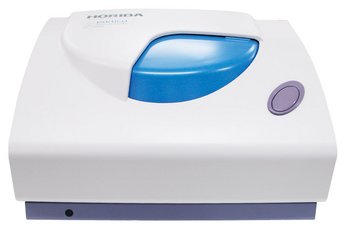
Nanoparticle Analyzer
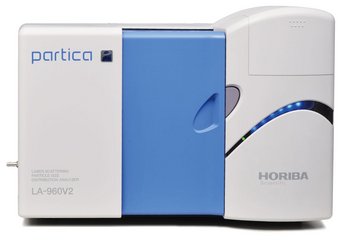
Laser Scattering Particle Size Distribution Analyzer
如您有任何疑問,请在此留下詳細需求或問題,我們將竭誠您服務。