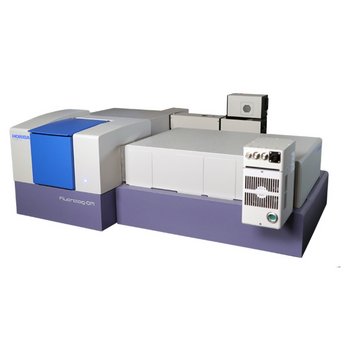
Credit: Nobel Prize Outreach. Photo: Clément Morin
For decades, scientists believed humanity was largely limited to studying and using the proteins already found in nature. David Baker, Ph.D., a biochemist and computational biologist at the University of Washington, challenged this paradigm. He asked a revolutionary question: Can we design entirely new proteins from scratch to solve specific, real-world problems?
Through decades of rigorous research, Dr. Baker and his team developed Rosetta, a state-of-the-art computational software suite. Rosetta not only accurately predicts how linear chains of amino acids will fold into three-dimensional structures, but it also allows scientists to work backward, designing entirely new amino acid sequences that fold into desired, custom shapes. This breakthrough, known as de novo protein design, opened the door to custom-built proteins capable of neutralizing viruses, degrading plastics, and serving as highly targeted therapeutics.
The HORIBA Connection: Validating the In Silico with the In Vitro
Predicting a protein structure on a computer is only half the battle; the true test comes when that protein is synthesized in the laboratory. To prove that these computationally designed proteins fold correctly and function as intended, researchers require extraordinarily precise analytical instrumentation.
This is where HORIBA’s legacy of optical excellence intersects with Nobel-winning science.
To validate their computational designs and understand complex molecular interactions, Dr. Baker’s team of computational scientists and research collaborators validated their findings on a collaborator's HORIBA Fluorolog-3 spectrofluorometer. Because proteins often contain naturally fluorescent amino acids (like tryptophan) or can be tagged with fluorescent markers, highly sensitive fluorescence spectroscopy is critical for monitoring protein folding, unfolding, and binding affinities in real-time.
The unmatched sensitivity and flexibility of the Fluorolog-3 allowed Dr. Baker's lab to capture the precise photoluminescent data required to characterize these novel proteins. The pivotal use of this HORIBA instrumentation in advancing the understanding of protein interactions was outlined in the group's 2006 research published in Chemistry & Biology called Ca2+ Indicators Based on Computationally Redesigned Calmodulin-Peptide Pairs (DOI:10.1016/j.chembiol.2006.03.007).
A Legacy of Innovation
Born in 1962 in Seattle, Washington, David Baker grew up in an environment that fostered deep scientific curiosity and academic rigor. His early fascination with the mechanics of the natural world led him to Harvard University, where he completed his undergraduate studies in 1984. He subsequently earned his Ph.D. in biochemistry at the University of California, Berkeley, in 1989, studying under the mentorship of Randy Schekman, Ph.D., who would himself go on to win a Nobel Prize. Following a postdoctoral fellowship at the University of California, San Francisco, Dr. Baker returned to his hometown to join the faculty at the University of Washington. It was there that he would build the laboratory and the team responsible for his revolutionary contributions to biochemistry.
Today, Dr. Baker serves as the Director of the Institute for Protein Design and is a Howard Hughes Medical Institute (HHMI) Investigator. His work has spun off numerous biotechnology companies and continues to push the boundaries of medicine, nanomaterials, and sustainability.
HORIBA is proud to have played a role in the analytical validation of this world-changing research. The HORIBA Spex Fluorolog-3’s contribution to Dr. Baker’s lab stands as a testament to our ongoing mission: providing the ultimate analytical tools to the brilliant minds shaping the future of science.
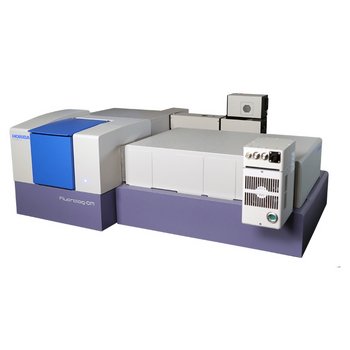
Modular Research Fluorometer for Lifetime and Steady State Measurements
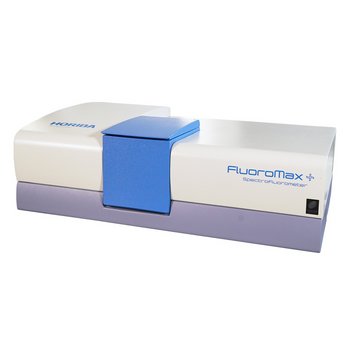
Steady State and Lifetime Benchtop Spectrofluorometer
如您有任何疑問,请在此留下詳細需求或問題,我們將竭誠您服務。