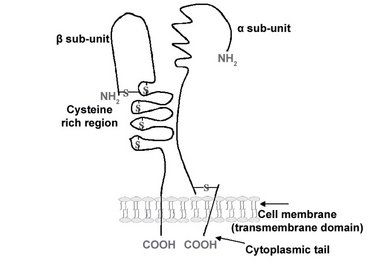
G-protein-coupled receptors (GPCRs), the largest family of integral membrane proteins, participate in the regulation of many physiological functions and are considered as one of the most successful therapeutic targets for a broad spectrum of diseases (approximately 30% of currently marketed drugs). However, despite their pharmacologic potential, clinically useful ligands do not exist for the majority of GPCRs. GPCRs are extremely hydrophobic, characterized by seven transmembrane-spanning α-helices. These receptors require a lipid environment to maintain the native structure, conformation and activity. Typically, GPCRs are expressed with low levels in native tissues.