AVEKA founder Willie Hendrickson, Ph.D.
AVEKA Group didn't begin with a grand industrial manifesto; it was born in 1994 as a specialized spin-off from the 3M Corporation. Willie Hendrickson, Ph.D., the company's founder and CEO, and a former 3M employee, built the enterprise on a highly technical, yet remarkably simple truth: in the specialized world of advanced contract manufacturing, the fundamental matters are size, shape, and surface coating. This insight propelled AVEKA into existence as a critical, often invisible, partner across numerous global supply chains.
Hendrickson, a technical mind with a motivational speaker’s enthusiasm, founded the group as a solution provider for a pervasive problem: manufacturers rarely possess the capacity or the specialized equipment required for every single material transformation in-house. AVEKA stands ready as the specialized manufacturing partner, focusing entirely on making esoteric materials behave exactly the way their customers need them to. The initial corporate structure coalesced around four distinct manufacturing sites staffed by approximately 200 people, dedicated to industrial, chemical, and food contract manufacturing, along with process development for particulate materials.
To understand AVEKA is to grasp the concept of the particulate material. As Hendrickson defines it, these materials are physically vast in their scope, ranging from particles smaller than an inch in diameter down to angstrom-sized materials—a truly daunting range. The company specializes in the physical transformation of these materials. In short, they accept raw solids or sometimes liquids, change their physical properties (like size, shape, or surface coating), and prepare them for final products, ensuring the materials are perfect for the customer's manufacturing line.
This work is essential because the particle’s characteristics directly govern the function of the final product. For an industrial company, that might mean taking a gritty active ingredient and grinding it into an ultra-fine powder that dissolves instantly. For a food manufacturer, it could involve coating a sticky powder so it flows smoothly and efficiently out of a filling machine.
Hendrickson refers to the company's function using a spectrum of industry terms: they operate as a Contract Manufacturing Organization (CMO) and, more comprehensively, as a Contract Development and Manufacturing Organization (CDMO). The distinction is critical: a CMO executes an established process, simply accepting material, processing it, and sending it back; a CDMO steps in much earlier. It accepts the customer's initial idea, performs the development work to figure out how to successfully scale and manufacture it, and then executes the production run. It is this CDMO capability—the marriage of development and production—that sets AVEKA apart.
The range of AVEKA's specialization is astonishing, cutting across numerous industrial boundaries. Their work is concentrated in the food industry, animal feed industry, personal care industry, and industrial chemicals industry, with the latter two being the largest sectors by volume. Yet, their services touch aerospace, microelectronics, and numerous other fields, owing to another fundamental truth articulated by Hendrickson: "Just about every industry that handles materials has a powder somewhere in their process."
For instance, the need for precise particle size is critical in sectors demanding structural integrity or specialized function. In the aerospace industry, where a customer might be making a helicopter blade from a fiberglass laminate, an additive particle may be required in the resin. AVEKA might be tasked with grinding a particle that acts as a filler to strengthen the resin after it cures or even grinding ion particles that the customer needs to act as a radar-absorbing material within the system.
In the personal care industry, which includes makeup and cosmetics, the necessity is both aesthetic and functional. The quality of makeup, for example, relies heavily on a "very specific size distribution" so that the powders effectively cover blemishes and apply smoothly. AVEKA ensures the pigment particles are ground to this precise dimension. The chemical industry relies on them for polymers used in additive manufacturing, requiring powders like nylons or engineering materials (used in hip or knee replacements) to be rendered at a "very specific size" for 3D printing applications. In microelectronics, AVEKA might treat a pigment particle to enhance its effectiveness for an electronic display.
The transformations AVEKA performs are varied and demand a wide array of specialized techniques: they might receive a truckload of silica and grind it to a smaller size, coat a material to change its color (say, making silica red), or agglomerate a material to increase its particle size. They also perform spray drying operations, taking liquids like slurries of yeast or solutions of maltodextrin and drying them into a solid particles. The ability to perform this range of physical transformations—grinding, coating, and agglomerating—is central to their identity.
Willie Hendrickson is unique in that he is both the technical mind—holding over 60 patents issued or pending—and the primary salesman. He attributes his extensive patent record not to simply an ability to focus, but to the sheer diversity of problems AVEKA Group addresses. Since AVEKA operates purely as a service provider, the core of their business model is not the intellectual property itself, but the act of problem-solving.
Hendrickson states clearly: "Our company does not thrive by selling intellectual property. Our company thrives by helping solve people's problems and then manufacturing the solutions for them." The patents serve to excite customers and signal innovation, proving that AVEKA has the novel ideas and ability to "optimize" their processes. The company maintains a broad view of "all these different materials, different processes, different end uses," and this allows Hendrickson to quickly identify solutions based on experience—a capability he half-jokingly refers to as recalling "trick number 42.” This ability to listen to a client’s problem, conceive a unique approach, and convince them to proceed is what consistently generates revenue.
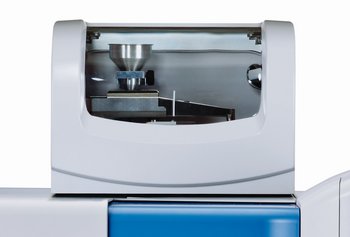
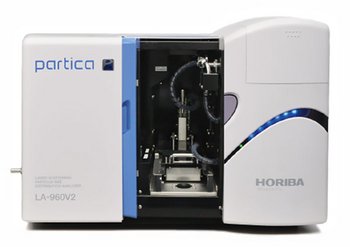
HORIBA's Partica LA-960V2 with Powderjet dry feeder accessory.
AVEKA’s specialized manufacturing mandates an equally specialized approach to quality control and measurement. According to Hendrickson, a crucial component of AVEKA's success and its competitive advantage lies in its extensive analytical capability. As he insists: "At the end of the day, if I can't measure it, how do I know if I've discovered something new?"
This dedication to metrology has forged a long-term, essential relationship with HORIBA Instruments. AVEKA Group relies on a formidable suite of HORIBA particle size analyzers—instruments that are vital for ensuring the materials they produce conform exactly to the customer's stringent specifications.
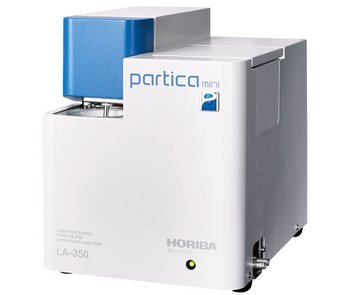
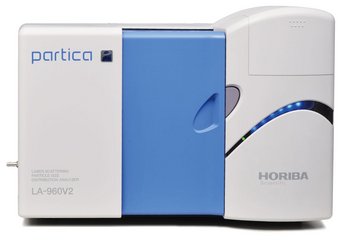
AVEKA’s analytical arsenal includes multiple HORIBA laser scattering particle size distribution analyzers, including the LA-350, an LA-940, an LA-950, and an LA-960. These devices are the eyes of the operation, allowing the team to measure particle size, shape, and distribution precisely to verify that the grinding, coating, or agglomeration process has succeeded. The long-term investment in, and mastery of, this HORIBA equipment demonstrates AVEKA's belief that sophisticated instrumentation is not just a tool, but a competitive differentiator: "We're probably better utilizing our characterization equipment than most big companies are.” This analytical superiority is the final, essential guarantee that the materials leaving AVEKA's factory are perfect for the customer’s manufacturing line.
Looking ahead, the industry is moving toward greater control and precision, driven by demands for better and better control processes. This involves continuous monitoring and analysis of data points—temperatures, pressures, and particle sizes—fed into data tables.
Hendrickson believes this is where Artificial Intelligence (AI) will play a pivotal role. Since the volume of data collected often overwhelms human analysis time, AI can assist in monitoring and analyzing trends to help maintain product specifications and generate new product ideas. The future of particle processing, therefore, is focused on integrating analytical speed and precision—a continuation of the same philosophy that mandated their extensive use of HORIBA's technology from the beginning. The quest remains the same: to reduce the variability and increase the predictability of material transformation, ensuring that AVEKA continues to operate as the world's most versatile, specialized, and successful material shapeshifter.
Related Links



Vous avez des questions ou des demandes ? Utilisez ce formulaire pour contacter nos spécialistes.
Granulomètre par diffusion laser
Granulomètre par diffusion laser