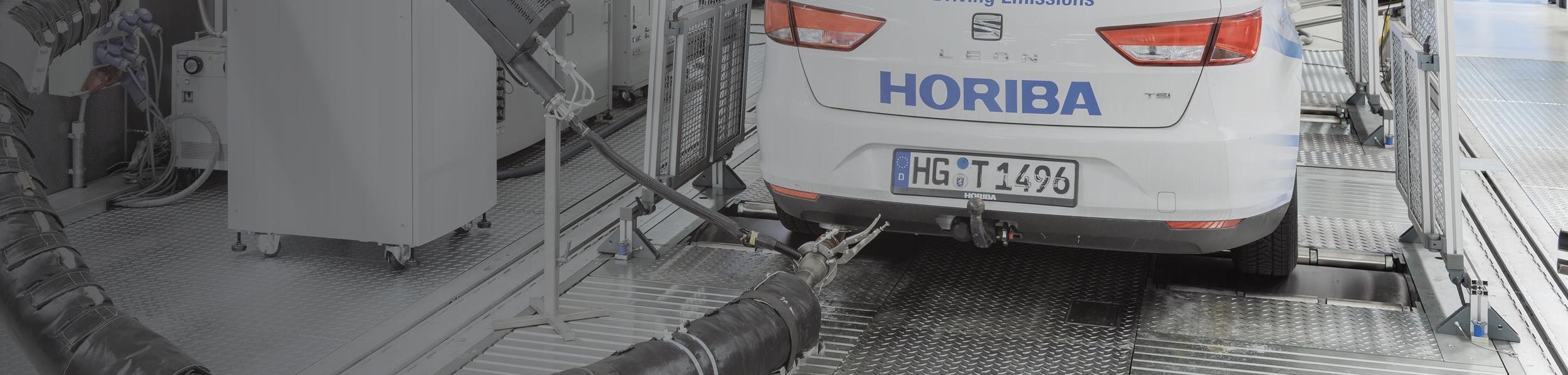
HORIBA’s Stationary Particle Analyzers provide highly accurate and repeatable particle measurement for automotive development, certification, and compliance testing. Engineered for laboratory and test-cell environments, these systems ensure stable, long-term performance for modern particulate emission analysis.
The product portfolio—including SPCS-ONE, MDLT-ONE, PFS-ONE, and MEXA-ONE-FT—offers advanced measurement technology, seamless integration, and reliable operation for precise particle number and particle size assessment.
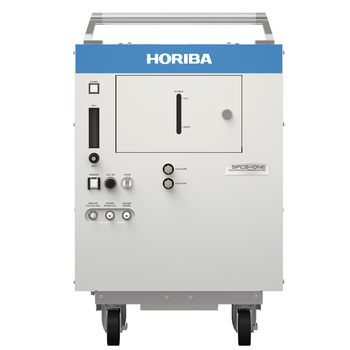
Solid Particle Counting System
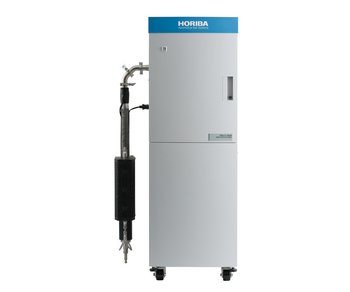
Micro Dilution Tunnel for Particulate-Matter Sampling
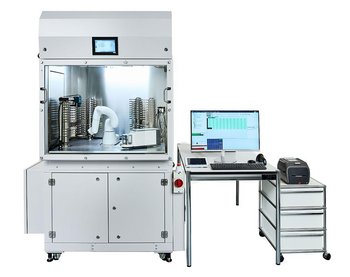
Particulate Filter Management System
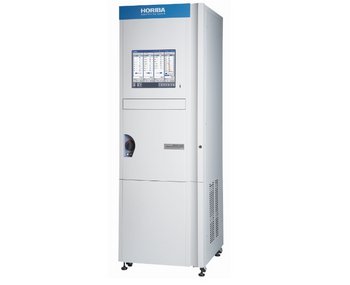
FTIR Motor Exhaust Gas Analyzer
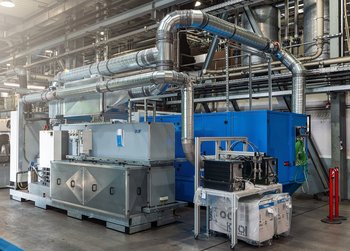
Brake Dynamometer for Brake Emissions Testing
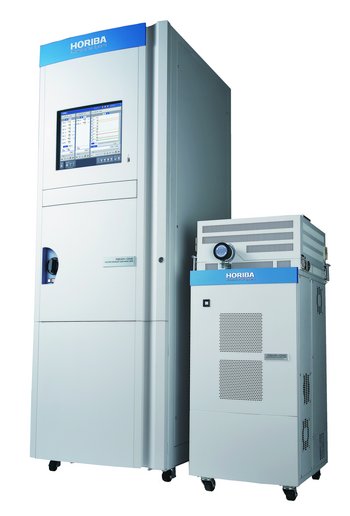
Motor Exhaust Gas Analyzer for Engine & Vehicle Testing
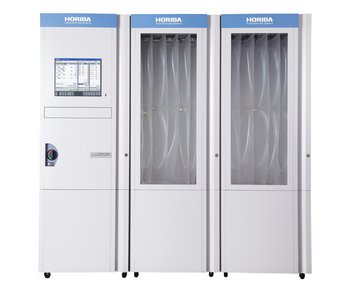
Constant Volume Sampler for Diluted Vehicle and Engine Emissions
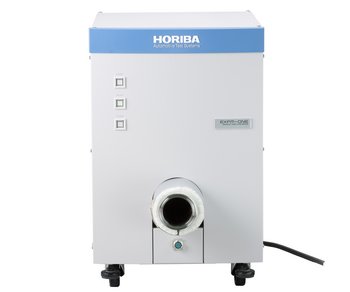
Ultrasonic Exhaust Flow Meter for Real-Time Emissions Measurement
A Stationary Particle Analyzer is a laboratory-based measurement system designed to accurately determine the number, size, and characteristics of particles emitted from engines, vehicles, or other combustion sources. These analyzers deliver high-precision, repeatable particle data that is essential for emission certification, advanced powertrain development, and compliance with global particle number (PN) and particulate matter (PM) regulations.
Stationary Particle Analyzers typically measure key parameters such as particle number (PN), particle size distribution, and in some systems particulate mass (PM). They are engineered to meet the stringent requirements of test-cell and emissions laboratory environments, offering stable long-term performance and minimal drift—crucial for achieving consistent measurement quality throughout certification cycles and R&D programs.
Unlike portable particle measurement devices, stationary systems are permanently installed and integrated into the test facility’s sampling and exhaust handling infrastructure. This enables continuous, high-accuracy measurements during engine tests, chassis dynamometer cycles, or powertrain development. HORIBA’s analyzers—such as SPCS-ONE, MDLT-ONE, PFS-ONE, and MEXA-ONE-FT—utilize advanced technologies including condensation particle counting (CPC), diffusion charging, and FTIR-based particulate measurement to capture a wide range of particle sizes and concentrations.
Regardless of the measurement principle, all stationary particle analyzers follow a similar process: exhaust sampling, particle conditioning (such as dilution and drying), and particle detection using highly sensitive sensors. This combination ensures precise, traceable, and regulation-compliant particle measurements for today’s and tomorrow’s emission challenges.
Você tem alguma dúvida ou solicitação? Utilize este formulário para entrar em contato com nossos especialistas.