


In-Line/On-Line Image Analysis systems are integrated directly into manufacturing lines or reaction processes to measure particle size and shape in real time. Unlike offline laboratory methods, these systems continuously monitor particle behavior as the process evolves to enable rapid detection of anomalies and automated feedback control, such as Process Analytical Technology (PAT). Depending on the process environment, measurements can be made directly inside the process vessel or piping (In-line), or by drawing a sample into a bypass line (on-line).
Immediate Process Control
By continuously monitoring parameters like particle size and shape in real time, operators can quickly detect anomalies, such as oversized particles, and optimize processes like milling, granulation, and crystallization without the delay of laboratory analysis.
Elimination of Sampling Errors
Measuring directly in the process, or via an automated bypass, eliminates the need for manual sampling, preventing particle breakage, agglomeration, or changes in state that often occur during sample transport.
These methods are ideal when continuous data are needed for automated process control and offline sampling delays are not acceptable. They are especially valuable for monitoring dynamic changes—such as milling, granulation, or crystallization, as they happen on the manufacturing line.
While both provide real-time data, they handle samples differently:
Image of In-Line/On-Line Measurement System
In-Line Image Analysis: Measures particles directly inside the process piping or vessel. It captures the true state of the sample with zero delay. Because physical dilution is not possible, it relies on the advanced analytical software to segment and measure overlapping particles in dense fluids.
On-Line Image Analysis: Draws a portion of the sample into a bypass line. It is the preferred choice when the process fluid is too concentrated for direct imaging, as it allows physical sample conditioning, such as automated dilution and temperature control, before analysis.
Challenge of Motion Blur:
Because measurements are performed on moving particles, this approach faces the same challenges as Dynamic Image Analysis, and can be addressed using the same methods.
Ensuring Continuous Reliability: Fouling Prevention
Continuous monitoring can lead to fouling, where particles adhere to the optical window and degrade image quality. It is important to maintain reliable measurements throughout the monitored process by incorporating designs that prevent fouling, and cleaning mechanisms to that remove adhered particles.
HORIBA Solution: Eyecon2™* Direct Imaging Particle Analyzer - HORIBA
It is a system that measures particle size and shape in real time during manufacturing.
In-line measures particles directly in the process. On-line draws a sample into a bypass line for analysis.
They enable real-time monitoring, faster process control, and reduced sampling errors.
Real-time particle measurement helps operators detect process changes quickly and respond before issues grow.
On-Line Analysis is useful when the process fluid is too concentrated for direct imaging, or when sample conditioning is needed.
Motion blur and fouling are common challenges. They can be managed with proper system design and control.
Máte nějaké dotazy nebo požadavky? Pomocí tohoto formuláře kontaktujte naše specialisty.
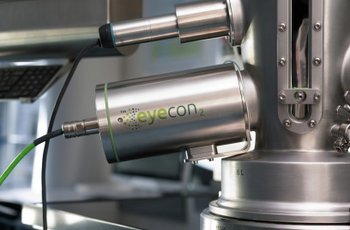
Direct Imaging Particle Analyzer
