Emergence of organic memristors has been hindered by poor reproducibility, endurance stability scalability and low switching speed. Knowing the primary driving mechanism at the molecular scale will be the key to improve the robustness and reliability of such organic based devices.
Memristive elements are believed to be one of the most promising components for the next generation of electronics for artificial intelligence (AI) and internet of things (IoT). One of the biggest problems with existing memristors is that their switching is non-uniform (filamentary) and stochastic which accounts for their lack of reproducibility and device-to-device consistency. This application note reports on the demonstration of a 100% uniform molecular switching mechanism in memristors based on Ru-complexes of azo-aromatic ligands using concurrent nanoscale mapping of the conductance by c-AFM and of the chemical signature by in operando TERS.
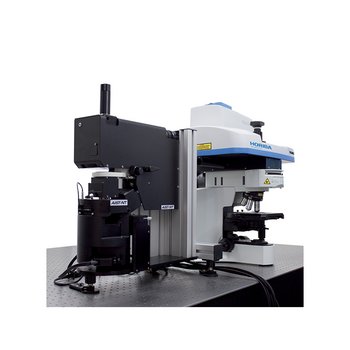
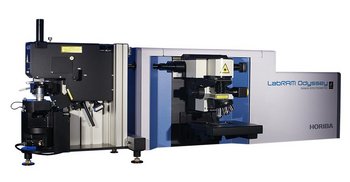
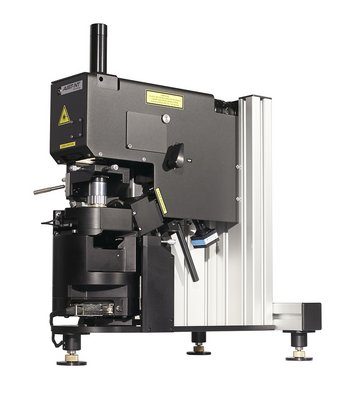
AFM-Raman pour l'imagerie physique et chimique
Plateforme optique AFM
Vous avez des questions ou des demandes ? Utilisez ce formulaire pour contacter nos spécialistes.