

Comparaison avec d'autres méthodes d'analyse élémentaire
La méthode d'extraction de gaz est la meilleure méthode pour l'analyse quantitative du carbone, du soufre, de l'oxygène, de l'azote et de l'hydrogène en raison de sa grande sensibilité sans influence des gaz coexistants, de sa large gamme de concentration, de sa bonne répétabilité et de sa rapidité d'analyse.
Méthode d'analyse | C | S | O | N | H | Avantages | Inconvénients |
|---|---|---|---|---|---|---|---|
ICP-OES | × | ○ | × | × | × |
|
|
Absorption Atomique | × | ○ | × | × | × | ||
| XRF | △ | △ | △ | △ | × |
|
|
| Etincelle OES | ○ | ○ | ○ | ○ | × | ||
Extraction de Gaz | ✓ | ✓ | ✓ | ✓ | ✓ |
|
|
✓: Très adapté ○:Adapté △:Partiellement adapté ×:Inadapté
Hormis la méthode d'extraction des gaz, il n'existe aucune technique capable de fournir une analyse de C/S, O/N et H avec une telle sensibilité et en quelques minutes.
Par exemple :
- L'ICP-OES peut déterminer environ 70 éléments du tableau périodique, mais pas C, O, N et H.
- L'ED-XRF ne peut pas mesurer O, N et C.
- Le WD-XRF ne peut mesurer le C qu'en pourcentage.
- Les instruments Etincelle-OES ne peuvent pas mesurer le H avec précision et n'atteignent pas les performances de la méthode d'extraction des gaz pour les niveaux de concentration faibles et élevés.
L'une des limites des instruments de la méthode d'extraction des gaz est qu'ils ne sont pas conçus pour manipuler des échantillons liquides et ne peuvent pas mesurer le C, le S, l'O, le N et le H organiques. En outre, ces instruments ne sont pas conçus pour effectuer des mesures sur le terrain ou à proximité du processus et les avoir dans un laboratoire transportable constitue une solution coûteuse en raison de la nécessité d'utiliser des gaz et un courant électrique élevé.
Demande d'informations
Vous avez des questions ou des demandes ? Utilisez ce formulaire pour contacter nos spécialistes.
Produits
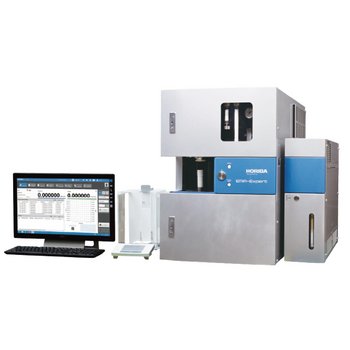
Analyseur de carbone/soufre
(modèle haute précision)
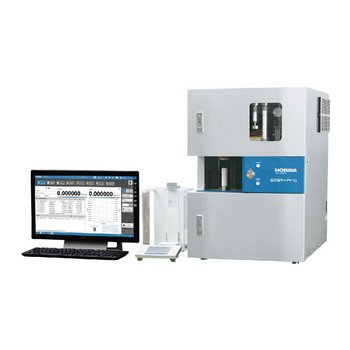
Analyseur de carbone/soufre (modèle d'entrée de gamme)
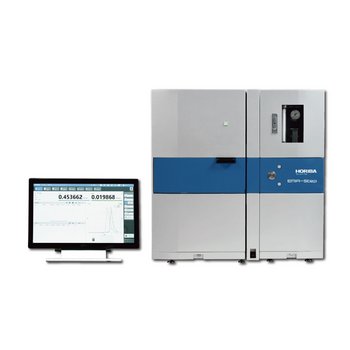
Analyseur de carbone/soufre (modèle avec quatre tubulaires à résistance électrique)
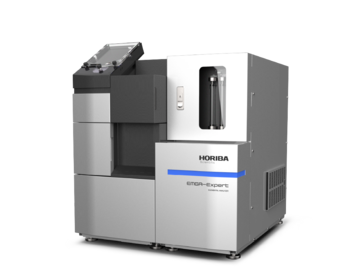
Analyseur d'oxygène/azote/hydrogène
(modèle haute précision)
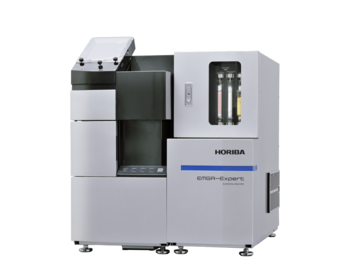
Analyseur d’hydrogène – Série EMGA
(Modèle haute précision)

Analyseur d'oxygène/azote (modèle d'entrée de gamme)