
Fermentation R&D teams are responsible for identifying the strains, media formulations, feed strategies, and process conditions that maximize yield. AI-driven design can accelerate that search by generating hundreds of predicted experiments—but those predictions still need to be experimentally validated.
That is where the bottleneck appears: HPLC remains essential for confirmation, but it often takes tens of minutes per sample. Raman can measure samples in seconds. At high sample volumes, that magnitude of speed difference can reshape the workflow: hundreds of samples may be screened by Raman in less than an hour, while the same sample set could take days to analyze by HPLC.
Instead of sending every fermentation sample directly to chromatography, teams can use the PoliSpectra® Rapid Raman Plate Reader (RPR) to rapidly screen large sample sets, identify the most promising candidates, and down-select which samples truly need HPLC confirmation. Because Raman analysis is non-destructive, those same preserved samples can then be analyzed by HPLC for confirmation after Raman has captured the broader chemical trends.
By bringing Raman spectroscopy into a high-throughput plate-reader format, the RPR enables rapid screening across 24-, 96-, or 384-well formats. Teams can quickly evaluate key metabolic parameters, identify chemical trends, detect outliers, and prioritize samples most likely to represent improved yield or meaningful process differences.
The result is a more scalable fermentation development workflow: AI predicts more conditions, RPR screens the large experimental set, and HPLC is reserved for confirming the candidates that matter most.
The schematic above summarizes the workflow: build a Raman-based titration model, validate it against HPLC, and then use the validated model to rapidly screen large fermentation sample sets so only the most important samples advance to HPLC confirmation.
To illustrate this workflow, the example shown here focuses on glucose, a key fermentation substrate. The same approach can also be applied to other fermentation metabolites and, in some cases, end products.
Using 785 nm Raman excitation, the RPR measured glucose titration samples across five different growth media, for a total of 45 samples spanning multiple glucose concentrations. These measurements were used to build a Raman-based glucose prediction model, which was then validated against HPLC.
The real data shown at the end demonstrates the model-building process. The left-hand panel shows the Raman spectral data collected from the 45 samples across different media. The right-hand panel compares glucose concentrations predicted from the Raman model against the actual glucose concentrations measured by HPLC.
Raman accurately modeled glucose concentration in four of the five media. Medium D exhibited a high fluorescence background that interfered with Raman measurements, reducing prediction accuracy. Samples with elevated fluorescence can be addressed using a dedicated calibration model or flagged for follow-up analysis by HPLC.
The key difference was speed. All 45 samples were measured in under 10 minutes using the RPR, or approximately 12.5 seconds per sample, while corresponding HPLC measurements would require many hours. Across most media, Raman reliably captured glucose trends, demonstrating the RPR’s value as a front-end screening tool once a model has been built and validated.
By combining AI-guided fermentation design with high-throughput Raman screening, the PoliSpectra® RPR helps teams move from prediction to proof faster—ensuring HPLC and scale-up resources are focused only where they deliver the most value.
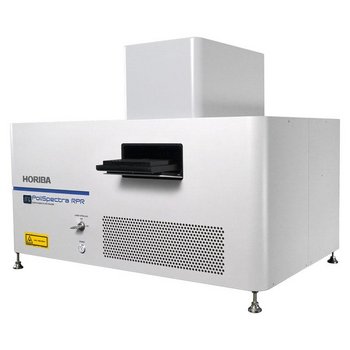
Rapid Raman Plate Reader – Multiwell Fast Raman screening
如您有任何疑問,请在此留下詳細需求或問題,我們將竭誠您服務。


