Credit: Nobel Prize Outreach. Photo: A. Mahmoud
Gérard Mourou, born 1944, is a French physicist and a world-renowned pioneer in the field of ultra-fast lasers. His career has been marked by a relentless pursuit of higher laser intensity, leading to an invention that revolutionized optics and opened the door to applications in medicine, manufacturing, and fundamental physics. He has held distinguished positions at institutions including the University of Rochester, the University of Michigan, and the École Polytechnique.
In 2018, Gérard Mourou was awarded a share of the Nobel Prize in Physics (along with his former graduate student, Donna Strickland) for their method of generating high-intensity, ultra-short optical pulses. This method is known as Chirped Pulse Amplification (CPA).
Before CPA, scientists were limited in how much they could amplify a short, intense laser pulse. Attempting to directly amplify a powerful, ultra-short pulse would inevitably destroy the laser's amplifying material, as the peak power was simply too high.
The idea for CPA struck Mourou on a ski lift in the cold winter of Rochester, New York. The technique, established in 1985, is described as elegantly simple:
The result is a pulse that is both ultra-short (down to the femtosecond range) and incredibly powerful, reaching the petawatt range with an intensity impossible to achieve before CPA.
The invention of CPA became the new standard for high-intensity lasers globally, enabling a "laser revolution" with far-reaching applications:
A critical part of the CPA breakthrough was the final design of the stretcher and compressor, which required the use of diffraction gratings for both steps to ensure a perfect match.
The Initial Limitation: Mourou's initial 1985 CPA demonstration used small gratings for the compressor and a fiber cable for the stretcher. This mismatch limited the efficiency and power output of the final pulse.
The Technical Leap: To scale up the power, Mourou needed much larger, more robust, and highly efficient gratings for both the stretching and compression stages. He collaborated with Jobin Yvon (now HORIBA France) to develop these specialized components.
HORIBA developed gratings that were huge by the day's standards (190 mm by 350 mm), about 25 times larger than the commercial norm. This size increase directly allowed for a proportional increase in the laser pulse energy. They also developed specialized gold-coated surfaces with a high damage threshold and high efficiency (over 90%), which was essential because the laser beam bounces off four gratings, magnifying any loss to the fourth power.
The combination of the gratings' large size and robustness was the key that unlocked the high-intensity, petawatt-class lasers. This essential component was deemed so important that when asked to provide an item to commemorate his Nobel Prize, Mourou chose to display one of the original HORIBA (Jobin Yvon) diffraction gratings at the Nobel Museum in Stockholm, recognizing it as the critical breakthrough that made true high-power CPA possible.
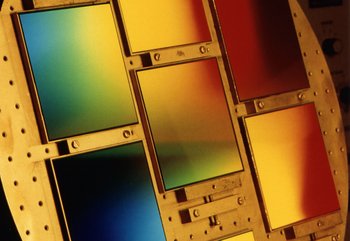
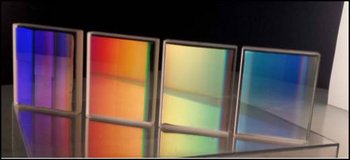
OEM gratings design and production capabilities
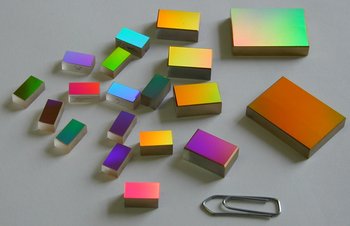
OEM gratings design and production capabilities
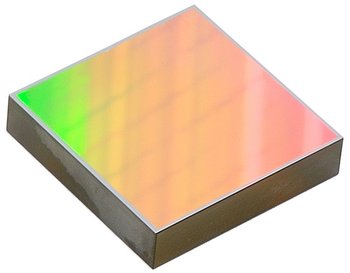
OEM gratings design and production capabilities
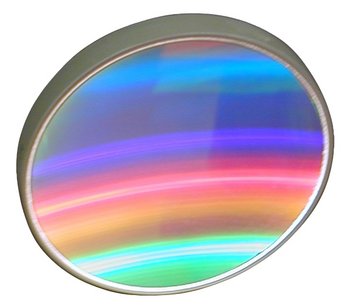
OEM gratings design and production capabilities
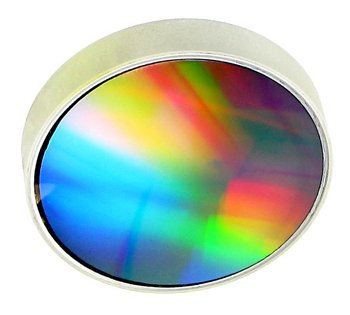
OEM gratings design and production capabilities
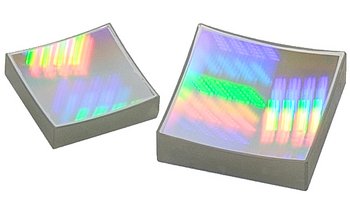
OEM gratings design and production capabilities

Pulse compression gratings using holographic techniques
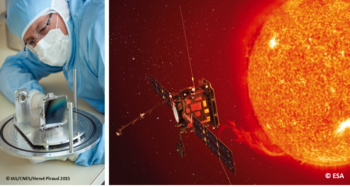
Space qualified and TRL9
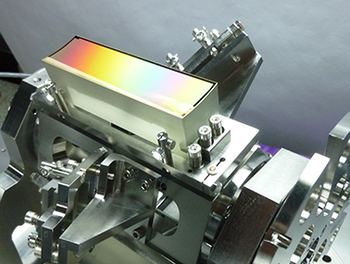
Holographic Lamellar Gratings
如您有任何疑問,请在此留下詳細需求或問題,我們將竭誠您服務。